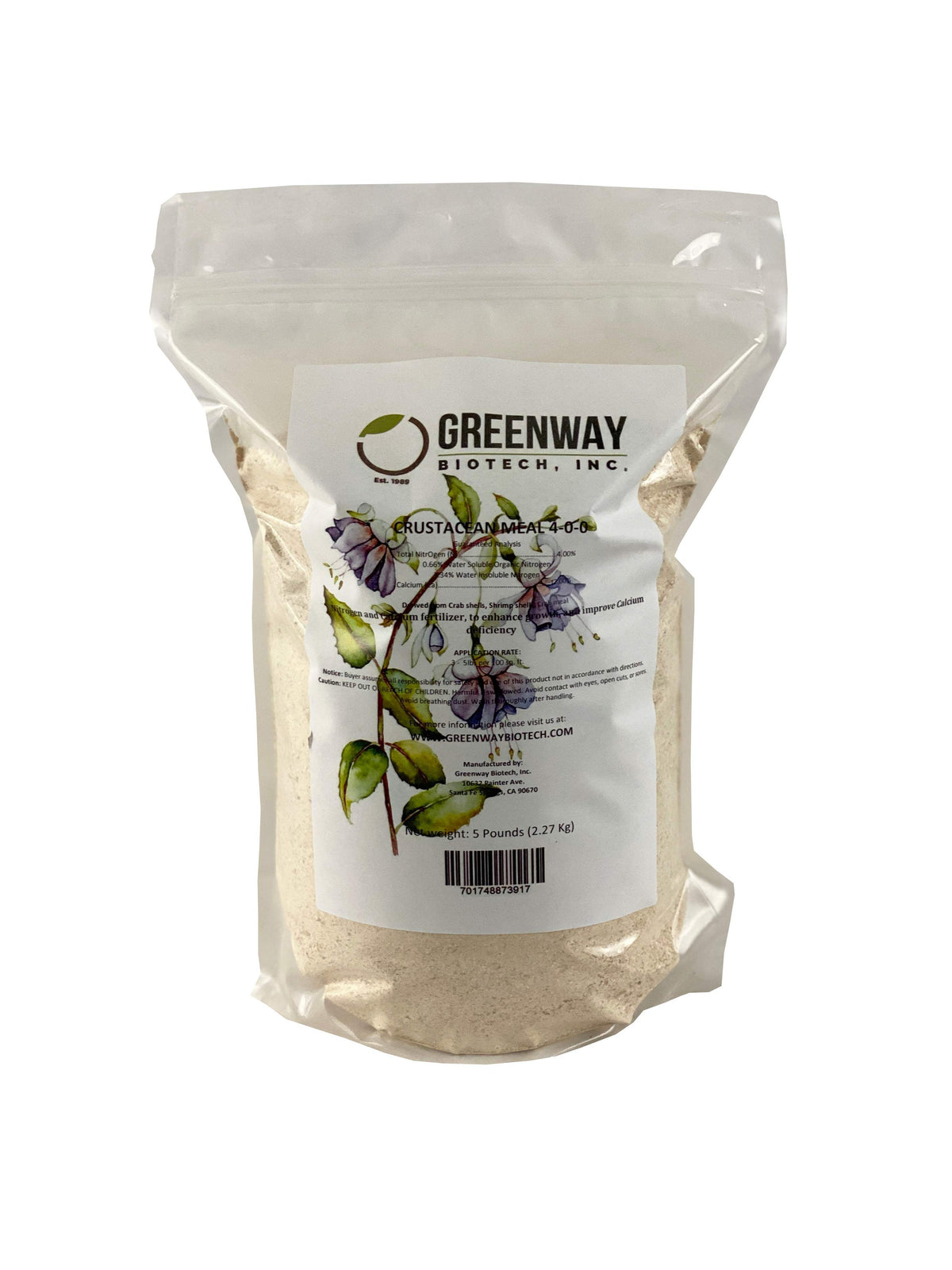
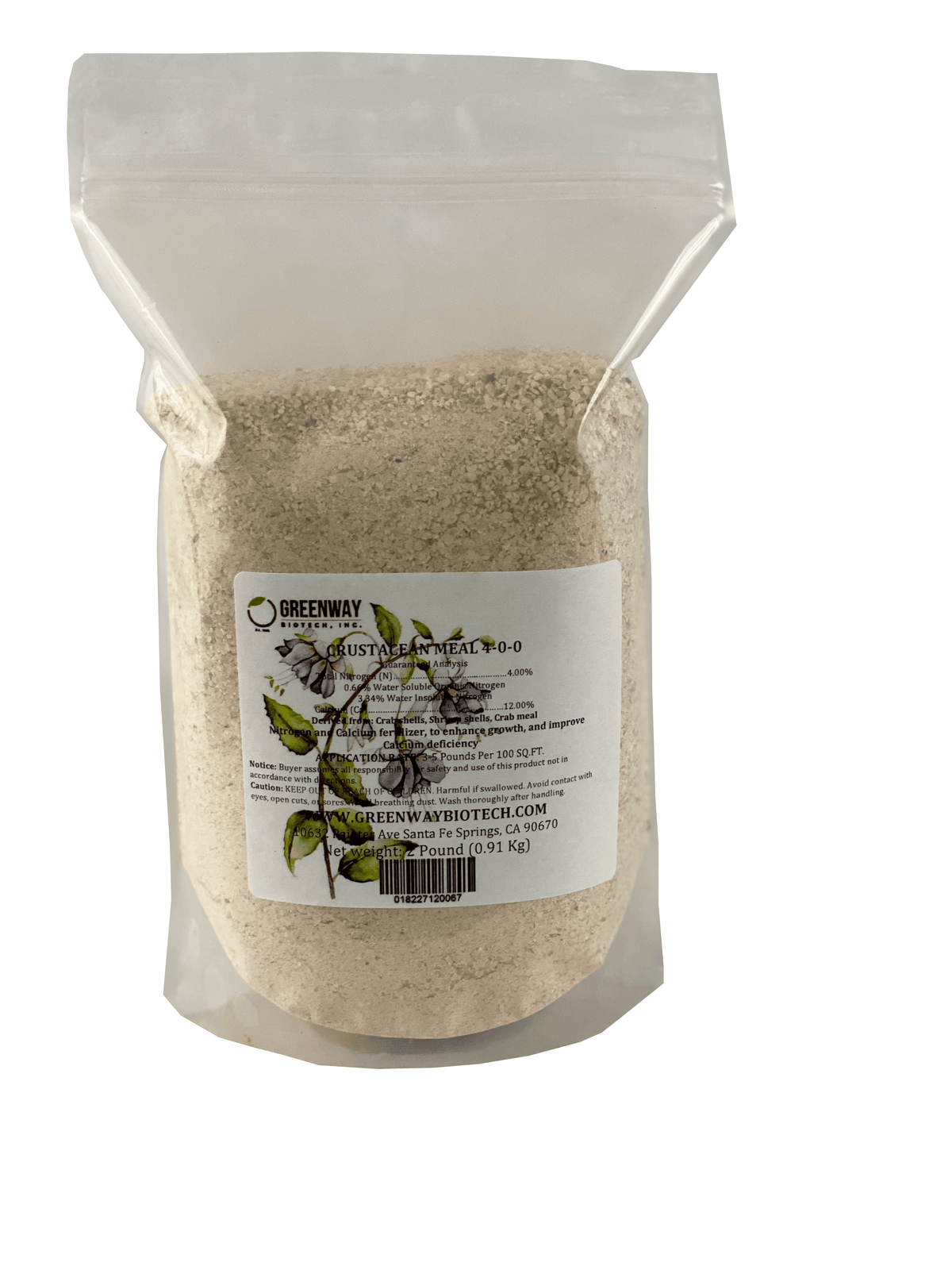
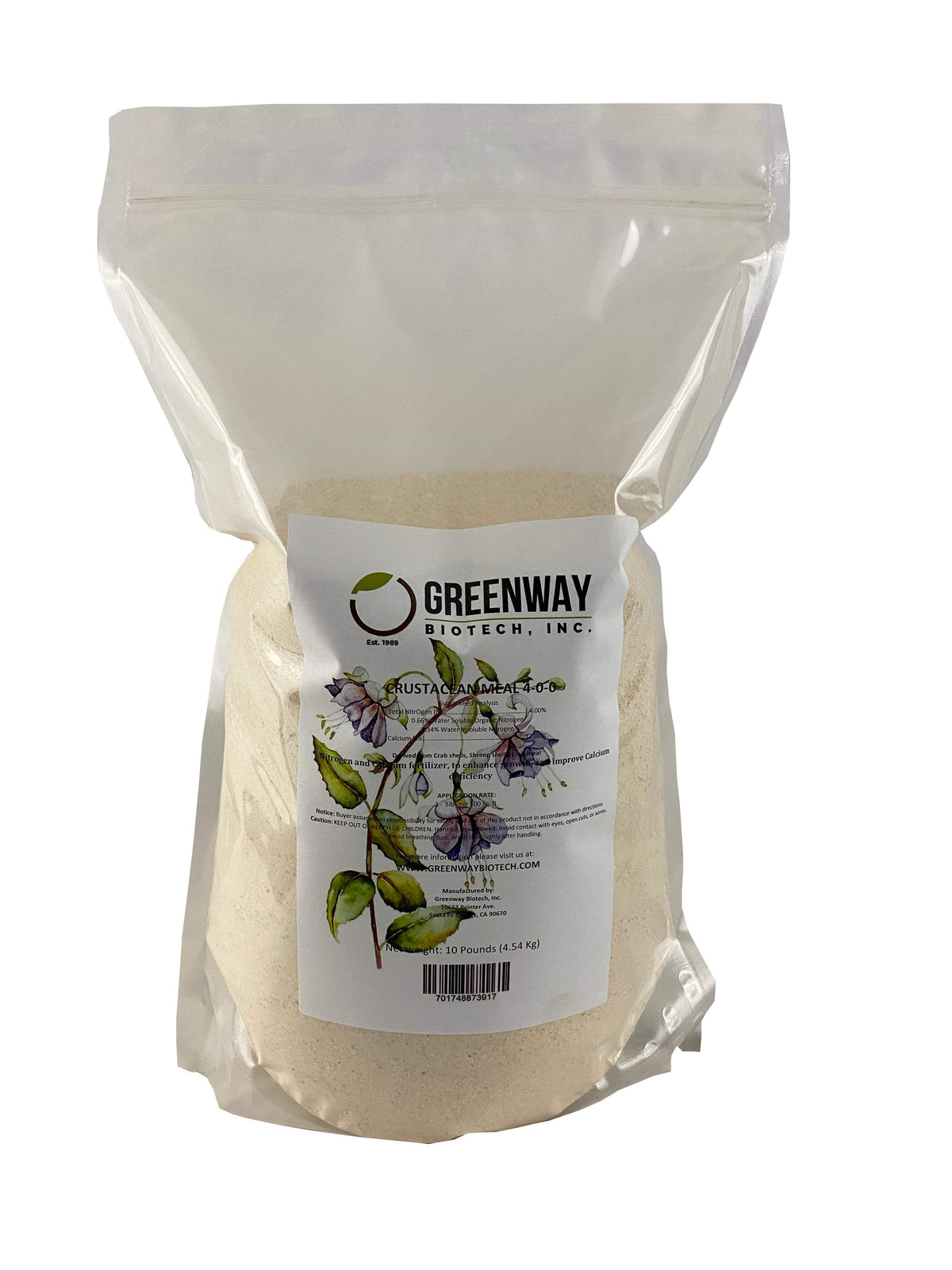
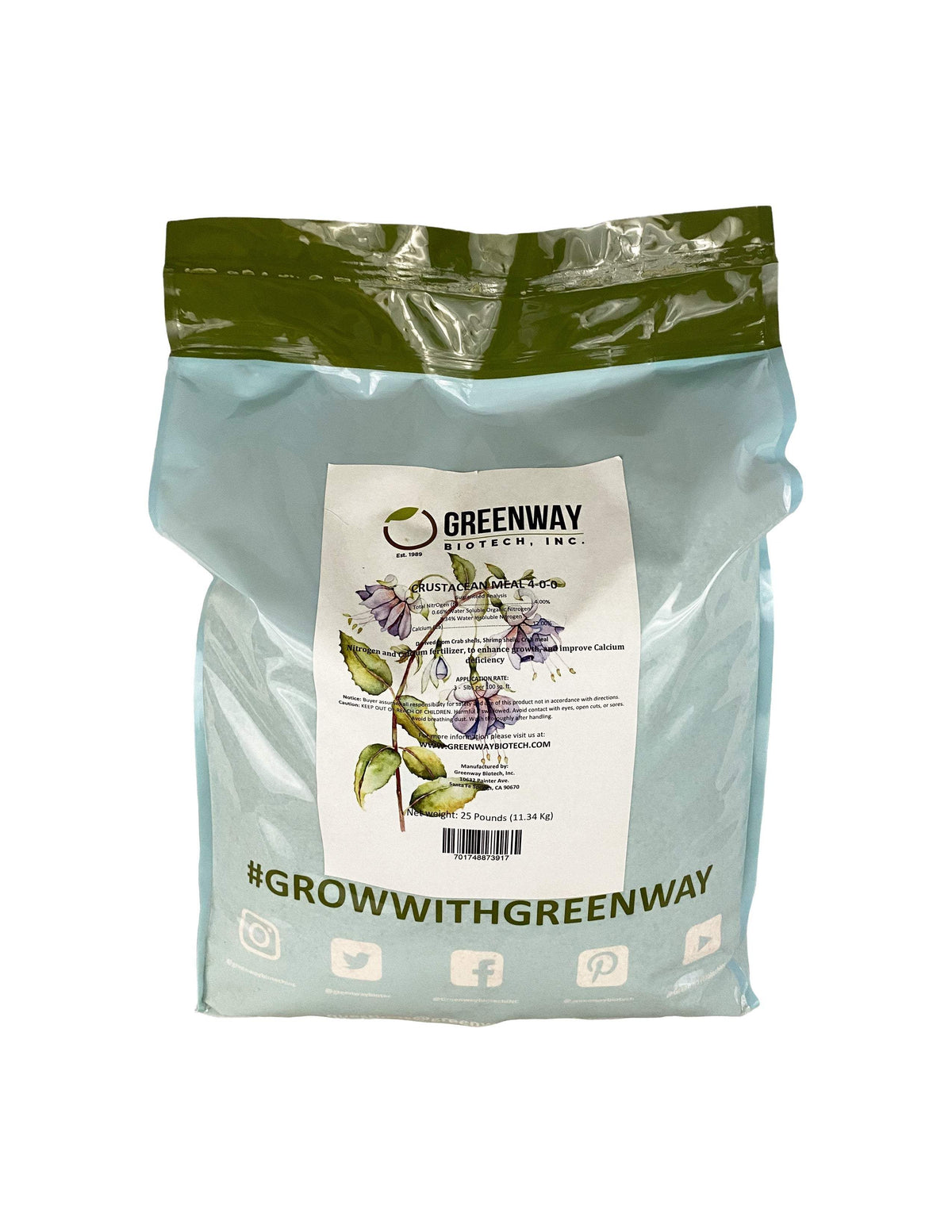
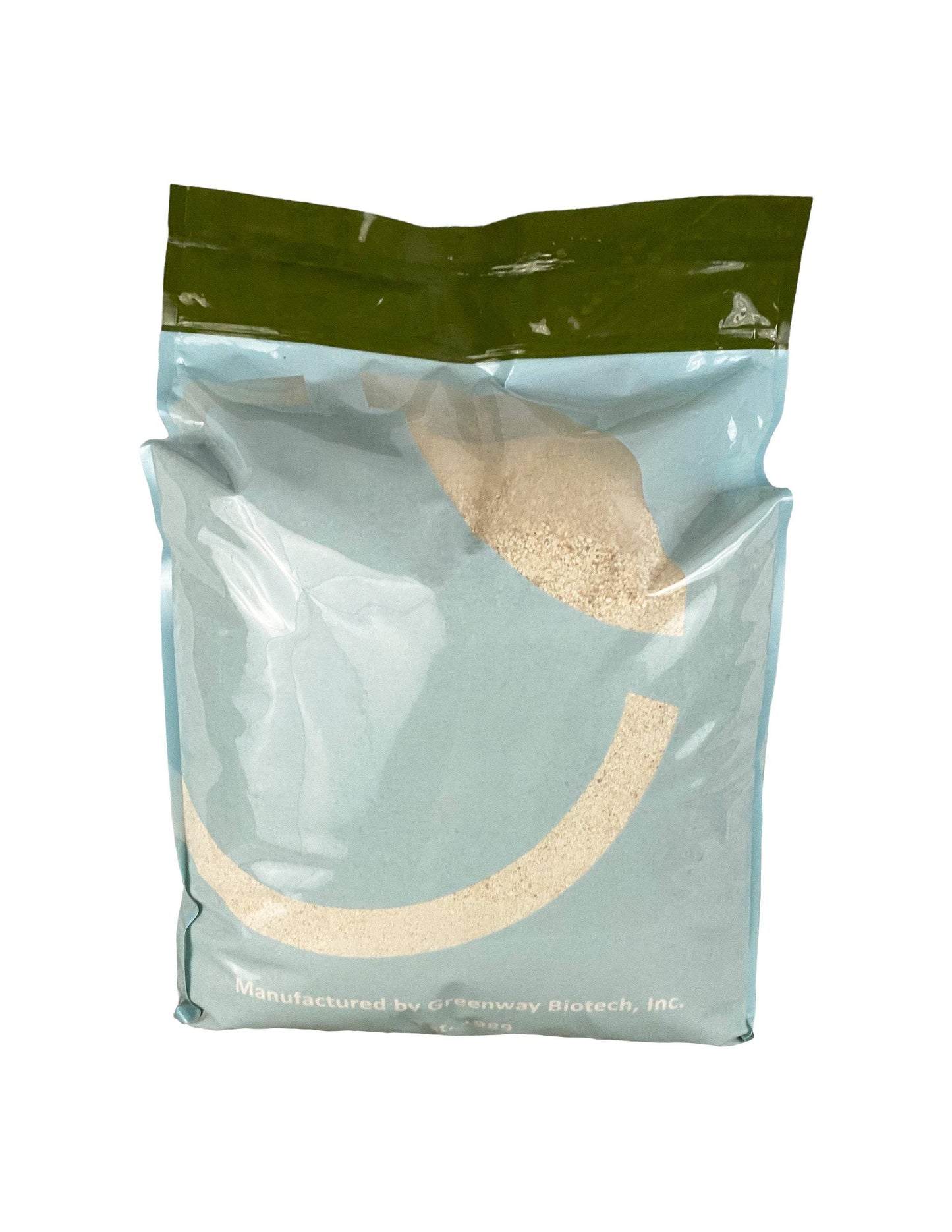
Premium crab and shrimp shell meal with 4% nitrogen, 12% calcium, and chitin — a naturally occurring fiber that feeds beneficial soil microbes and helps support a healthier root zone over time.
Derived from food-grade crab and shrimp shells, delivering a rich blend of 4% nitrogen, 12% calcium, and 1.3% magnesium in every application.
Chitin — the structural fiber in crustacean shells — feeds chitinase-producing microbes in the soil, supporting a more active and resilient root zone biology.
High calcium content supports strong cell walls and firm fruit development, helping reduce calcium-related disorders like blossom end rot and tip burn.
Nitrogen releases gradually over 2–3 months through microbial decomposition, providing sustained feeding without the burn risk of fast-release fertilizers.
Contains 1.3% magnesium — a central component of chlorophyll — supporting healthy green foliage and efficient photosynthesis throughout the season.
Registered with the California Department of Food and Agriculture, meeting strict labeling and safety standards for agricultural and home garden use.
Independently lab tested for heavy metal content so you can apply with confidence in edible gardens, raised beds, and high-production growing environments.
Made from recycled crab and shrimp shells — a seafood processing byproduct — turning waste material into a high-value soil amendment that supports circular agriculture.
Unlike lime-based calcium sources, crustacean meal has minimal effect on soil pH, making it safe to use in both alkaline and mildly acidic garden soils without disrupting pH balance.
Works as a pre-plant soil amendment, container mix additive, side-dress fertilizer, and compost activator — one product that fits multiple steps in any organic nutrition program.
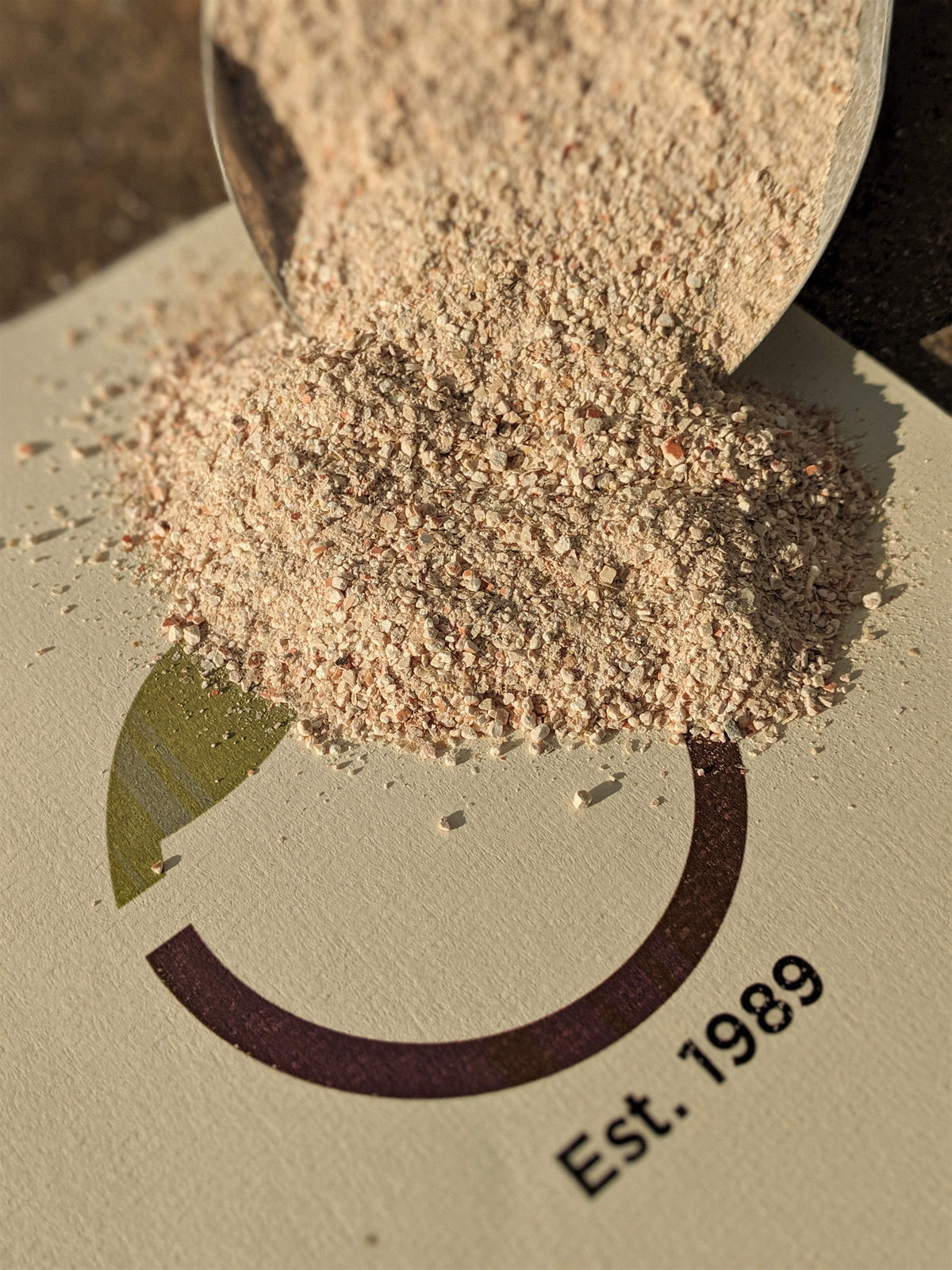
Greenway Biotech's Crustacean Meal is sourced from food-grade crab and shrimp shells — byproducts of the seafood processing industry. These raw materials are dried and ground to a consistent meal texture, preserving their natural chitin, calcium, magnesium, and protein-derived nitrogen. No synthetic additives or binders are used.
Crustacean meal provides slow-release nitrogen through protein hydrolysis, structural calcium for plant cell integrity, and chitin — a natural polysaccharide that stimulates microbial activity in the root zone. Best performance occurs when soil temperatures are above 50°F and soil is kept evenly moist to support the microbial populations that drive nutrient release.
Nitrogen is locked in the protein matrix of crustacean shells and becomes available as soil microbes break down the meal over 2–3 months. This gradual release feeds plants steadily without the runoff risk or burn potential of synthetic nitrogen sources.
Crustacean shell naturally contains no significant phosphorus. For crops with high phosphorus demand — flowers, fruiting vegetables, root crops — pair with Bone Meal 3-15-0 or Fish Bone Meal 4-17-0 for complete nutrition.
Crustacean meal contains minimal potassium. For crops needing potassium for fruit quality and stress resistance, consider pairing with Potassium Sulfate 0-0-53 or Kelp Meal 2-0-4.
Calcium is essential for cell wall formation, membrane integrity, and fruit development. At 12%, crustacean meal delivers meaningful calcium alongside nitrogen — a combination uncommon in single-ingredient fertilizers.
Magnesium is the central atom of the chlorophyll molecule and plays a critical role in photosynthesis, enzyme activation, and phosphorus mobility within the plant.
Chitin is a structural polysaccharide found in crustacean exoskeletons. Research suggests chitin additions to soil stimulate populations of chitinase-producing bacteria and fungi, which may contribute to a more biologically active root environment.
Most organic nitrogen sources (blood meal, feather meal) deliver no calcium. Most calcium sources (gypsum, lime) deliver no nitrogen. Crustacean meal is one of the few amendments that provides both in significant quantities.
No other common fertilizer provides chitin at the levels found in crustacean meal. This makes it a genuinely distinct amendment for gardeners focused on soil biology as a foundation for plant health.
Unlike dolomite lime or oyster shell, crustacean meal has minimal effect on soil pH. Gardeners with well-balanced or alkaline soil can add calcium without risk of pushing pH higher.
Results vary with soil temperature, moisture, and microbial activity. Best performance when soil temperatures are above 50°F and soil is kept evenly moist.
Always incorporate crustacean meal into the top 2–3 inches of soil and water thoroughly after application. Works best when mixed into the soil rather than left on the surface. Soil temperatures above 50°F are needed for microbial breakdown and nutrient release.
| Timing | Rate | Notes |
|---|---|---|
| Pre-plant (4–6 weeks before) | 2–3 lb per 100 sq ft | Mix into top 2–3″ of soil |
| At transplant | 1–2 tbsp per planting hole | Mix with backfill soil before planting |
| Side-dress (monthly) | 2–4 oz per large plant | Work lightly into soil surface |
| Plant Size | Application Rate | Timing |
|---|---|---|
| Young trees (1–3 years) | 1–2 lb per tree | Split 50/50 spring & early summer |
| Mature trees (4+ years) | 2–5 lb per tree | Apply at bud break and again in early summer |
| Berry bushes | 0.5–1 lb per plant | Apply in early spring before new growth |
| Application | Rate | Frequency |
|---|---|---|
| Pre-plant bed preparation | 1.5–2.5 lb per 100 sq ft | Once at bed preparation |
| Top-dress established plants | ½ cup per large plant | Every 8–12 weeks as needed |
| Method | Rate | Notes |
|---|---|---|
| New plantings — mix in | 1–2 tbsp per gallon of soil | Blend thoroughly with potting mix before planting |
| Top-dress established pots | 1–2 tsp per gallon of soil | Work into soil surface; water in well. Every 4–6 weeks. |
| Compost Volume | Rate | Notes |
|---|---|---|
| Per cubic yard of compost | 2–5 lb | Layer between carbon-rich materials; turns help incorporate evenly |
For brassicas (cabbage, broccoli, kale) and root crops (carrots, beets), apply 3 pounds of crustacean meal per 100 sq ft 4–6 weeks before planting and water in well. The calcium supports firm heads and roots, and the chitin can help create a more biologically active soil environment that benefits transplant establishment. Combine with Bone Meal for phosphorus to cover all macronutrient bases before the season starts.
Refer to the Safety Data Sheet (SDS) for complete safety information.
Crustacean meal supplies nitrogen and calcium, but no phosphorus or potassium. Build a complete organic nutrition program by pairing with these complementary products.
Adds high phosphorus for root development, flowering, and fruit set — the nutrient crustacean meal doesn't supply.
Contributes potassium plus 60+ trace minerals and natural growth hormones for balanced crop nutrition.
Fast-release nitrogen boost for heavy feeders or mid-season greening when slow-release nitrogen isn't enough.
Additional water-soluble calcium and sulfur for heavy clay soils, blossom end rot prevention, and improved drainage.
Crustacean meal is made from ground, dried crab and shrimp shells. It naturally contains 4% nitrogen, 12% calcium, and 1.3% magnesium, along with chitin — a structural fiber that feeds beneficial soil microbes. It's a slow-release organic amendment that builds soil biology while providing sustained plant nutrition over 2–3 months.
Chitin is a naturally occurring polysaccharide found in crustacean exoskeletons. When added to soil, it is studied for stimulating populations of chitinase-producing bacteria and fungi. These microbes create a more biologically active root zone, which may support overall plant health. This is an indirect biological effect that develops over several weeks as microbial populations respond to the chitin substrate.
Crustacean meal is a slow-release fertilizer with only 4% nitrogen, making it very unlikely to cause fertilizer burn when used at recommended rates. Nutrients are released gradually through microbial breakdown over 2–3 months. Follow the application rates for your plant type, mix it into the soil, and water in thoroughly.
Yes, crustacean meal has a seafood odor — similar to dried shrimp or crab. The smell is most noticeable when the bag is first opened and immediately after application. Incorporating the meal into soil (rather than leaving it on the surface) and watering it in thoroughly will significantly reduce odor. The scent dissipates within a few days as the material begins to break down. It is noticeably milder than fish meal or blood meal.
When applied as directed and watered into the soil, crustacean meal is generally safe in gardens with pets. However, the seafood scent may attract dogs and other animals, so it's best to water the product in well after application and monitor pets in the area for the first day or two. Discourage direct consumption of the meal in large amounts. Keep bags stored securely away from pets.
Crustacean meal has minimal impact on soil pH — unlike lime-based calcium sources such as dolomite or oyster shell, which actively raise pH. This makes crustacean meal a good calcium source for gardeners who need to add calcium without disturbing a well-balanced or already alkaline soil pH. If you need to raise soil pH significantly, Dolomite Lime is the appropriate amendment.
A white or grayish surface growth sometimes appears after applying organic meals in warm, moist conditions. This is harmless microbial activity — beneficial fungi and bacteria colonizing the organic material — not a problem with the product. To minimize surface growth, work the meal into the top 2–3 inches of soil rather than leaving it on the surface, and water in after application.
No — crustacean meal is rated 4-0-0, meaning it contains no significant phosphorus or potassium. For crops with high phosphorus demand (flowering annuals, fruiting vegetables, bulb crops), pair with Bone Meal 3-15-0 or Fish Bone Meal 4-17-0. For potassium, Kelp Meal 2-0-4 or Potassium Sulfate 0-0-53 are good organic-compatible options.
Not satisfied? Contact us within 90 days of purchase for a full refund or replacement. We stand behind every product we sell.
Greenway Biotech, Inc. has been a California-based fertilizer company since 1989. Family-owned and operated, we serve both commercial growers and dedicated home gardeners with technically accurate products and honest education. Our facility is located at 17861 Road 24, Madera, CA 93638, in the heart of the San Joaquin Valley.
Check back soon — we're building out our organic amendment resource library with in-depth guides on crustacean meal, chitin, calcium management, and more.
Check out our full FAQ page or contact our experts for personalized advice.
Couldn't load pickup availability