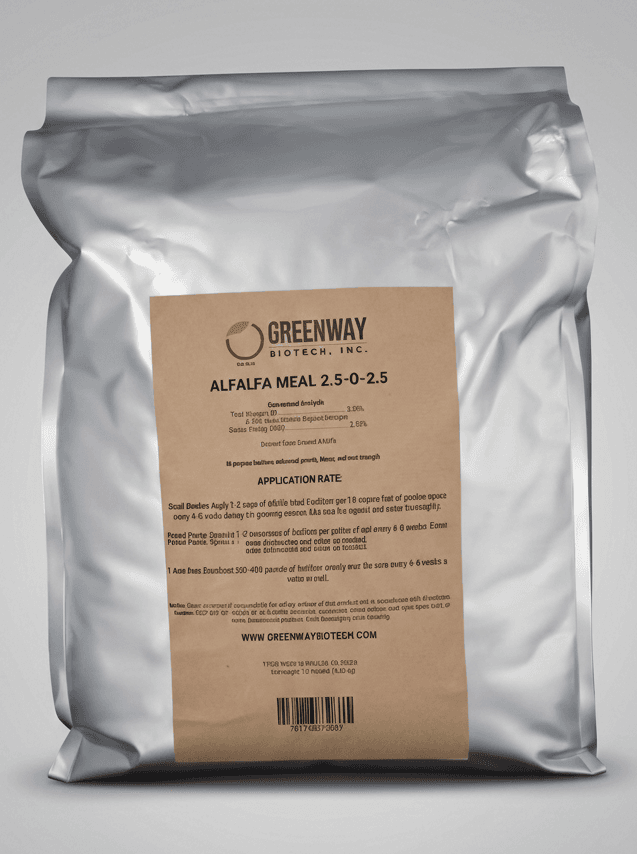
Premium organic alfalfa meal with natural triacontanol — gentle, sustained feeding for roses, vegetables, flower beds, and compost activation. Many gardeners notice a growth response within the first week. Tested for heavy metals.
Contains triacontanol, a naturally occurring fatty alcohol studied for its ability to enhance photosynthesis, stimulate root development, and promote new growth — many gardeners notice a response within the first week of application.
One of the most trusted organic amendments among professional rose exhibitors for decades. Promotes basal breaks (new canes from the base) and abundant, larger blooms without any risk of burning.
Dual-action organic nutrition: triacontanol supports a rapid growth response, while the meal releases nitrogen and potassium gradually over 4–8 weeks as soil microbes break it down.
Feeds beneficial bacteria and fungi in the soil food web. Regular applications increase biological activity, improve nutrient cycling, and build healthier, more resilient soil over time.
Equal parts nitrogen and potassium (2.5-0-2.5) support both vegetative growth and plant vigor in a single application. Pair with a phosphorus source like bone meal for a complete organic feeding program.
Gentle, slow-release organic nutrition that will not burn roots, foliage, or seedlings even when over-applied. Safe for vegetables, flowers, trees, shrubs, and houseplants.
High nitrogen content and microbial stimulation accelerate compost decomposition. Add 2–3 cups per pile to jumpstart breakdown and increase compost quality.
Apply as a dry soil amendment, top dressing, or brew into alfalfa tea for faster nutrient delivery. Finely ground meal steeps quickly — strain and apply the liquid as a root drench or foliar spray.
Adds organic matter that enhances water retention in sandy soils and improves drainage in clay soils. Builds better tilth and root penetration with every application.
Independently lab tested for heavy metal content. CDFA registered, 100% organic, sourced from non-GMO alfalfa, and manufactured in the USA to strict quality standards.
Our Organic Alfalfa Meal is derived from a single, premium-quality source — non-GMO alfalfa grown and processed in the United States. This product is the whole dried alfalfa plant, finely ground to maximize nutrient availability and soil contact.
Alfalfa's deep taproot system mines calcium, magnesium, iron, and other trace minerals from deep soil layers, concentrating them in the plant tissue.
A naturally occurring 30-carbon fatty alcohol found in alfalfa wax, studied for its effects on photosynthesis, root growth, and cell division in treated plants.
This formula provides nitrogen for vegetative growth and potassium (K₂O) for plant vigor and disease resistance. Alfalfa naturally contains no significant phosphorus — pair with a bone meal product for complete NPK coverage. The real distinction is triacontanol, a natural growth stimulant unique to alfalfa that synthetic fertilizers cannot replicate. Best performance when soil temperatures are above 55°F and kept evenly moist.
Moderate, slow-release nitrogen from organic plant protein. Feeds gradually over 4–8 weeks as soil microbes mineralize the meal — promoting steady, healthy foliage growth without the flush-and-crash cycle of synthetic nitrogen.
Alfalfa naturally contains no significant phosphorus. If your soil test shows a phosphorus need, pair with Bone Meal 3-15-0 or Fish Bone Meal 4-17-0 for complete nutrition.
Potassium is required for the activity of numerous enzymes and supports disease resistance, drought tolerance, bloom quality, and overall plant vigor. Especially important for roses, flowering perennials, and fruiting vegetables that demand strong K levels throughout the growing season.
Triacontanol is a natural plant growth regulator found in alfalfa wax, studied for its effects on photosynthetic rate, cell division, and root elongation — benefits no other common organic meal provides.
The combination of triacontanol and balanced N-K nutrition is associated with new basal canes (breaks from the base of rose bushes), leading to more vigorous, productive plants with increased bloom capacity.
Unlike synthetic fertilizers that bypass the soil food web, alfalfa meal feeds beneficial bacteria and fungi directly. This builds long-term soil health, improves nutrient cycling, and creates a self-sustaining growing environment.
Organic amendments like alfalfa meal release nutrients slowly through microbial decomposition, so there's no risk of chemical burn to roots, foliage, or seedlings — even when generously applied. Safe to use liberally throughout the growing season.
Results vary with soil temperature, moisture, and microbial activity. Best performance when soil temperatures are above 55°F.
Apply alfalfa meal at planting time and throughout the growing season. Work into soil or use as top dressing. Water in well after application to activate microbial breakdown. Can be reapplied every 4–6 weeks without risk of burning.
Note: Nutrient release depends on soil microbial activity. For best results, apply when soil temperatures are consistently above 55°F.
| Application Type | Rate | Frequency |
|---|---|---|
| Vegetable Gardens | 2–5 lb per 100 sq ft | Every 4–6 weeks |
| Flower Beds | 3–4 lb per 100 sq ft | Monthly during bloom |
| Lawns | 20 lb per 1,000 sq ft | 3–4 times per year |
| Trees & Shrubs | 1–2 cups per plant | Every 6–8 weeks |
| Potted Plants (per gallon pot) | 1–2 teaspoons | Every 4–6 weeks |
| Compost Activator | 2–3 cups per pile | With each new layer |
| Crop | Application Rate | Notes |
|---|---|---|
| Roses | 1 cup per bush | Monthly during growing season |
| Tomatoes | ¼ cup per plant | At transplant & first flowering |
| Lettuce & Greens | 3 lb per 100 sq ft | Before planting |
| Root Vegetables | 2 lb per 100 sq ft | Work into rows |
| Annual Flowers | ¼ cup per plant | At planting |
| Package Size | Light (2 lb/100 sq ft) | Standard (3.5 lb/100 sq ft) | Heavy (5 lb/100 sq ft) |
|---|---|---|---|
| 1 lb | 50 sq ft | 29 sq ft | 20 sq ft |
| 2 lb | 100 sq ft | 57 sq ft | 40 sq ft |
| 4 lb | 200 sq ft | 114 sq ft | 80 sq ft |
| 15 lb | 750 sq ft | 429 sq ft | 300 sq ft |
| 40 lb | 2,000 sq ft | 1,143 sq ft | 800 sq ft |
For excellent rose results, apply 1 cup of alfalfa meal around the drip line of each bush in early spring to encourage basal breaks — those thick new canes that produce the biggest flowers. Follow up monthly through the growing season, and pair with Epsom Salt for deeper green foliage.
Refer to the Safety Data Sheet (SDS) for complete safety information.
Build a complete organic nutrition program by pairing alfalfa meal with these complementary products:
Adds the phosphorus alfalfa meal lacks. Essential for root development, flowering, and fruit set.
High-nitrogen organic boost for heavy feeders like corn, tomatoes, and leafy greens.
Adds over 60 trace minerals and natural cytokinins for stress resistance and root health.
Magnesium for chlorophyll production — especially beneficial for roses when paired with alfalfa meal.
Marine-sourced phosphorus alternative with faster breakdown than traditional bone meal.
Adds calcium without changing soil pH. Improves clay soil structure and root penetration.
Alfalfa meal contains triacontanol, a natural growth stimulant studied for its role in promoting basal breaks (new canes from the base) and prolific blooming. Rose growers have relied on alfalfa meal for decades as their go-to organic fertilizer. The balanced 2.5-0-2.5 formula provides nitrogen for foliage and potassium (K₂O) for bloom development.
Many gardeners notice a growth response within the first week or two thanks to triacontanol. Full nutrient release occurs gradually over 4–8 weeks as soil microbes break down the organic matter. Results vary with soil temperature, moisture, and microbial activity.
Our Alfalfa Meal is a finely ground meal (powder texture), not pellets. This form breaks down faster in soil, mixes easily into potting media, and is ideal for making alfalfa tea or activating compost piles. Pellets take significantly longer to decompose.
Unlike synthetic fertilizers that deliver a quick nutrient spike and can burn plants, organic alfalfa meal feeds gently over 4–8 weeks and is completely non-burning. It also builds long-term soil health by adding organic matter and feeding beneficial microbes — something synthetic fertilizers cannot do. For a deeper look at the differences, read Organic vs Synthetic Fertilizer: Key Differences and Tips.
Alfalfa meal has a mild, earthy scent that does not generally attract pets or garden pests. It's much less appealing to animals than bone meal or blood meal. For best results, work it into the top few inches of soil after application rather than leaving it on the surface.
Yes — alfalfa tea is an excellent way to deliver nutrients and triacontanol directly to roots and foliage. Add 1 cup of alfalfa meal to 5 gallons of water, steep for 24–48 hours stirring occasionally, strain, and apply to soil or use as a foliar spray. Use within a few days for best results.
Yes. Alfalfa meal is a gentle, non-burning organic plant food safe for vegetables, flowers, trees, shrubs, and houseplants. It's particularly popular for roses, tomatoes, peppers, and flowering perennials. Safe to use around children and pets when applied as directed. See the Best Fertilizer for Vegetable Gardens guide for how to fit alfalfa meal into a broader edible garden program.
Alfalfa meal adds organic matter that improves soil structure and water retention, stimulates beneficial microbial activity, and enhances nutrient cycling. Regular use builds healthier, more productive soil over time — feeding both your plants and the ecosystem that supports them. Learn more about the role of soil biology in Soil Microbes and Plant Health.
Absolutely. Alfalfa meal combines well with other organic amendments. Popular pairings include Bone Meal (adds phosphorus), Kelp Meal (adds trace minerals), and Epsom Salt (adds magnesium). See the Complete Your System section for specific recommendations.
Alfalfa meal has a minimal effect on soil pH. As it decomposes, it may contribute a very slight acidifying tendency, but the impact is negligible in most garden soils. It's safe to use without worrying about pH swings.
Alfalfa meal has a mild, earthy, hay-like scent — much less odor than blood meal, fish-based products, or manure. Most gardeners find the smell pleasant and barely noticeable once worked into the soil.
In warm, humid conditions you may notice a white or gray surface mold on alfalfa meal left on top of soil. This is harmless — it's a sign of beneficial microbial activity. To prevent it, work the meal into the top few inches of soil and water in after application.
Alfalfa meal is generally safe around pets when applied as directed. It's a natural plant material with low toxicity. However, discourage pets from eating it directly in large amounts, as it could cause mild digestive upset. Working it into the soil after application keeps it out of reach.
When you choose Greenway Biotech, you're choosing quality, transparency, and a company that gives back.
If you're not completely satisfied, we offer a 90-day money-back guarantee. Simply return the unused portion in its original packaging, and we'll process a full refund. No questions asked.
We're committed to sustainable practices, including:
1% of all profits go to our foundation, focused on improving educational opportunities for children in agricultural communities.
Check out our full FAQ page or contact our experts for personalized advice.
Couldn't load pickup availability