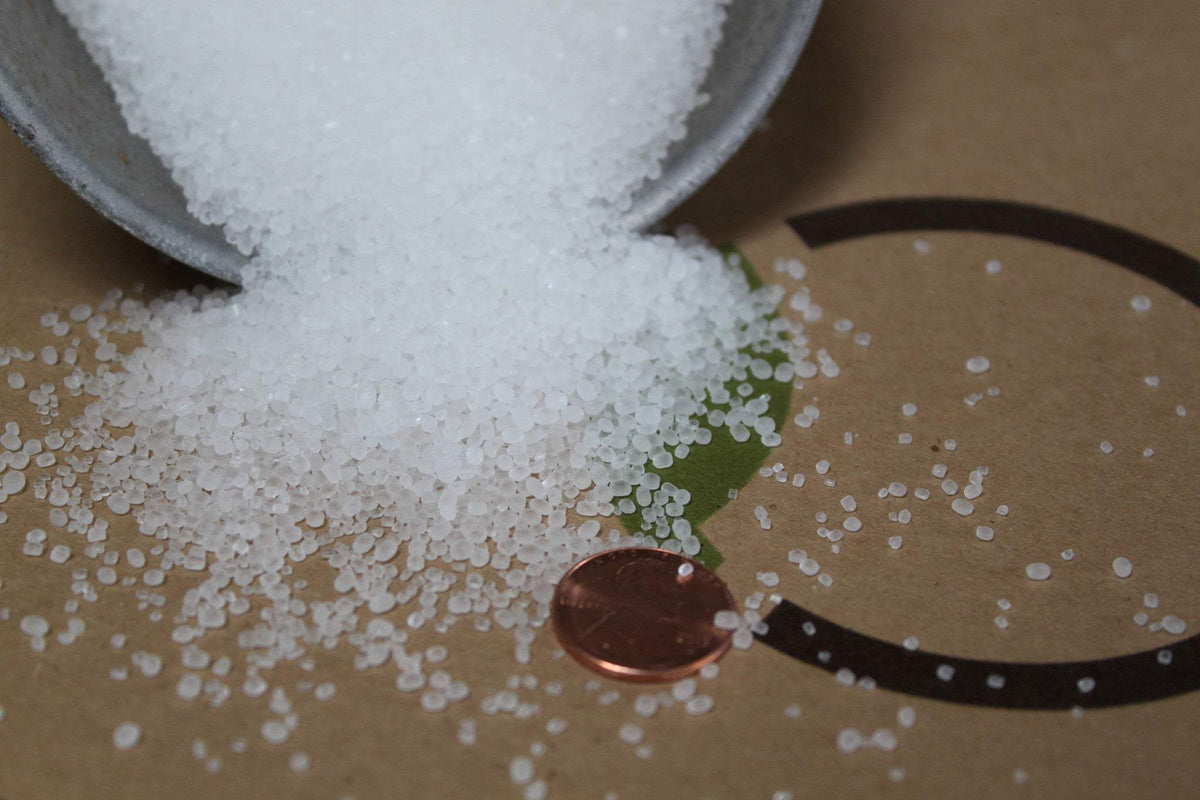
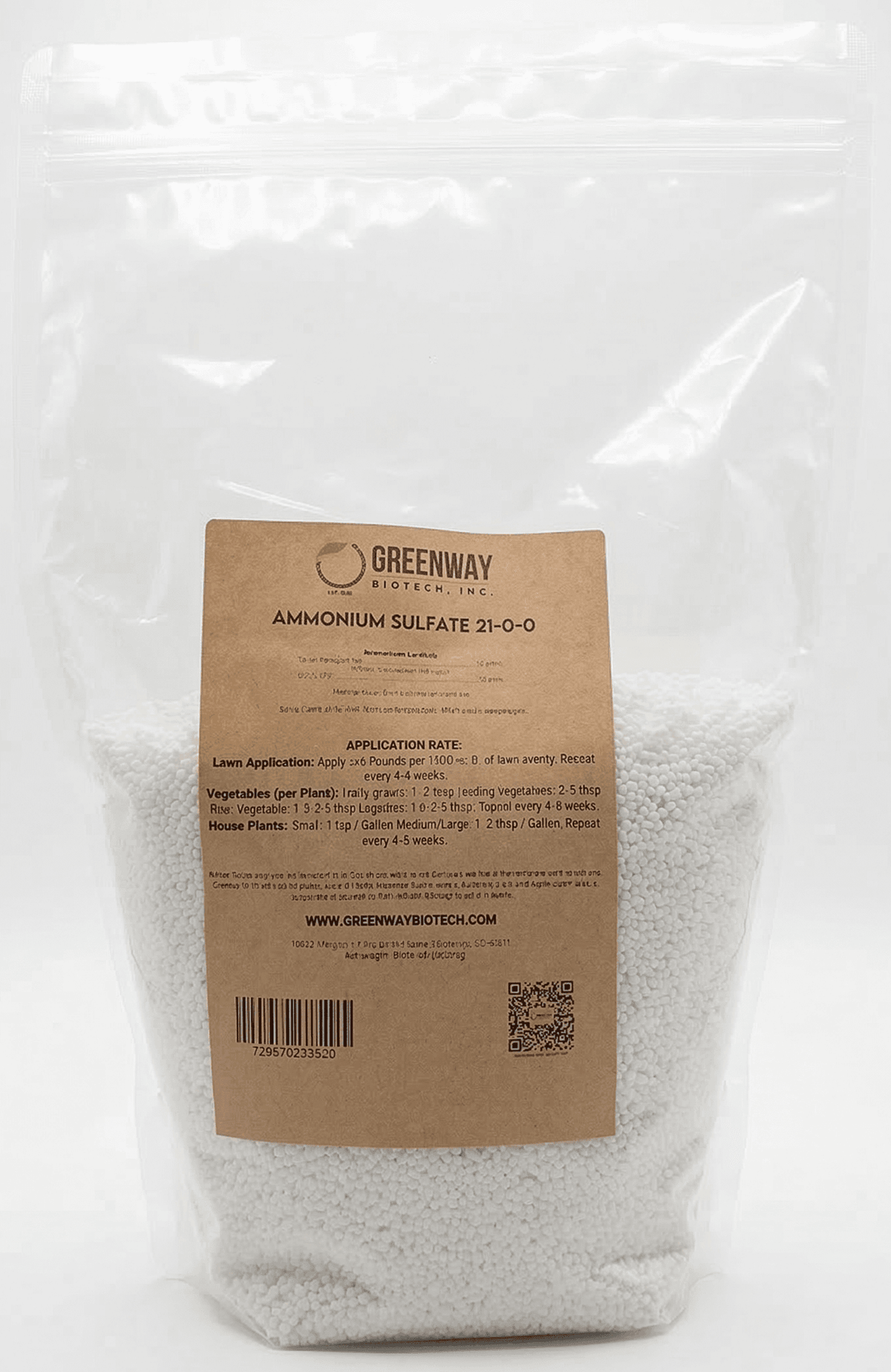
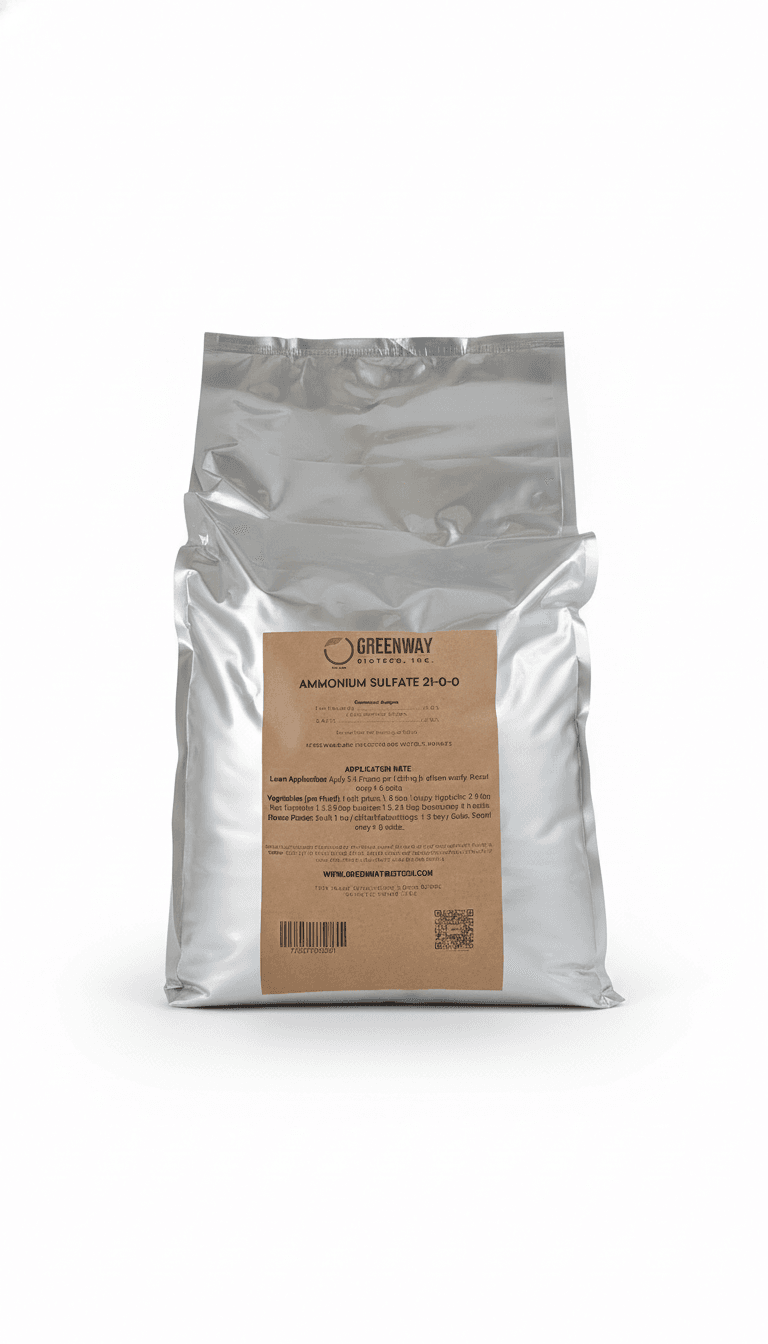
Fast-acting nitrogen and sulfur fertilizer for lawns, vegetables, and acid-loving plants. 100% water-soluble formula delivers rapid green-up while gradually acidifying alkaline soils — ideal for blueberries, azaleas, and rhododendrons.
Delivers nitrogen as NH₄⁺ — the ammoniacal form preferred by blueberries and other acid-loving plants. Fast uptake drives visible green-up in 7–10 days.
Sulfate sulfur (SO₄²⁻) is immediately available for protein synthesis, chlorophyll formation, and enzyme activation — one of the highest sulfur concentrations available in a water-soluble fertilizer.
Dissolves completely with no residue, making it ideal for soil drench, fertigation, and drip irrigation. No clogging, no guesswork.
Gradually lowers soil pH over time as ammonium converts to nitrate, releasing hydrogen ions. Creates and maintains the ideal acidic conditions for blueberries, azaleas, and camellias.
Provides both nitrogen and sulfur nutrition in a single application — no need for a separate sulfur supplement when both nutrients are deficient.
Registered with the California Department of Food and Agriculture. Every batch meets state nutrient content standards for fertilizer quality.
Independently tested for heavy metal content. Results consistently well below required limits for garden and agricultural use. Certificate of Analysis available.
High nutrient concentration means less product per application. A small amount delivers meaningful nitrogen and sulfur — cost-effective for large areas.
Manufactured domestically under strict quality controls by a family-owned company with 35+ years in specialty fertilizers. Consistent purity and nutrient content in every bag, backed by our 90-day satisfaction guarantee.
Effective for lawns, vegetables, fruit trees, ornamentals, and houseplants. Works in soil, container, and hydroponic applications wherever nitrogen and sulfur are needed.
Ammonium sulfate is a pure, single-compound fertilizer manufactured in the USA through a controlled industrial process. Each lot is tested for nutrient analysis and heavy metal content to meet CDFA registration requirements.
Produced by reacting ammonia gas with sulfuric acid, forming a stable crystalline salt. This process ensures consistent purity, nutrient content, and solubility in every batch. Provides 21% nitrogen as ammonium (NH₄⁺) and 24% sulfur as sulfate (SO₄²⁻).
The ammoniacal form of nitrogen. Immediately available for plant uptake and particularly well-suited to acid-loving crops like blueberries that perform best with ammonium rather than nitrate nitrogen.
The plant-available form of sulfur. Directly absorbed by roots without requiring microbial conversion. Supports chlorophyll production, protein synthesis, and enzyme function from first application.
Nitrogen is a core component of chlorophyll and amino acids. As ammonium (NH₄⁺), it drives rapid vegetative growth, deep green color, and recovery from chlorosis. Ammonium nitrogen is the preferred form for acid-loving plants.
Not included. Use ammonium sulfate when your soil test shows adequate phosphorus. Pair with MAP 12-61-0 or Bone Meal 3-15-0 when phosphorus is also needed.
Not included. For a complete program, pair with Potassium Sulfate 0-0-53 or MKP 0-52-34 when potassium is also deficient.
Sulfur is the fourth most important plant nutrient. As sulfate (SO₄²⁻), it is immediately plant-available and essential for chlorophyll production, protein synthesis, enzyme activation, and oil formation in crops.
Most fertilizers supply nitrogen as nitrate (NO₃⁻), which has an alkalizing effect in the root zone. Ammonium sulfate supplies nitrogen exclusively as ammonium (NH₄⁺). When soil bacteria convert ammonium to nitrate through nitrification, hydrogen ions (H⁺) are released — gradually lowering soil pH. This is precisely why ammonium sulfate is the preferred nitrogen source for blueberries, azaleas, rhododendrons, and camellias: it feeds plants while simultaneously creating the acidic conditions these crops require.
The acidifying effect of ammonium sulfate is gradual and cumulative. Over a full growing season of regular applications, many soils show a 0.2–0.5 pH unit reduction, though results vary considerably with soil texture, buffering capacity, organic matter content, and starting pH. Sandy soils with low buffering capacity acidify faster; clay soils and those with high organic matter respond more slowly. Always test soil pH before first application and retest every 4–6 weeks to track changes and prevent over-acidification.
| Plant Type | Target pH | AMS Benefit | Notes |
|---|---|---|---|
| Blueberries | 4.5–5.5 | Excellent | Creates ideal conditions; test every 6 months |
| Azaleas / Rhododendrons | 5.0–6.0 | Excellent | Maintains acidity in alkaline regions |
| Camellias | 5.5–6.5 | Good | Monitor — avoid dropping below 5.5 |
| Lawn Grass | 6.0–7.0 | Good | Provides N + slight acidification if needed |
| Vegetables | 6.0–6.8 | Good | Supplies nitrogen; monitor pH quarterly |
| Feature | Ammonium Sulfate 21-0-0 | Urea 46-0-0 | Calcium Nitrate 15.5-0-0 |
|---|---|---|---|
| Nitrogen % | 21% | 46% | 15.5% |
| Nitrogen Form | NH₄⁺ (ammoniacal) | Urea → converts to NH₄⁺ | NO₃⁻ (nitrate) |
| Sulfur % | 24% | 0% | 0% |
| Secondary Nutrient | Sulfur 24% | None | Calcium 19% |
| pH Effect | Acidifying | Mildly acidifying | Alkalizing |
| Speed of Action | Fast (3–7 days) | Moderate (7–14 days) | Very fast (2–5 days) |
| Best For | Acid-loving plants, alkaline soils, sulfur deficiency | High-N needs, neutral soils | Calcium-deficient soils, fruiting crops |
| Burn Risk | Moderate — water in well | Low | Moderate |
Bottom line: Choose Ammonium Sulfate when you need both nitrogen and sulfur, or when lowering soil pH is beneficial. Choose Urea for maximum nitrogen concentration in neutral soils. Choose Calcium Nitrate when calcium is also needed or soil is already acidic.
Always dissolve or water in thoroughly after application to prevent foliar burn and move nutrients into the root zone. Apply when temperatures are below 85°F to reduce volatilization risk.
| Area | AMS Rate per Application | Actual N Provided | Frequency |
|---|---|---|---|
| Per 1,000 sq ft | 3–5 lb | 0.63–1.05 lb N | Every 4–6 weeks |
| Per Acre | 120–200 lb | 25–42 lb N | Based on soil test |
| Crop Type | Per 1,000 sq ft | Per Plant | Timing |
|---|---|---|---|
| Leafy Greens (lettuce, kale) | 1–2 lb | 1–2 tbsp | Every 3–4 weeks |
| Fruiting Crops (tomatoes, peppers) | 2–3 lb | 2–3 tbsp | At transplant, then at flowering |
| Root Crops (carrots, beets) | 1.5–2.5 lb | 1.5–2.5 tbsp | At planting only; avoid later apps |
| Plant Type | Rate per Application | Frequency | Target pH |
|---|---|---|---|
| Blueberries (mature) | ¼–½ cup per bush | 2× per year (early spring + fall) | 4.5–5.5 |
| Azaleas / Rhododendrons | ¼ cup per foot of height | 2× per year | 5.0–6.0 |
| Camellias | ⅓ cup per plant | 2× per year | 5.5–6.5 |
| Hydrangeas (blue flowers) | ¼ cup per plant | Monthly during growing season | 5.2–5.5 |
| Container Size | Rate (dissolved in water) | Frequency |
|---|---|---|
| 4–6" pots | ½ tsp per gallon | Every 4–6 weeks during active growth |
| 8–10" pots | 1 tsp per gallon | Every 4–6 weeks |
| 12"+ pots | 1 tbsp per gallon (up to 1.5 tbsp for large, actively growing specimens in well-draining media) | Every 4–6 weeks |
For established blueberry bushes, apply ¼–½ cup per bush in early spring just as new growth begins, then again in early fall after harvest. Water in well and mulch with pine bark after each application to help maintain soil acidity. Test pH every 6 months — if pH drops below 4.5, skip the next application and retest.
Refer to the Safety Data Sheet (SDS) for complete safety and emergency information.
Ammonium sulfate provides nitrogen and sulfur — build a complete nutrient program with these complementary products.
High-phosphorus water-soluble fertilizer for root establishment, flowering, and fruiting. Pairs well with ammonium sulfate in a complete N-P-K program.
Adds potassium and additional sulfur without changing soil pH. Ideal complement when potassium is also deficient in acid-loving plant programs.
Provides both phosphorus and potassium in one water-soluble formula. A clean, chloride-free option for sensitive crops and hydroponic systems.
Higher nitrogen concentration for situations where sulfur is not needed or soil pH is already optimal. Cost-effective for large-scale N applications.
When calcium is deficient or soil is already acidic. Nitrate nitrogen with a pH-raising effect — the counterbalance to ammonium sulfate.
Have a specific question about rates, crops, or troubleshooting? Visit our dedicated Ammonium Sulfate FAQ page for answers covering blueberries, Zoysia, Bermuda grass, pomegranates, storage, and more.
Ammonium sulfate is a water-soluble inorganic salt — (NH₄)₂SO₄ — that provides 21% nitrogen as ammonium (NH₄⁺) and 24% sulfur as sulfate (SO₄²⁻). The 21-0-0 designation follows the standard NPK format: 21% nitrogen, 0% phosphorus, 0% potassium. The sulfur is not represented in the NPK numbers but is listed separately on the guaranteed analysis label. For a deeper look at how nitrogen forms differ, see our guide on the best nitrogen fertilizers.
Yes, ammonium sulfate gradually acidifies soil over time. As soil bacteria convert ammonium (NH₄⁺) to nitrate (NO₃⁻) through nitrification, hydrogen ions (H⁺) are released, lowering soil pH. Over a full growing season of regular applications, many soils show a 0.2–0.5 pH unit reduction, though results vary with soil texture, buffering capacity, organic matter, and starting pH. Sandy soils respond faster; clay soils and those with high organic matter buffer change more slowly. Always test soil pH before first application and retest every 4–6 weeks to monitor progress and avoid over-acidification.
Yes — ammonium sulfate is one of the best nitrogen sources for blueberries for two reasons. First, blueberries are poorly adapted to nitrate nitrogen (NO₃⁻) and perform significantly better when nitrogen is supplied in the ammonium form (NH₄⁺). Second, the acidifying effect of ammonium sulfate helps maintain the pH 4.5–5.5 range blueberries require. Apply ¼–½ cup per mature bush twice yearly (early spring and after harvest in fall), water in well, and test soil pH every 6 months. For a full berry fertilization guide, see What Is the Best Fertilizer for Berries?
Very quickly. As a 100% water-soluble fertilizer, ammonium sulfate dissolves and becomes plant-available within 24–48 hours when watered in properly. Visible greening typically appears within 7–10 days. The nitrogen effect lasts 4–6 weeks before another application may be needed. The sulfur and pH-lowering effects accumulate over multiple applications and soil seasons.
Ammonium sulfate mixes well with most phosphorus and potassium fertilizers in solution. Avoid mixing with lime or other alkaline materials, which neutralize the acidifying effect. Critical: Avoid dry-blending or storing ammonium sulfate in contact with urea — when these two granular materials meet moisture together, they form a hygroscopic mass that is difficult to separate. In dilute aqueous solution this reaction does not occur; mixing both in tank water is generally acceptable. As always, jar-test unfamiliar tank combinations before large-scale application.
Yes, when used as directed. Our ammonium sulfate is independently tested for heavy metal content, with results consistently well below required limits for garden and agricultural use. Apply as a side-dress 4–6 inches from plant stems, water in thoroughly, and reduce or discontinue applications 2–3 weeks before harvest for leafy greens and fruiting vegetables.
Yes, it can cause rust-colored staining on concrete, pavers, and stonework. If granules fall on hard surfaces, sweep or rinse them off immediately with plenty of water. To prevent staining, apply away from walkways and driveways, and water in promptly after application to dissolve any granules that land near paved areas.
Both supply nitrogen, but they differ significantly. Ammonium sulfate (21-0-0) provides nitrogen immediately as ammonium, includes 24% sulfur, and has an acidifying effect on soil pH. Urea (46-0-0) contains more than double the nitrogen per pound but must first convert through soil bacteria before becoming plant-available, contains no sulfur, and has a milder acidifying effect. Choose ammonium sulfate when sulfur is needed or when lowering pH is a goal; choose urea when nitrogen concentration and cost-per-pound of N are the primary factors.
Store in a cool, dry location in the original sealed container. Ammonium sulfate is hygroscopic — it absorbs moisture from the air and will clump if left unsealed. Keep away from urea, lime, and alkaline materials. Properly stored, it has an indefinite shelf life. Keep out of reach of children and pets.
→ More questions? See the full Ammonium Sulfate FAQ page — covers Zoysia, Bermuda grass, pomegranates, foliar rates, pet safety, and more.
Not satisfied with your results? Contact us within 90 days for a full refund — no questions asked. We stand behind every product we sell.
A portion of Greenway Biotech's sales supports youth gardening and agricultural education programs in our community. Learn more at greenway.foundation.
Family-owned and operated since 1989 in California. For over 35 years, we've specialized in high-purity fertilizers and plant nutrition products — making gardens, and their humans, healthier.
Couldn't load pickup availability