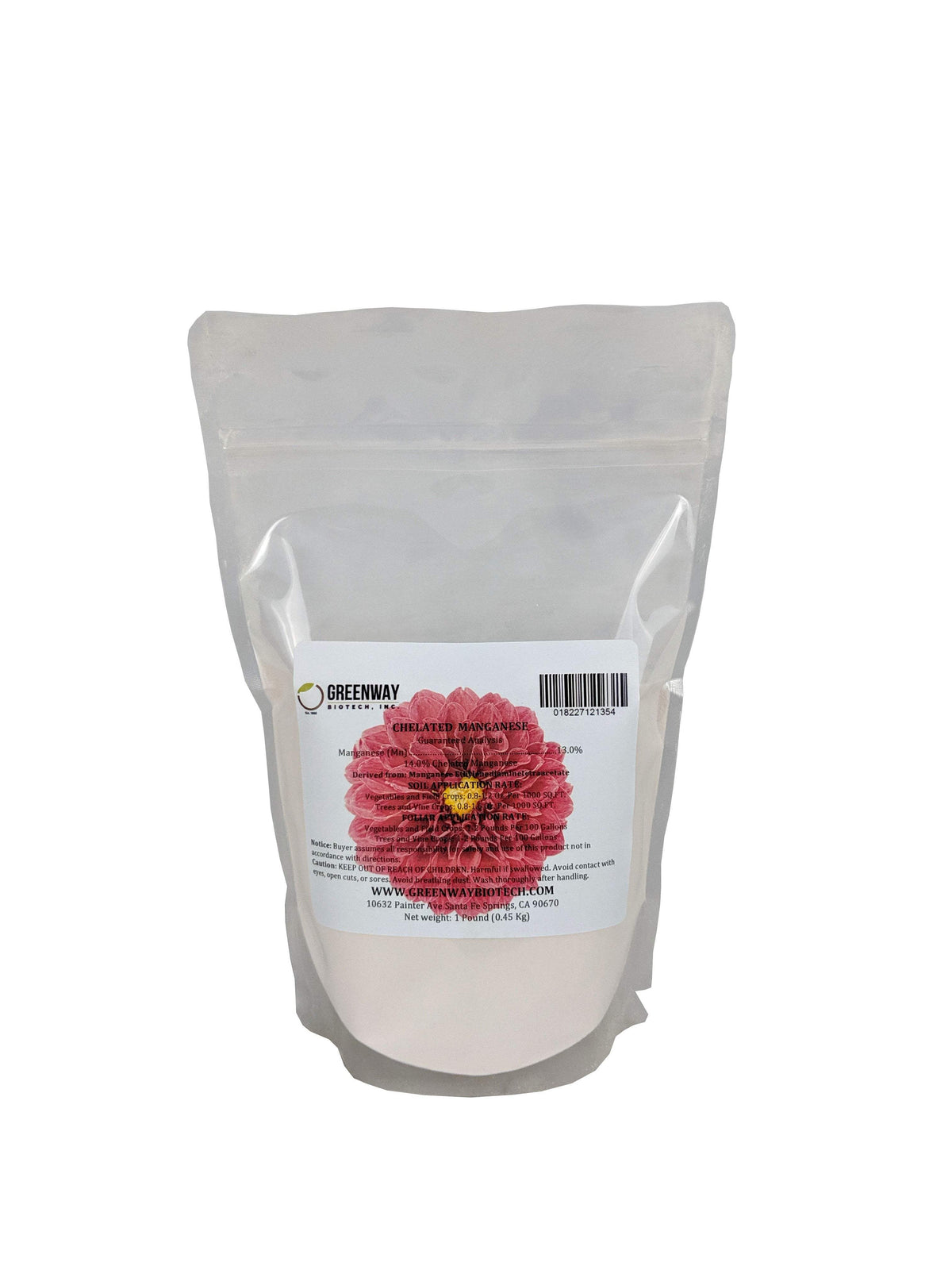
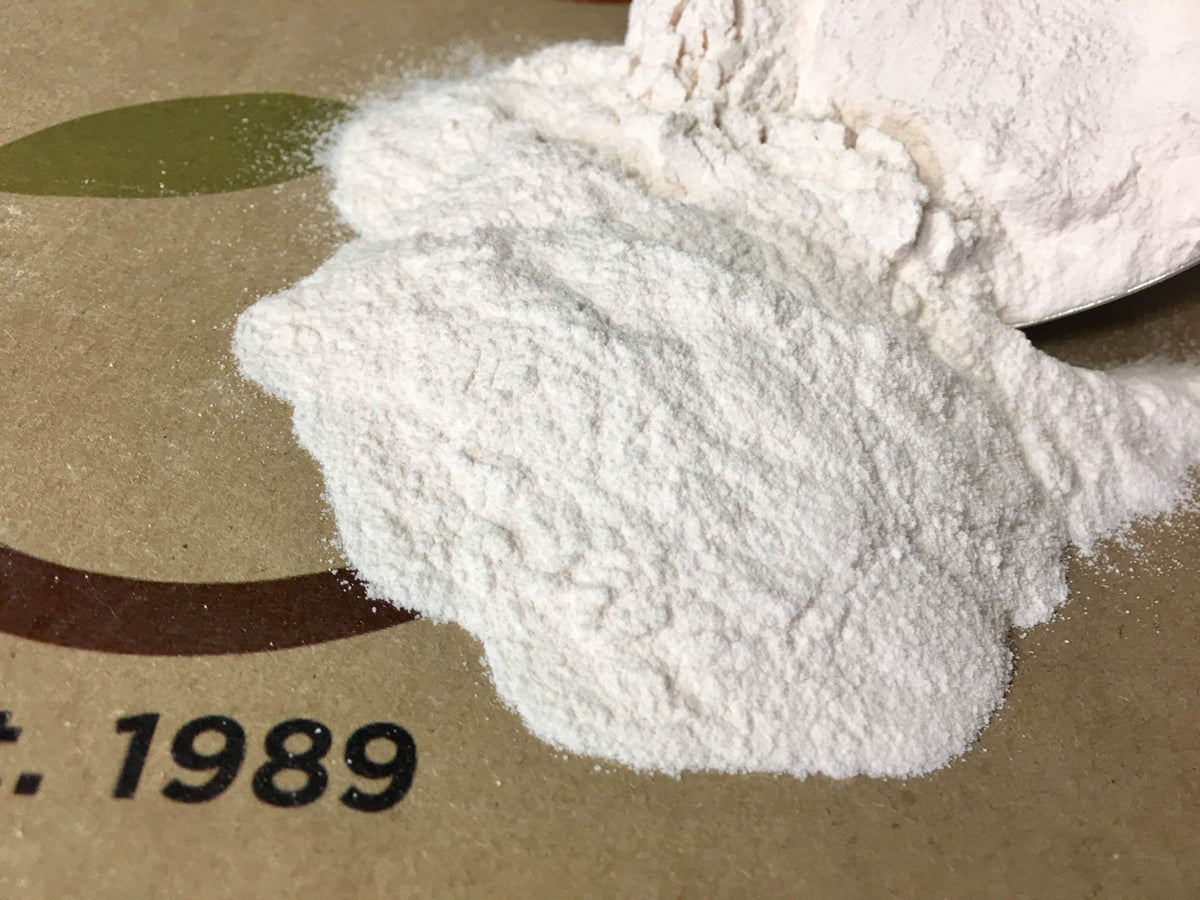
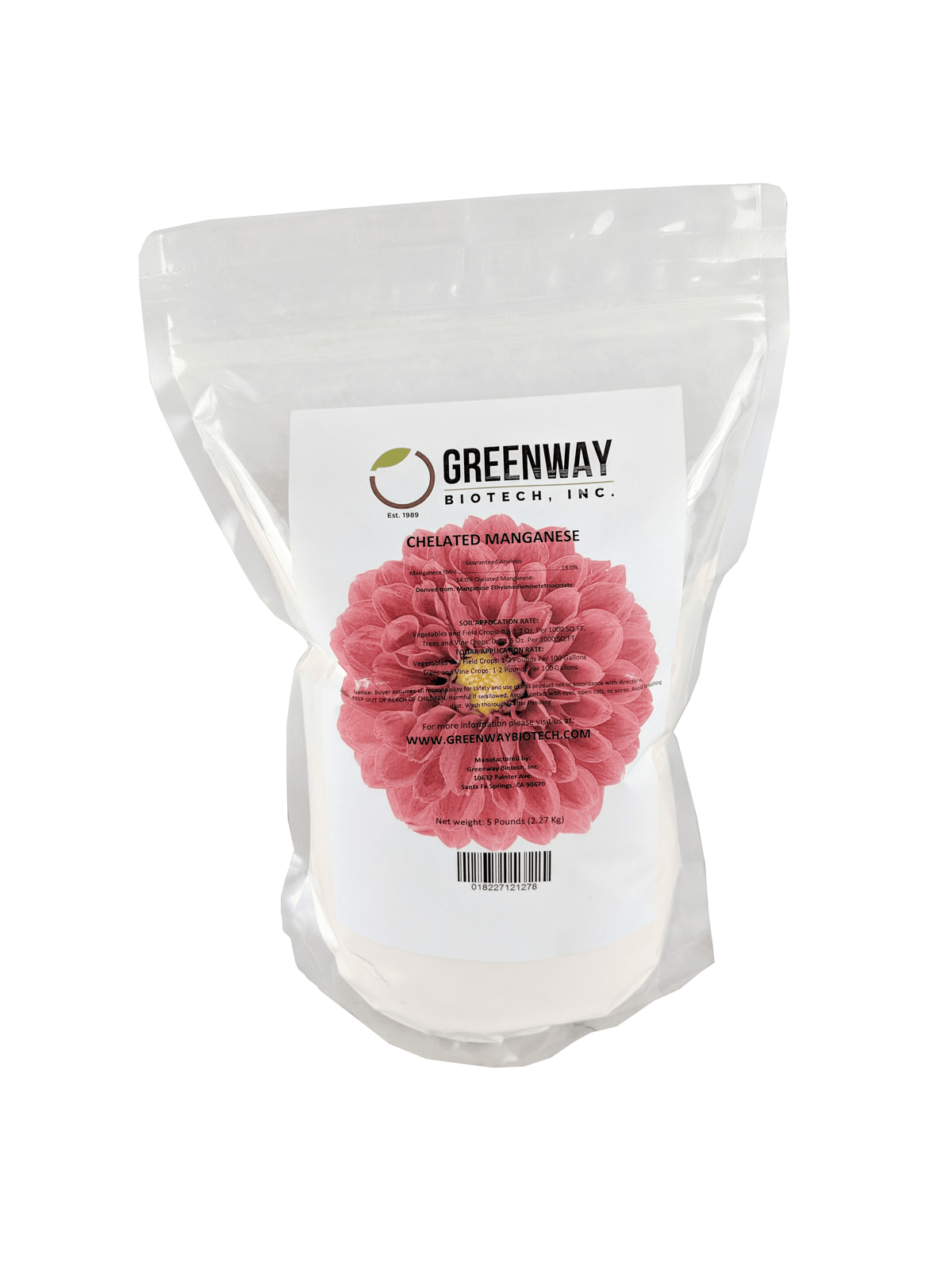
Restore vibrant plant health with professional-grade Chelated Manganese EDTA — 13% chelated manganese for maximum bioavailability, rapidly correcting interveinal chlorosis across all crop types.
High-concentration formula delivers 13% elemental manganese per application, allowing precise correction of deficiencies at lower application rates than non-chelated sources.
EDTA forms a protective shield around manganese ions, preventing soil lockup from phosphates, carbonates, and organic matter — keeping Mn plant-available from pH 4.0 to 7.0.
Rapidly resolves yellowing between leaf veins while veins remain green — the classic visual sign of manganese deficiency — across vegetables, field crops, trees, and turf.
Manganese is essential for activating enzymes involved in photosynthesis, oxygen evolution in chloroplasts, and nitrogen metabolism including nitrate reduction and protein synthesis.
Adequate manganese nutrition fortifies plant cell walls and activates defense enzymes, reducing susceptibility to root rot, Pythium, and foliar disease pressure.
Dissolves completely without sediment, making it ideal for drip irrigation, fertigation systems, foliar spray programs, and hydroponic nutrient reservoirs.
Equally effective as a foliar spray, soil drench, fertigation input, or hydroponic additive — one product supports your entire nutrient management program.
Leaf-applied chelated manganese typically shows visible greening in 7–14 days — ideal when rapid correction is needed during the growing season.
Independently tested for heavy metal content and registered with the California Department of Food and Agriculture (CDFA) — the same standard trusted by commercial growers.
Manufactured in California, USA by Greenway Biotech, Inc., established 1989 — with consistent batch-to-batch quality and responsive customer support.
Our Chelated Manganese EDTA is produced from a single high-purity chelated compound, providing a stable, reliable manganese source with predictable performance across soil types and application methods.
EDTA (ethylenediaminetetraacetic acid) is one of the most effective chelating agents for manganese. Unlike sulfate forms, EDTA-chelated Mn resists tie-up with phosphates and carbonates in the soil solution, remaining available to roots and leaves up to pH 7.0. This stability is why commercial growers and hydroponic operators prefer chelated micronutrients over simple mineral salts.
Manganese is a transition metal micronutrient required in small but critical quantities. At soil pH above 6.5, unchelated Mn rapidly oxidizes to insoluble MnO₂, becoming unavailable to plants. EDTA chelation prevents this reaction while the 13% concentration ensures a meaningful amount of elemental Mn is delivered per application — reducing both product use and application frequency.
Manganese is essential for the oxygen-evolving complex (OEC) in Photosystem II — the step where water molecules are split to release oxygen and electrons for photosynthesis. Without adequate Mn, photosynthetic efficiency drops significantly.
Mn activates over 35 plant enzymes including those controlling nitrogen assimilation (nitrate reductase), lignin biosynthesis, and reactive oxygen species (ROS) detoxification through Mn-superoxide dismutase (Mn-SOD).
Research shows manganese-sufficient plants produce more lignin and phenolic compounds that create physical and chemical barriers against pathogens, particularly root rot fungi and oomycetes like Pythium and Phytophthora.
Remains plant-available from pH 4.0 to 7.0. The EDTA chelate protects against precipitation with phosphates and carbonates across neutral and slightly alkaline soils.
Available primarily below pH 5.5. Above this range, Mn²⁺ oxidizes rapidly to insoluble Mn⁴⁺ oxides. Effective in very acidic soils but unreliable in most garden and agricultural pH ranges.
Results vary with application method, severity of deficiency, crop type, and environmental conditions. Soil temperature, moisture, and overall plant health all influence response speed.
| Crop Type | Application Rate | Notes |
|---|---|---|
| Vegetable Crops | 2–4 lbs/acre | Apply pre-plant or side-dress |
| Field Crops | 2–4 lbs/acre | Band or broadcast application |
| Tree & Vine Crops | 2–5 lbs/acre or 0.5–2 oz/inch trunk diameter | Apply to root zone under drip line |
| Ornamental Shrubs | 1 tbsp (small) / 1 tbsp per inch diameter (large) | Work into soil, water in thoroughly |
| Turf | 0.5 lb/1,000 sq ft or 2 lbs/acre | Water in thoroughly after application |
| Crop Type | Application Rate | Spray Volume |
|---|---|---|
| Citrus Trees | 1–2 lbs/100 gal | Cover spray (avoid bloom period) |
| Other Trees & Vines | 1–2 lbs/acre | 25 gal minimum |
| Vegetables & Field Crops | 0.33–1.33 lbs/acre | 25 gal minimum |
| Home Garden / Small Scale | 1–2 tsp/gallon (prevention) / 1 tbsp/gallon (correction) | Spray to runoff; repeat every 7–14 days |
| Turf | 1 tbsp/1,000 sq ft | Thorough coverage |
| System | Concentration | Target ppm Mn |
|---|---|---|
| Hydroponics | Stock solution method recommended | 0.5–1.0 ppm |
| Fertigation | 1–2 lbs/acre/application | Monitor with water testing |
For precise manganese dosing: dissolve 1 oz (28g) per gallon of water to create a stock solution of approximately 970 ppm Mn. Dilute into reservoir to achieve your target concentration. Typical crop targets: lettuce 0.5 ppm, tomatoes 0.5–1.0 ppm, peppers 0.5–0.8 ppm. Use the calculator below for exact measurements based on your reservoir size.
When manganese deficiency symptoms appear mid-season on vegetable or field crops, foliar application is the fastest correction method. Use 0.5–1 lb/acre in at least 20 gallons of water, and apply 2–3 times at 10-day intervals. This bypasses soil pH issues entirely and delivers Mn directly to affected tissue — many growers see visible improvement within 7–10 days.
Refer to the Safety Data Sheet (SDS) for complete safety and emergency response information.
Manganese works alongside other micronutrients and macronutrients to support complete plant nutrition. These products pair directly with Chelated Manganese EDTA for a comprehensive micronutrient program.
Corrects iron-deficiency chlorosis on youngest leaves — the complementary micronutrient to Mn in any complete foliar program.
Zinc activates enzyme systems alongside manganese, supporting growth regulation, protein synthesis, and pollen viability.
Copper supports lignin formation and electron transport — often deficient in organic soils alongside manganese.
Magnesium is the central atom of chlorophyll — supports the same photosynthetic pathways as manganese for full chlorophyll production.
Provides calcium and nitrogen to support overall plant structure and metabolic processes alongside micronutrient correction.
Manganese deficiency shows a characteristic interveinal chlorosis pattern — yellowing between leaf veins while the veins themselves remain green. Crucially, this symptom appears first on middle-aged leaves, which distinguishes it from iron deficiency (which affects the youngest leaves). As the deficiency progresses, small gray or tan necrotic spots may develop on the chlorotic tissue. Other indicators include delayed maturity, reduced root development, and increased disease susceptibility. Symptoms are most common when soil pH exceeds 6.8, in organic or high-humus soils, and during cool wet springs when Mn uptake is naturally reduced.
Both cause interveinal chlorosis, but the location of affected leaves is the key diagnostic clue. Manganese deficiency starts on middle-aged leaves and moves upward; iron deficiency starts on the newest, youngest growth and progresses downward. Soil conditions also differ — iron deficiency is most common in calcareous (high-calcium, high-pH) soils, while manganese deficiency occurs in a broader range of high-pH and organic soils. When in doubt, a plant tissue test provides a definitive answer. Optimal tissue Mn: 20–300 ppm; optimal tissue Fe: 50–300 ppm.
The core advantage is pH stability. Manganese sulfate is effective only below approximately pH 5.5, where Mn²⁺ remains soluble. Above this range — which covers most garden soils, turf, and agricultural land — unchelated manganese rapidly oxidizes to insoluble MnO₂ and becomes unavailable to plants. Chelated Mn-EDTA remains plant-available up to pH 7.0 because the EDTA ligand prevents this oxidation reaction. Additional advantages include 3–5x better absorption through roots and leaf surfaces, compatibility with most tank-mix fertilizers and pesticides, and lower required application rates due to greater efficiency. For a deeper look at the differences, see our article on Sulfate vs. Chelated Fertilizers: Key Differences and Garden Benefits Explained.
Yes — chelated manganese EDTA is well-suited for hydroponic use. The stock solution method is recommended: dissolve 1 oz (28g) per gallon of water to create a concentrated stock at approximately 970 ppm Mn, then dilute into your reservoir to reach a target of 0.5–1.0 ppm Mn. This is compatible with most complete hydroponic nutrient programs. Monitor Mn levels weekly with a water test kit, as different crops consume manganese at different rates. Most commercial hydroponic nutrients include some Mn, so always test before adding to avoid oversupply.
Soybeans, wheat, oats, and other small grains are among the most manganese-sensitive field crops. In the vegetable garden, potatoes, onions, sugar beets, peas, and brassicas are frequently affected. Citrus and stone fruit trees commonly show Mn deficiency in alkaline orchard soils. Turf grasses in high-pH or heavily limed soils can also develop interveinal chlorosis. Nursery crops and ornamentals growing in peat-based media with a pH above 6.5 are also prone to deficiency. Commercial growers in high-pH regions often include chelated Mn in preventive micronutrient spray programs.
If you're not completely satisfied with your results, we offer a 90-day money-back guarantee. Return the unused portion in its original packaging and we'll process a full refund — no hassle. View full return policy →
1% of all profits support our foundation, focused on expanding educational opportunities for children.
Check out our full FAQ page or contact our team for personalized advice on manganese deficiency diagnosis and treatment.
Couldn't load pickup availability