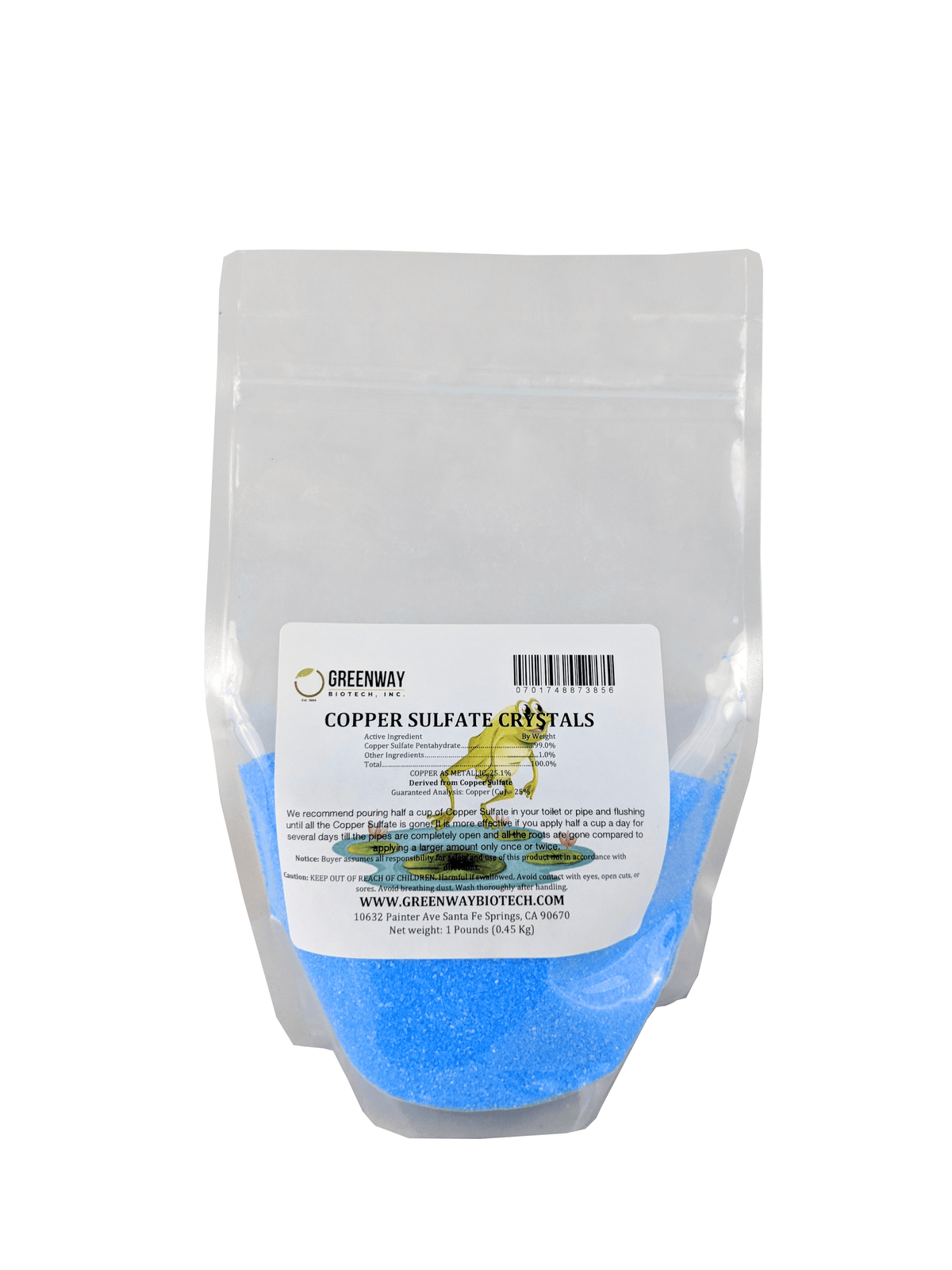
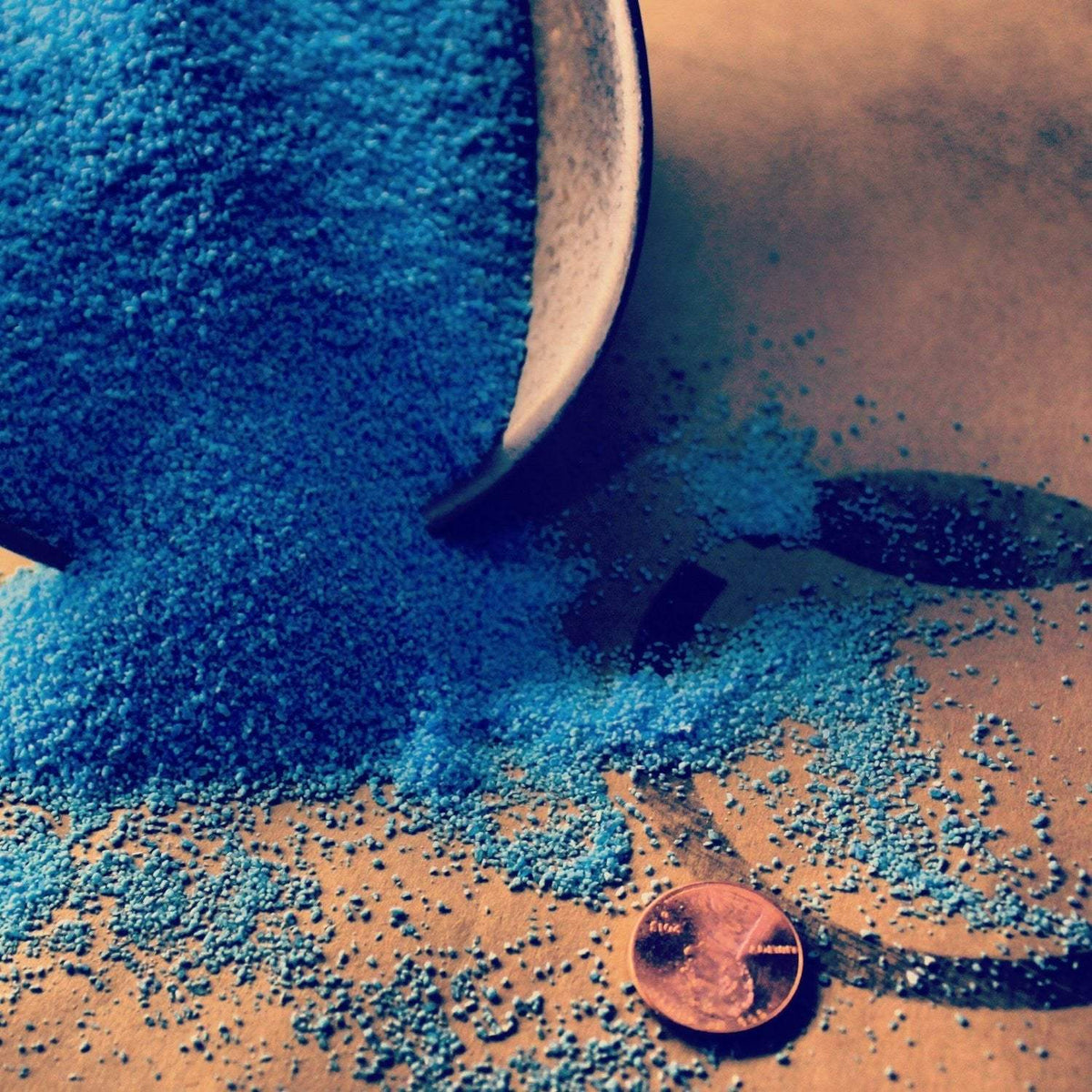
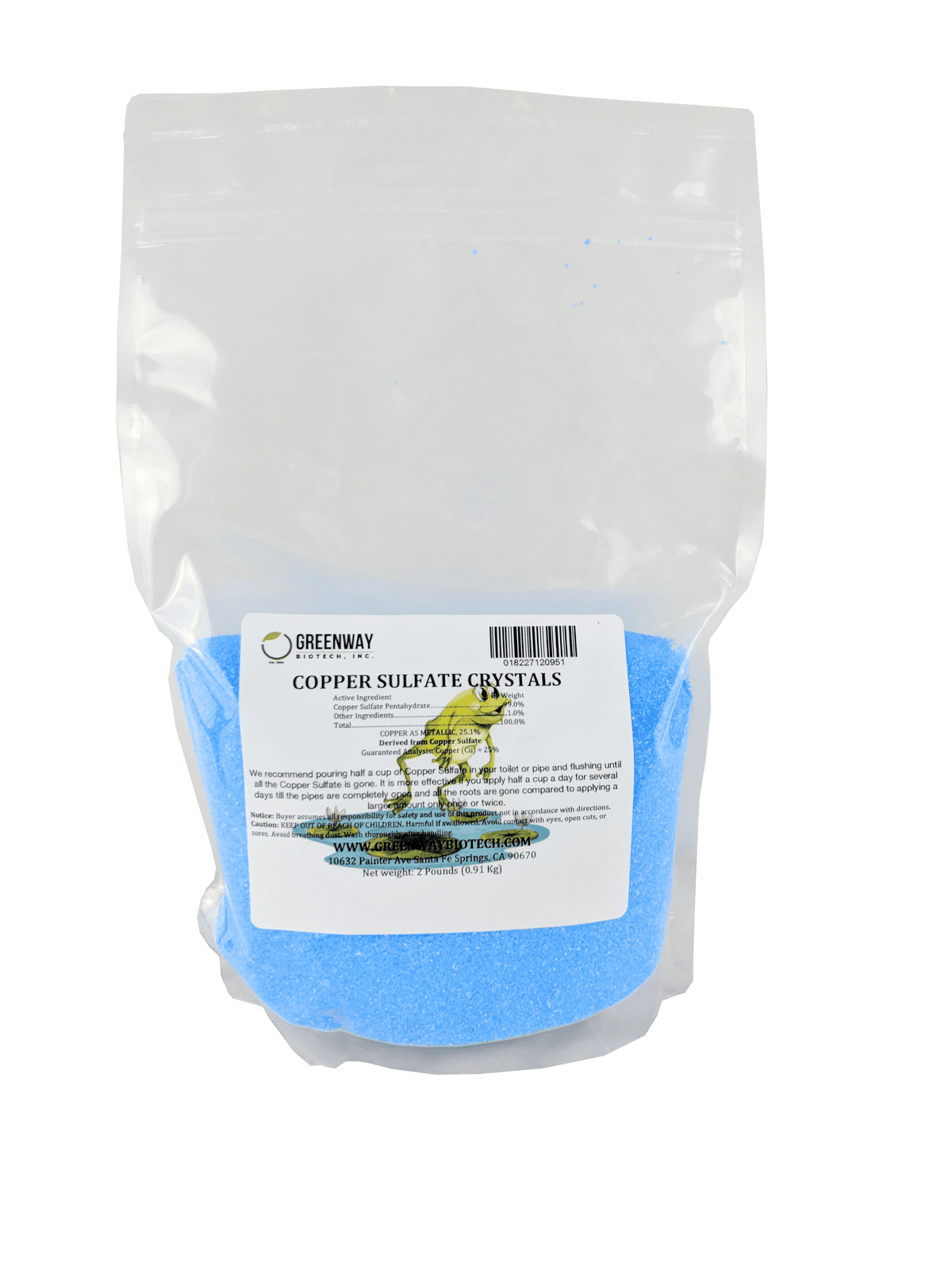
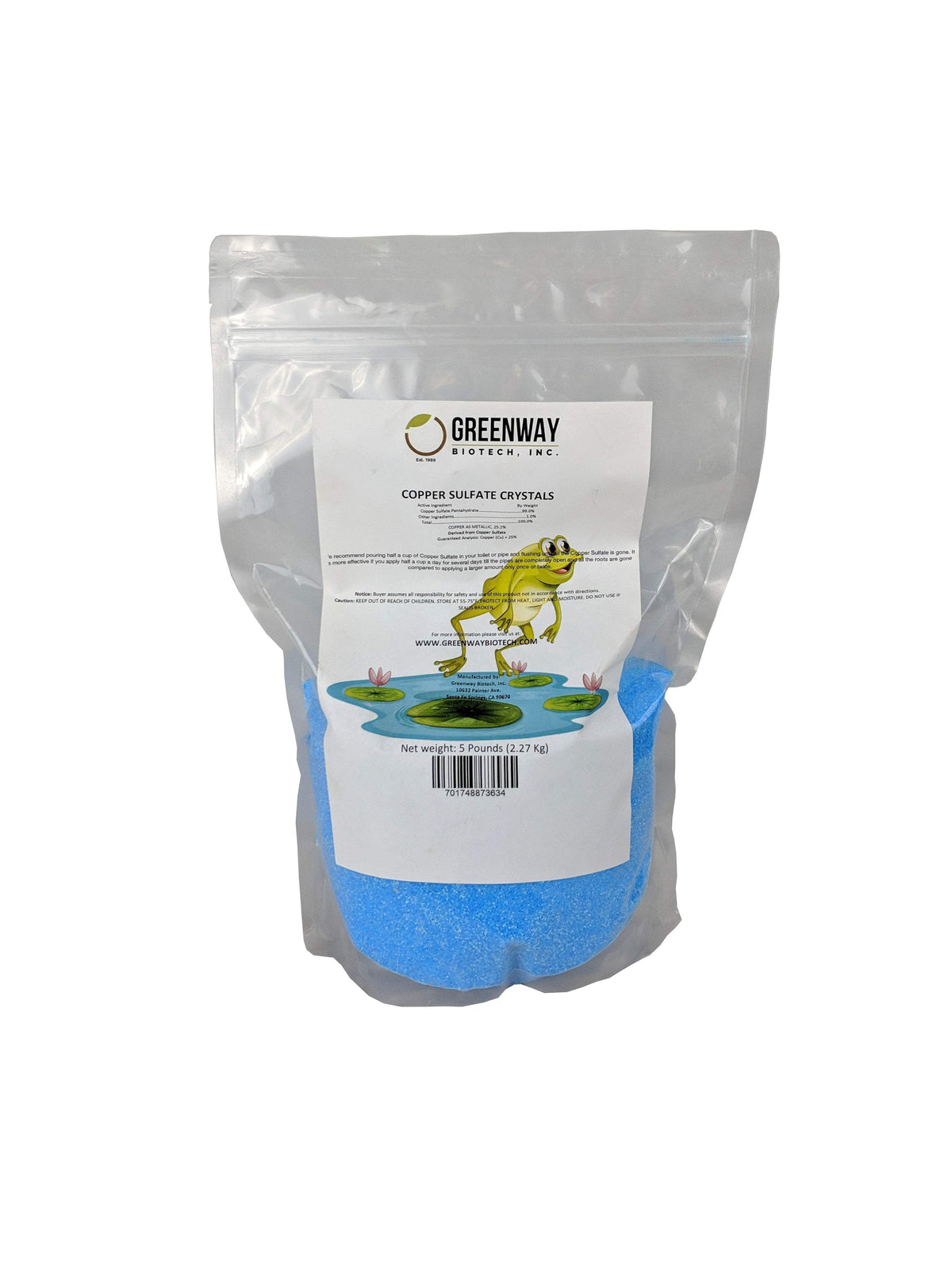
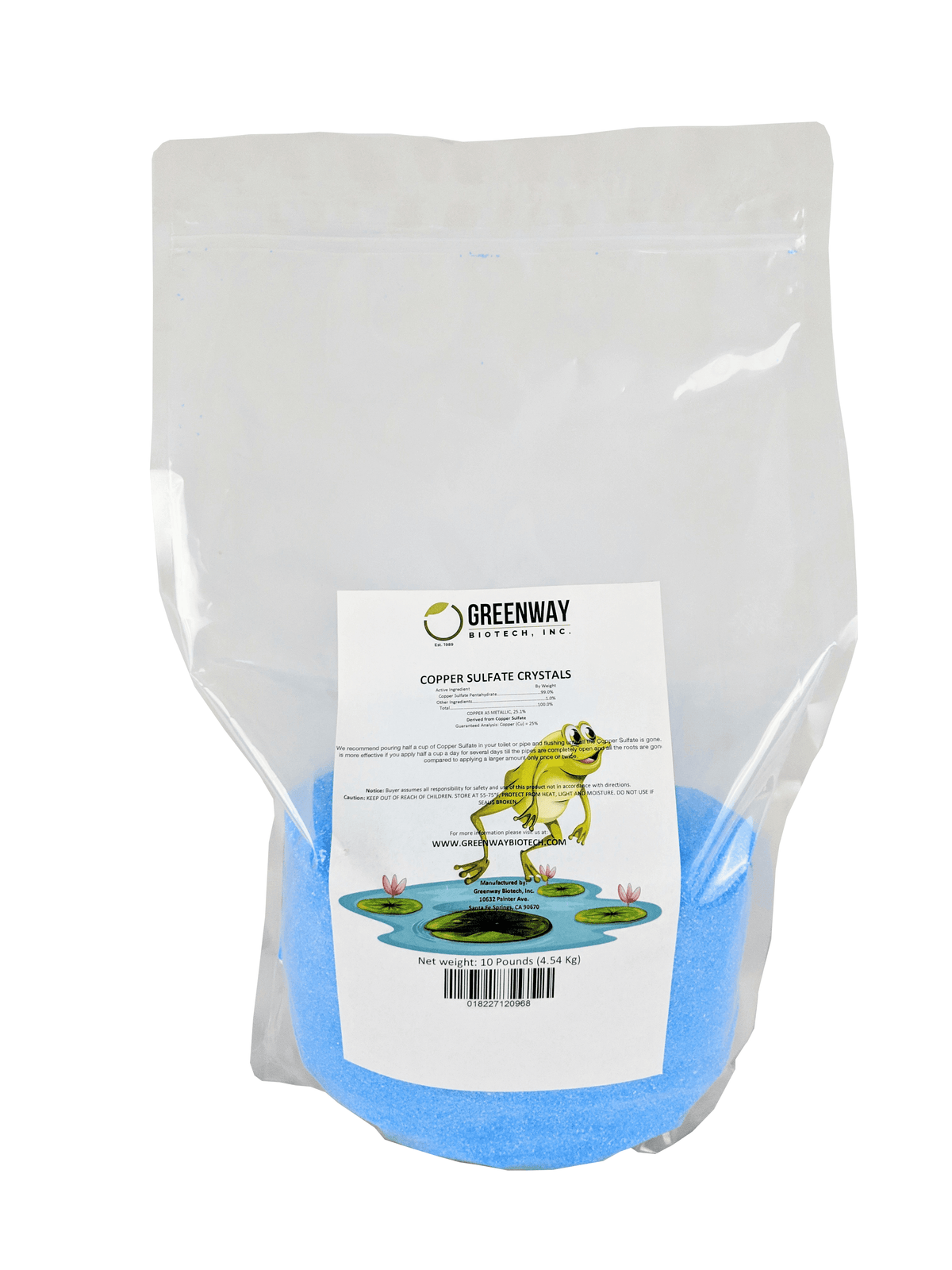
Professional-grade 99% pure copper sulfate crystals for algae control, Bordeaux mixture, root clearing, and copper deficiency correction. Lab tested for purity — trusted by growers, pool pros, and homeowners since 1989.
Lab tested to confirm 99% copper sulfate pentahydrate — no fillers, binding agents, or impurities that reduce effectiveness or interfere with precise applications like Bordeaux mixture.
Effective against green, blue-green, and filamentous algae in pools, ponds, irrigation canals, and water features. Works at trace concentrations — a little goes a long way.
Independently lab tested for heavy metal content to verify suitability for agricultural, horticultural, and livestock applications.
The foundation of the classic 4-4-50 Bordeaux mixture used in organic orchards and vineyards worldwide. High purity ensures correct reaction with hydrated lime for consistent results.
Corrects copper deficiency in sandy, peat, and high-pH soils. Copper supports enzyme systems, photosynthesis, and cell wall formation — applied to soil or as part of a foliar mix.
Kills roots inside sewer lines and drain fields without damaging pipe materials or disrupting beneficial soil bacteria outside the pipes. One treatment can last 6–12 months.
Dissolves readily in water for accurate dilution across all applications — pool treatment, foliar sprays, or footbath solutions. No grinding or pre-mixing required.
Stable crystalline form maintains potency indefinitely when stored in a cool, dry location. Buy in bulk with full confidence in long-term effectiveness.
Widely used in copper sulfate footbaths to help control hoof rot and digital dermatitis in cattle and sheep. Industry-standard treatment on commercial dairy and beef operations.
One product serves pool treatment, pipe maintenance, garden disease control, soil correction, livestock care, and science education — exceptional value per pound.
Copper sulfate (CuSO₄·5H₂O) is one of the most well-studied inorganic compounds in agriculture and water treatment. Its effectiveness depends on releasing free copper ions (Cu²⁺) in solution — and the concentration of those ions depends directly on product purity. At 99% purity, Greenway Biotech copper sulfate delivers the expected Cu²⁺ concentration with no guesswork.
Copper is a required cofactor for enzymes including cytochrome oxidase and superoxide dismutase. Deficient plants show wilting tips, pale new growth, and reduced disease resistance.
Copper contributes to lignin biosynthesis, which strengthens cell walls and improves structural integrity. Crops on sandy or high-organic soils are most frequently deficient.
Copper is required for plastocyanin, a protein involved in the electron transport chain during photosynthesis. Low copper can reduce yield and pollen viability in flowering crops.
Cu²⁺ ions bind to sulfhydryl groups on proteins in algae and fungal cell membranes, disrupting membrane permeability and causing cell death. This mechanism works at very low concentrations — typically 0.1–0.5 ppm for algae.
Copper ions inhibit key enzymes in photosynthetic organisms, blocking the electron transport chain. Algae are far more sensitive to this than higher plants, which is why trace doses control algae without harming aquatic vegetation at proper rates.
When copper sulfate reacts with hydrated lime (calcium hydroxide), it forms a colloidal copper hydroxide that adheres to plant surfaces. As the pH drops on the leaf surface (from rain or dew), Cu²⁺ is slowly released — providing long-lasting fungicidal protection against downy mildew, apple scab, and grape diseases.
Lower-purity products (often 85–96%) deliver unknown Cu²⁺ concentrations per measured dose. For fish ponds where the margin between effective and toxic is narrow, 99% purity is essential for safe, accurate treatment.
Impurities in copper sulfate can interfere with the lime reaction, resulting in unstable mixtures with poor adhesion. 99% purity ensures consistent reaction chemistry every time.
| Application | Amount | Frequency | Method |
|---|---|---|---|
| Swimming Pool (10,000 gal) | ½ teaspoon | Every 10–15 days | Add to skimmer basket |
| Small Pond (1,000 gal) | ¼ teaspoon | Monthly as needed | Dissolve and distribute |
| Fountain / Water Feature | Pinch per 100 gal | Bi-weekly | Add to circulation |
| Application | Amount | Method | Notes |
|---|---|---|---|
| Toilet Root Control | 1–2 lbs | Flush at night | Let sit overnight |
| Septic Treatment | 2 lbs | Via toilet | Once per year maximum |
| Drain Field | 2–3 lbs | Distribution box | Professional recommended |
| Application | Rate / Recipe | Use |
|---|---|---|
| Bordeaux Mixture (4-4-50) | 4 oz copper sulfate + 4 oz lime + 10 gal water | Fungal disease prevention |
| Soil Copper Correction | 1–2 lbs per 1,000 sq ft | Copper deficiency |
| Tree Soil Application | ¼ lb per tree | Apply to soil, not foliage |
| Application | Concentration | Notes |
|---|---|---|
| Cattle Footbath | 2–5% solution (2–5 lbs per 100 gal) | Hoof rot and digital dermatitis prevention |
| Sheep Footbath | 5% solution (5 lbs per 100 gal) | Foot rot treatment — consult a veterinarian |
The #1 mistake with Bordeaux mixture is skipping the pH check. If the mixture is too acidic (below pH 7.0), free copper ions remain in solution and can cause leaf burn — especially on young growth. Dip a piece of litmus paper into the finished mixture before spraying. If it reads below 7.5, add a small amount of hydrated lime in water, stir, and retest. A properly buffered mixture at pH 7.5–8.0 adheres better, releases copper more slowly, and protects foliage without phytotoxicity.
Refer to the Safety Data Sheet (SDS) for complete safety information including emergency response procedures.
Pair copper sulfate with these products for complete garden, soil, and crop management programs:
Corrects zinc deficiency alongside copper in soils with multiple micronutrient gaps. Commonly applied together in tree fruit and vegetable programs.
High-nitrogen fertilizer to support crop recovery after correcting copper deficiency. Promotes vigorous new growth following micronutrient treatment.
Raises soil pH in acidic soils where copper toxicity risk increases. Also supplies calcium and magnesium for balanced fertility alongside micronutrient programs.
Alternative or complementary fungicide for pH-sensitive plants and additional disease control in orchards and vineyards where Bordeaux mixture is used.
Yes, when used at the recommended rate of ½ teaspoon per 10,000 gallons, copper sulfate is safe for swimmers. It effectively controls algae at concentrations well below any health concern. The EPA has established drinking water standards for copper at 1.3 ppm — pool treatment concentrations are far below this threshold. Always pre-dissolve crystals before adding to the pool and run the pump after treatment.
Fish ponds require extreme caution. Fish toxicity depends on water hardness — copper is more toxic in soft water (low calcium and magnesium). As a general rule, never exceed 0.25 ppm total copper in a fish pond, and use only ¼ of the standard dose as a starting point. Koi, trout, and tilapia are particularly sensitive. Always treat only a portion of the pond at one time, monitor fish closely for 24 hours after treatment, and have aeration running. When in doubt, consult an aquatic specialist before treating any pond with fish.
Yes — Bordeaux mixture is approved for use in certified organic production under the USDA National Organic Program. To make the standard 4-4-50 formula: dissolve 4 oz copper sulfate in 5 gallons of water in a plastic container; in a separate container, mix 4 oz hydrated lime in 5 gallons of water; then slowly pour the lime solution into the copper solution while stirring. Test the pH — it should read 7.5–8.0 on litmus paper. Apply immediately as the mixture does not store. For a deeper guide, see our Complete Guide to Bordeaux Mixture.
Copper ions are toxic to plant root cells at the concentrations reached inside a pipe. When you flush copper sulfate crystals at night, they dissolve slowly and move through the line, contacting root masses that have infiltrated through joints or cracks. The copper kills the fine feeder roots on contact without harming the main root system of the tree outside the pipe. Unlike caustic drain cleaners, copper sulfate won't damage pipe materials (clay, PVC, cast iron) or disrupt the septic system when used at recommended rates. One treatment typically lasts 6–12 months.
For deficient soils, apply 1–2 lbs of copper sulfate per 1,000 square feet, worked into the top 2–3 inches of soil and watered in well. Sandy soils and high-organic soils (peat, muck) are most commonly deficient. Important: copper accumulates in soil and does not leach readily, so do not re-apply until a follow-up soil test confirms the deficiency persists. Over-application can suppress earthworms and beneficial soil microbes. Always base copper applications on a confirmed soil test result.
Copper sulfate has an unusually broad range of applications. For a comprehensive overview, see our article on 7 Reasons to Keep Copper Sulfate Handy in Your Home. Common uses include pool and pond algae control, Bordeaux fungicide for gardens and orchards, root intrusion control in drain lines, copper deficiency correction in garden soil, livestock hoof footbaths, and educational crystal-growing projects.
If you're not completely satisfied, we offer a 90-day money-back guarantee. Return the unused portion in its original packaging and we'll process a full refund — no hassle, no questions asked.
1% of all profits go to our foundation, focused on improving educational opportunities for children.
Check out our full FAQ page or contact our experts for personalized advice.
Couldn't load pickup availability