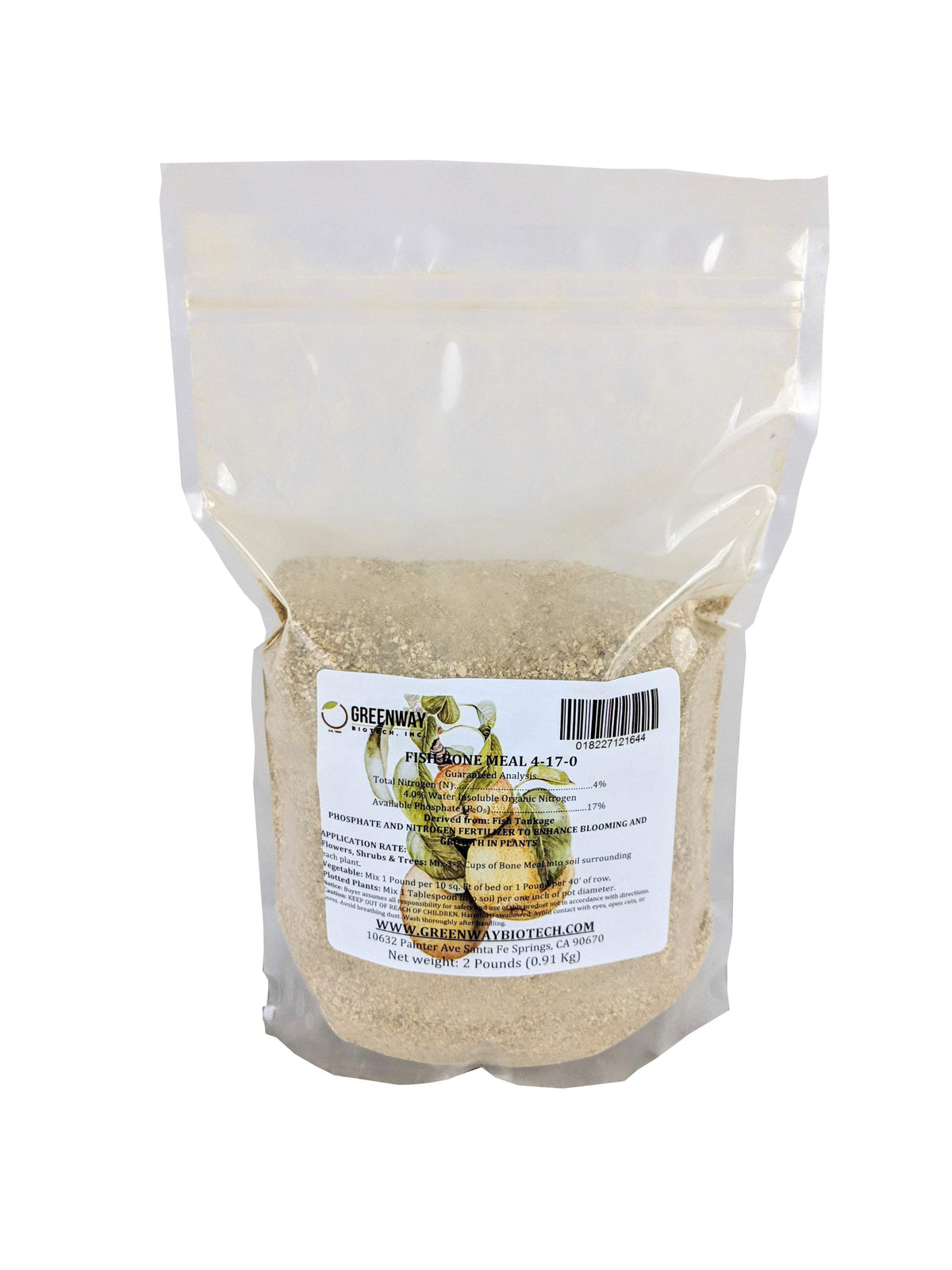
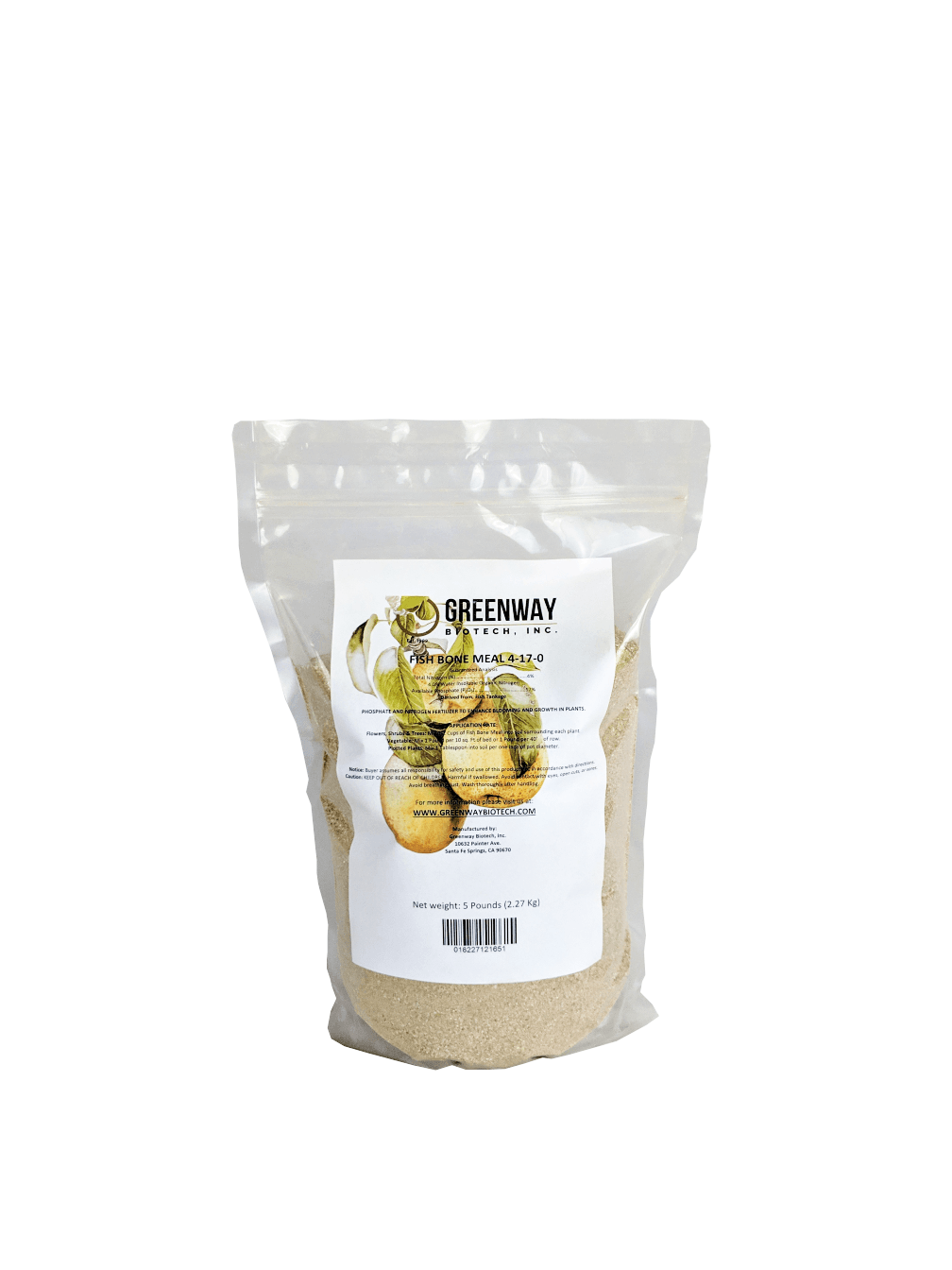
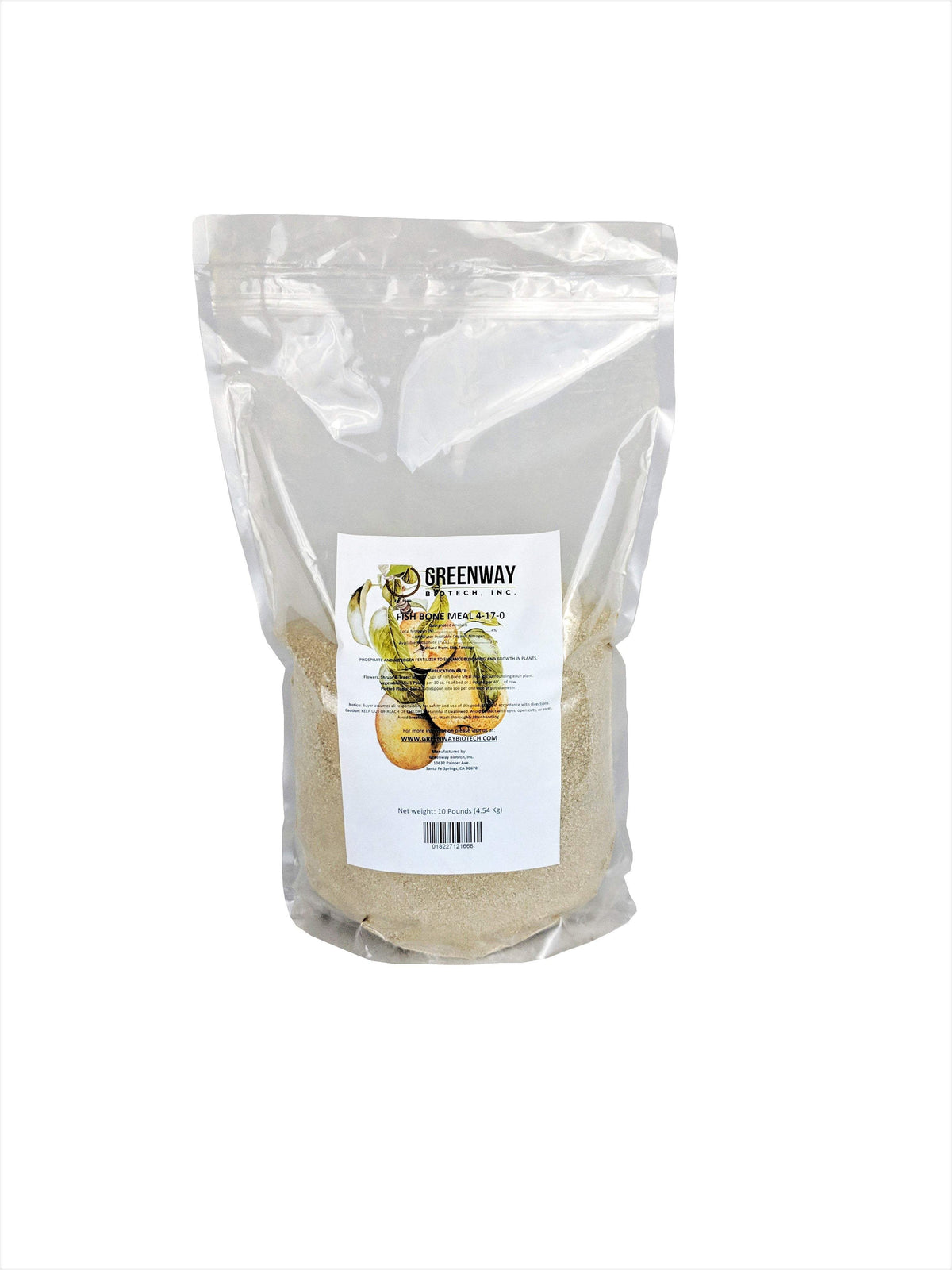
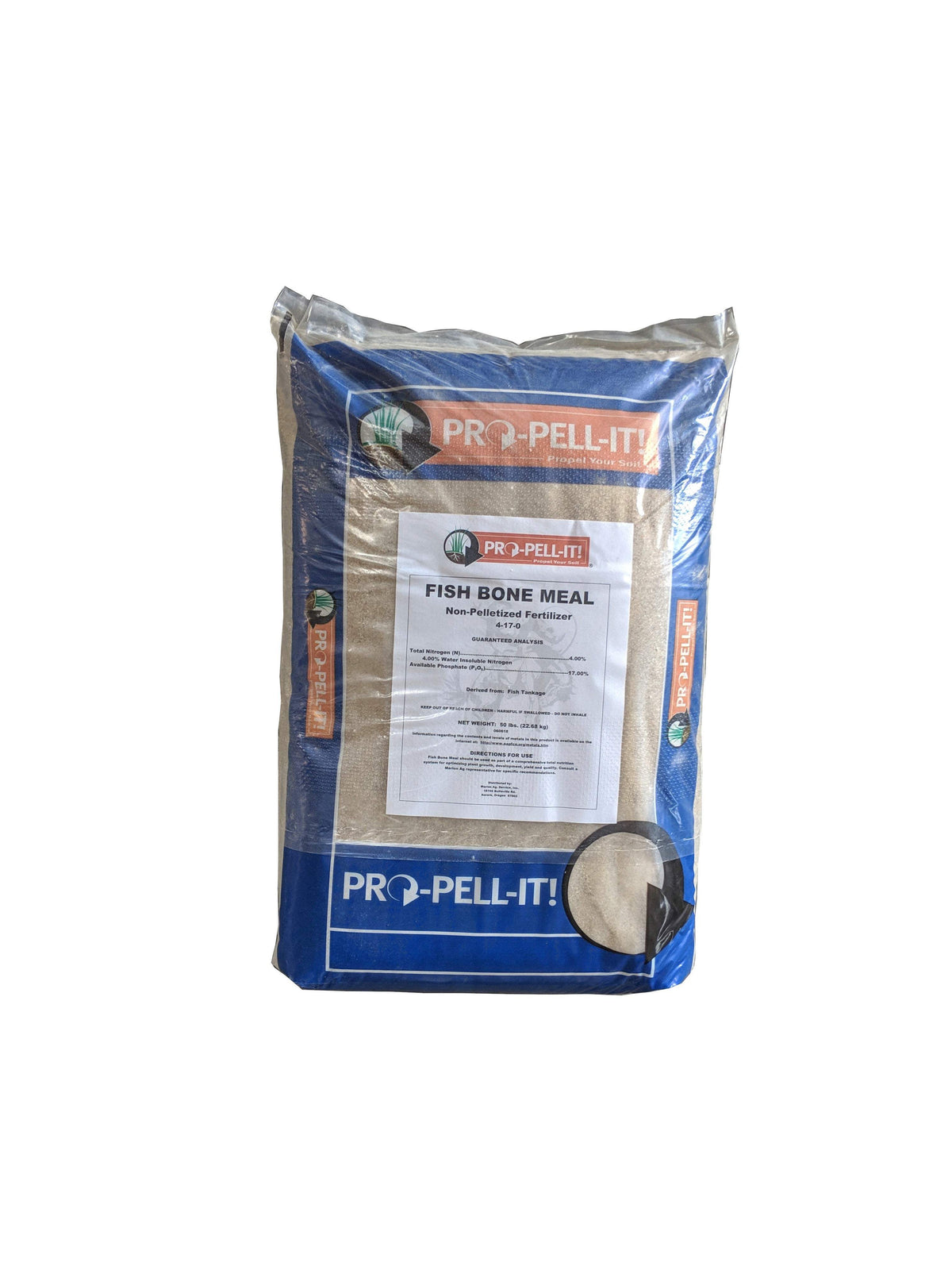
Premium marine-sourced organic phosphate for stronger roots, explosive blooms, and faster transplant recovery. CDFA-registered, independently tested for heavy metals.
Marine-sourced fish bone meal provides concentrated available phosphate to support root development, flower initiation, and fruit set in ornamentals and fruiting crops.
Enough nitrogen to support healthy canopy without pushing excessive vegetative growth — ideal for fruiting and flowering plants that need bloom-forward nutrition.
Fish bone meal generally becomes plant-available faster than many traditional bovine bone meal products, especially in warm, moist, biologically active soils above 55°F.
Contains no synthetic additives or GMO-derived ingredients. CDFA-registered as an organic input. Check with your certifier for use in certified organic production systems.
As fish bone meal breaks down in biologically active soil, marine-derived proteins contribute organic nitrogen, amino acids, and proteinaceous material that supports soil microbial activity.
Organic matter content feeds beneficial soil microbes, improving soil structure, water retention, and long-term nutrient availability beyond a single growing season.
Every batch is independently lab tested for heavy metal content to support quality control for garden use. Results available upon request.
Produced from fish processing by-products that would otherwise be discarded, supporting circular economy principles and reducing waste in the seafood supply chain.
High available phosphate accelerates root establishment after transplanting, helping seedlings and starts recover quickly and begin active growth rather than stalling.
Unlike soluble synthetic phosphorus fertilizers, fish bone meal contributes organic matter that persists in soil, gradually improving its structure and biology over time.
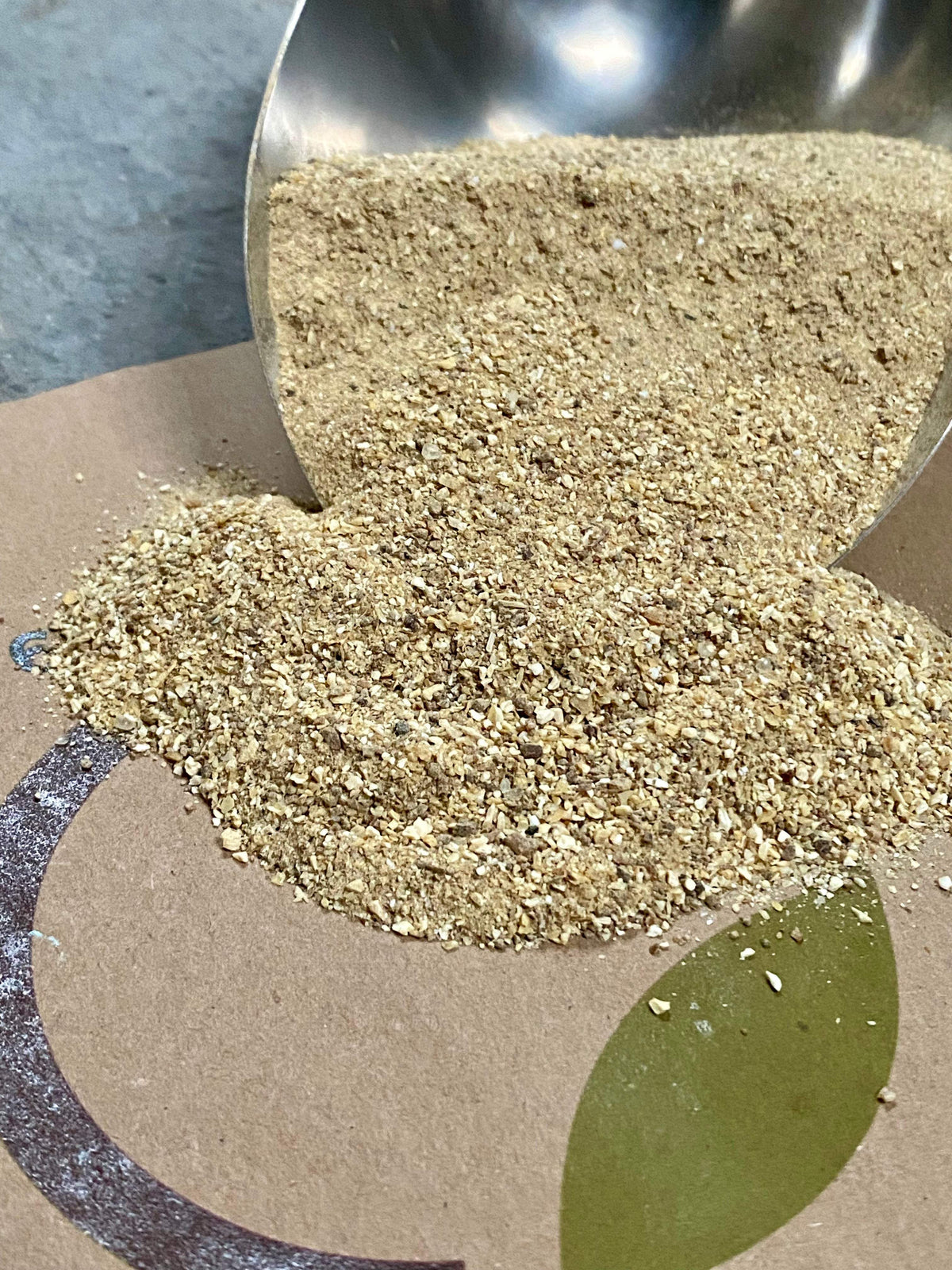
Fish Bone Meal 4-17-0 is produced from a single marine ingredient — processed fish bones sourced from responsible fishing and fish processing operations. The bones are dried, ground, and quality-tested to preserve their natural nutrient profile. No synthetic additives, binders, or fillers are included.
This formula is specifically structured for root development, flower initiation, and fruit set. The 17% available phosphate (P₂O₅) is the dominant nutrient by design for this product category, while 4% nitrogen provides supporting canopy growth. Potassium is absent and should be supplied separately when needed. Nutrient release is driven by soil microbial activity — best performance when soil temperatures are above 55°F and soil is kept evenly moist.
Provides balanced foliar support without stimulating excessive vegetative growth. This nitrogen level keeps fruiting and flowering plants energized through bloom and set without triggering a growth flush that would divert energy from reproductive development.
Phosphorus plays a central role in energy transfer, root development, and flower initiation. At 17% available phosphate (P₂O₅), this product is a concentrated organic granular phosphorus source for gardeners and growers who need bloom and root support from a single amendment.
Fish bone meal is not a meaningful potassium source. For complete plant nutrition, pair with Potassium Sulfate 0-0-53 or K-Mag 0-0-22 when potassium deficiency or stress resistance is a concern.
Fish bone meal often releases nutrients within weeks under favorable soil conditions — warm, moist, and biologically active — whereas traditional bovine bone meal may act more slowly depending on soil temperature and microbial activity.
As a marine-derived amendment, fish bone meal may contribute naturally occurring calcium and trace minerals alongside its primary nutrient content, reflecting the mineral composition of its ocean source.
As a marine-derived organic amendment, fish bone meal contributes proteinaceous material and amino acids as it decomposes in biologically active soil, supporting soil microbial communities.
Soil microbes begin colonizing the meal and releasing enzymes that break down marine proteins and phosphate bonds. Release rate is faster in warm, moist soils above 55°F.
Phosphate becomes plant-available in biologically active soils; many gardeners notice improved root density and early flowering response under optimal conditions.
Peak nutrient availability in warm soils above 55°F — bloom formation, fruit set, and improvement in plant vigor are commonly observed when soil moisture and temperature are maintained.
Results vary with soil temperature, moisture, and microbial activity. Applications to cold or dry soils will release significantly more slowly.
Fish Bone Meal 4-17-0 is applied dry and worked into soil. Avoid direct contact with plant stems. Water thoroughly after every application to begin nutrient release.
Note: Rates below are general starting points for gardens with average phosphorus levels. For best results, base your program on a current soil test. Soils already high in phosphorus may need little or no additional amendment — over-application in phosphorus-rich soils can limit the availability of zinc and iron, particularly above pH 7.0. In many gardens, one pre-plant application plus a light midseason side-dress is sufficient for the season.
| Application Type | Rate per 100 sq ft | Rate per Acre (approx.) | Frequency |
|---|---|---|---|
| New Plantings (pre-plant) | 0.5–1 lb | ~220–435 lbs | At soil prep |
| Established Plants (side-dress) | 1–2 lbs | ~435–870 lbs | Every 4–6 weeks |
| Heavy-Feeding Crops | 2–3 lbs | Consult local extension | Use higher rates only where soil test or crop history indicates elevated phosphorus demand |
| Plant Type | Application Rate | Method |
|---|---|---|
| Seedlings & Small Plants | 1 tablespoon | Mix into planting hole backfill |
| Medium Plants | 2–3 tablespoons | Work into top 3–4 inches around plant |
| Large Shrubs | ¼ cup | Side-dress at drip line |
| Trees | ½–1 cup | Broadcast under canopy, water in |
| Bulbs | 1 tsp per bulb | Mix into planting hole |
| Container Plants | 1 tbsp per gallon of soil | Mix into potting medium or top-dress |
| Package Size | Coverage at 1 lb/100 sq ft | Coverage at 2 lbs/100 sq ft |
|---|---|---|
| 1 lb | 100 sq ft | 50 sq ft |
| 5 lbs | 500 sq ft | 250 sq ft |
| 10 lbs | 1,000 sq ft | 500 sq ft |
| 25 lbs | 2,500 sq ft | 1,250 sq ft |
For tomatoes and peppers, side-dress with 2–3 tablespoons of fish bone meal per plant when the first flower clusters appear. Work it into the top inch of soil at the drip line and water well. This targeted phosphate application during the reproductive transition commonly improves fruit set and reduces blossom drop in plants grown in phosphorus-poor soils.
Refer to the Safety Data Sheet (SDS) for complete safety information.
Build a complete organic feeding program by pairing Fish Bone Meal with an organic nitrogen source and a potassium-rich amendment. Fish bone meal covers phosphate and moderate nitrogen — these products fill the gaps.
Fast-release nitrogen to complement fish bone meal's moderate N content — ideal for heavy-feeding leafy crops and establishing transplants quickly.
Slow-release nitrogen that feeds over 3–4 months — pairs with fish bone meal for a sustained N-P feeding program across the entire growing season.
Adds potassium and a broad spectrum of naturally occurring trace minerals that fish bone meal does not provide, along with organic matter that feeds soil biology.
Adds balanced N and K along with organic matter that feeds soil biology. A great all-around amendment to round out a fish bone meal application.
Fish bone meal generally becomes plant-available faster than many traditional bovine bone meal products — often within weeks under warm, moist, biologically active soil conditions — whereas bovine bone meal may act more slowly. Fish bone meal also carries a higher nitrogen content (4% vs. typically 1–2% for bovine sources) and contributes naturally occurring trace minerals and marine-derived organic matter as it decomposes. For gardeners who need phosphate available within a single growing season, fish bone meal is generally the more responsive choice. See our article on What's the Function of Phosphorus in Plants? for more background.
Fresh fish bone meal has a mild marine scent that can attract dogs, raccoons, and other animals if left on the soil surface. To minimize this, work the meal into the top 3–4 inches of soil immediately after applying, then water thoroughly. The odor typically dissipates within 24–48 hours once the product is incorporated and wetted. Fish bone meal has a noticeably less intense scent than fish emulsion or blood meal.
Fish bone meal works best when applied 1–2 weeks before planting (worked into soil during bed prep) or at the time of transplanting (mixed into the planting hole). For established plants, side-dress at the beginning of the flowering stage to support bloom set. Applications during active soil microbial activity — when soil is warm above 55°F and consistently moist — give the fastest results. See our article on Fertilizing Your Organic Garden for seasonal timing guidance.
Yes. Unlike soluble phosphate fertilizers, fish bone meal is a dry granular amendment that does not create the precipitation issues associated with mixing liquid calcium and phosphate sources in the same solution. Fish bone meal itself contains naturally occurring calcium, so if you are also applying calcium nitrate, conduct a soil test first to avoid overshooting calcium levels in the soil.
Use caution with acid-loving plants. Because fish bone meal contributes calcium, repeated use may gradually shift soil pH in ways that are less than ideal for strongly acid-loving crops. Crops such as blueberries, azaleas, rhododendrons, and gardenias prefer acidic conditions (pH 4.5–6.0) and may perform better with a pH-neutral phosphorus source. For phosphorus needs in acid-loving plants, MKP 0-52-34 may be a better fit. Always monitor soil pH when using any calcium-containing amendment.
Purple or reddish leaf coloration can be caused by several factors including phosphorus deficiency, cold stress, or genetics — so a soil test or crop history review is the most reliable way to confirm the cause before amending. Where phosphorus deficiency is confirmed or strongly suspected based on poor root growth, delayed flowering, or low soil test P levels, fish bone meal is a useful organic phosphate source to consider.
It has a mild fishy or oceanic scent when first applied, especially in warm conditions. This is much less intense than fish emulsion or blood meal. The odor typically fades within 24–48 hours after watering in. Applying in the morning and watering immediately minimizes any lingering scent during the day.
When applied and watered in as directed, fish bone meal is generally safe in gardens where pets are present. However, dogs in particular may be attracted to the scent and attempt to dig up or consume freshly applied meal. Keep pets away from treated areas until the product has been fully incorporated and watered in. If a pet consumes a significant quantity, contact your veterinarian.
If you're not satisfied with your purchase for any reason, we offer a 90-day money-back guarantee. Return unused product in its original packaging and we'll process a full refund — no questions asked.
1% of all Greenway Biotech profits support our foundation, focused on improving educational opportunities for children.
Family-owned since 1989, Greenway Biotech has been helping gardeners, farmers, and growers build healthier soils and more productive crops for over 35 years. Based in Madera, California, we manufacture and test every product at our own facility so you know exactly what you're getting.
Check out our full FAQ page or contact our experts for personalized advice.
Couldn't load pickup availability