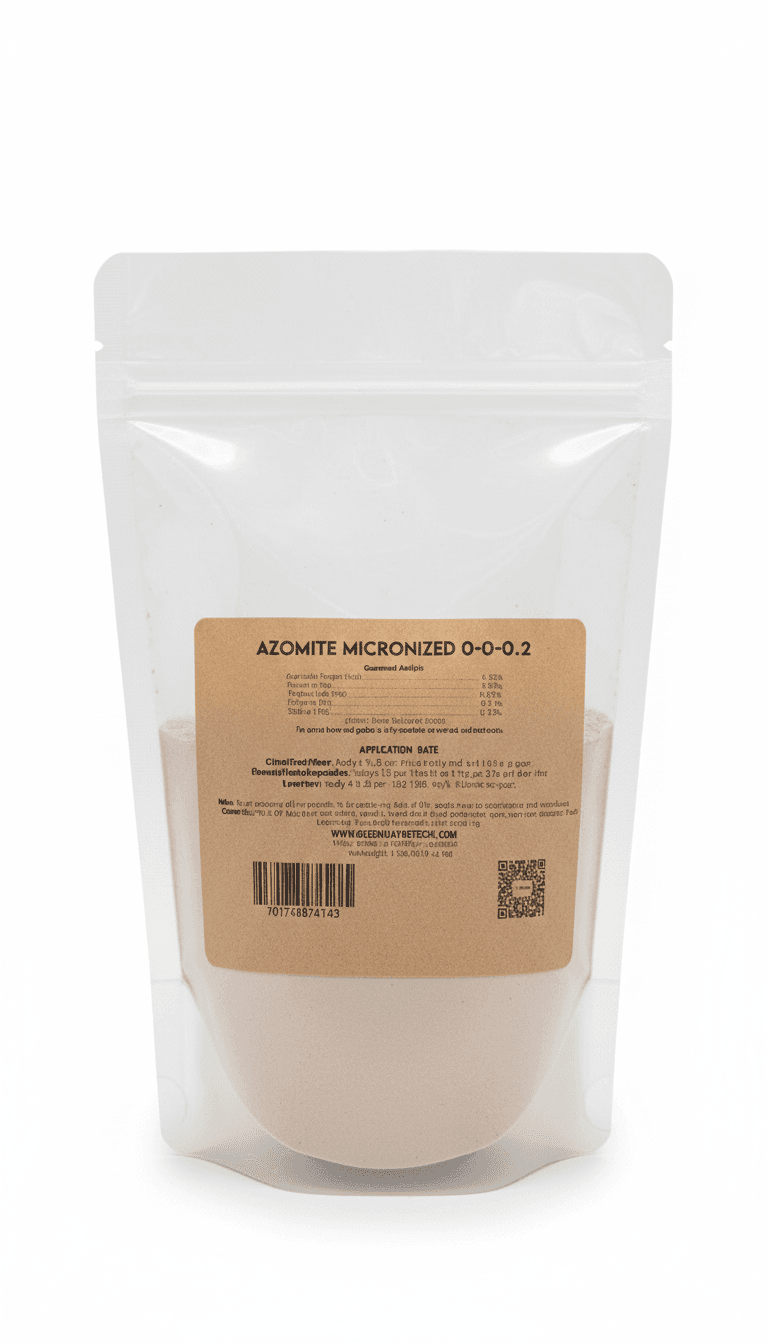
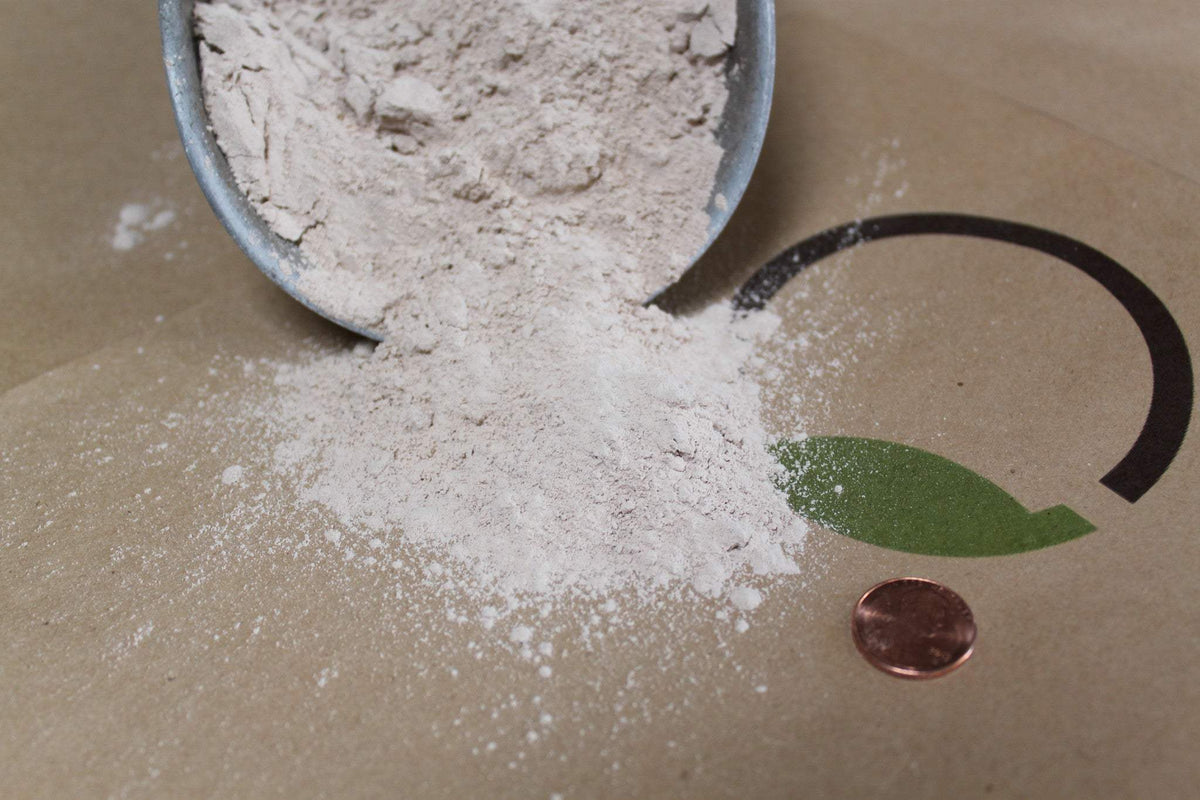
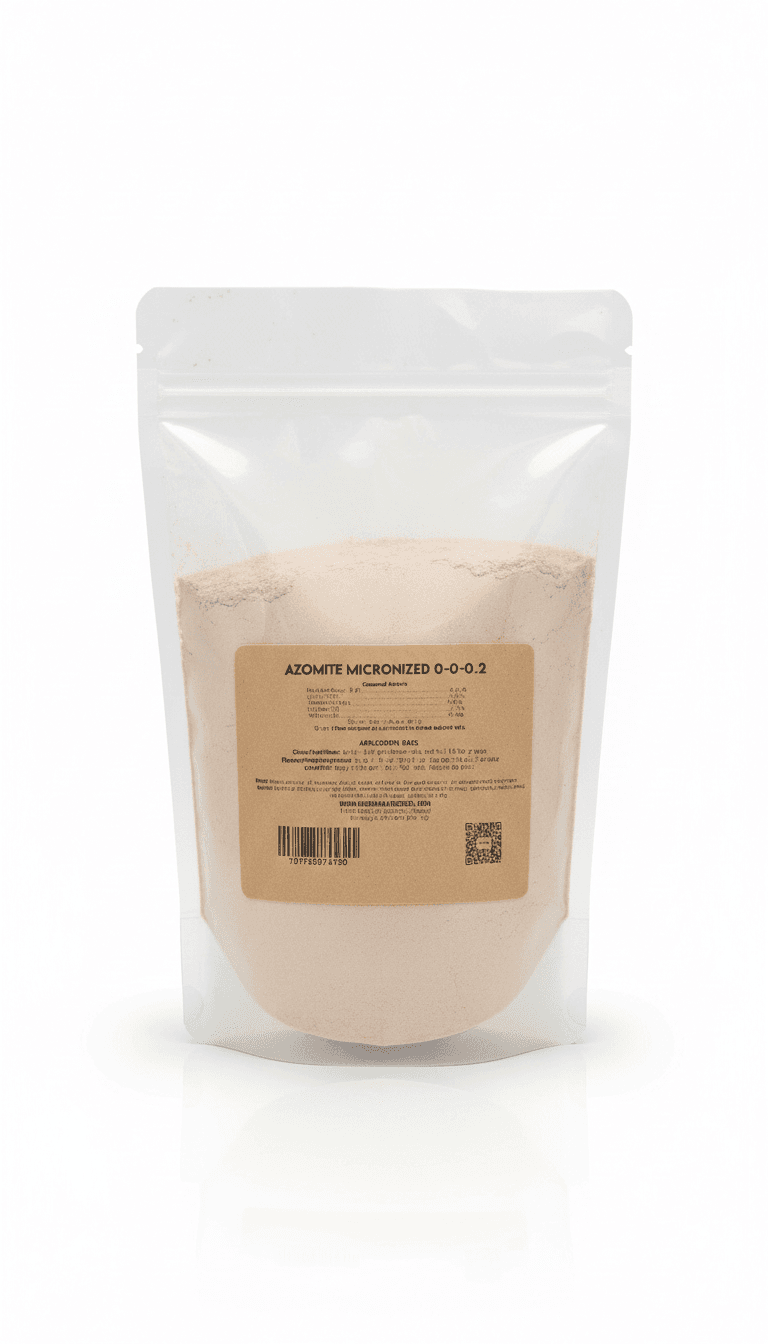
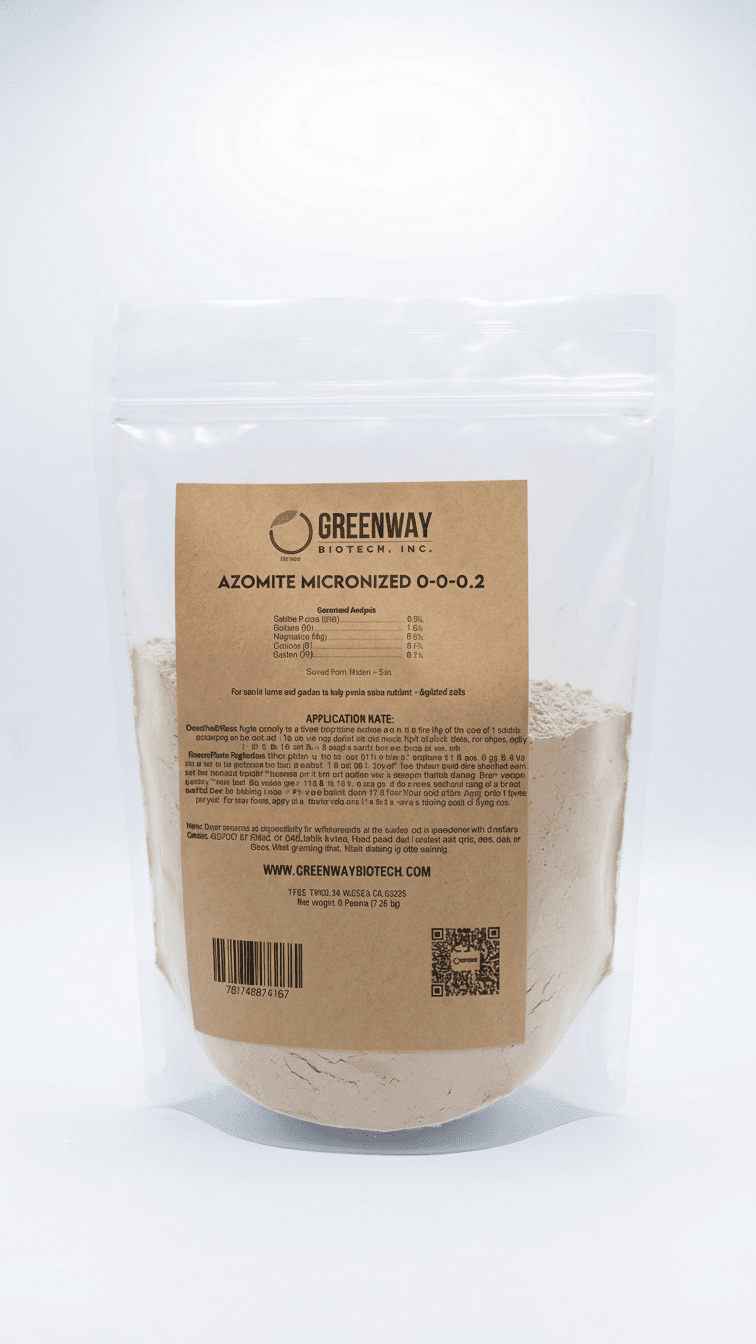
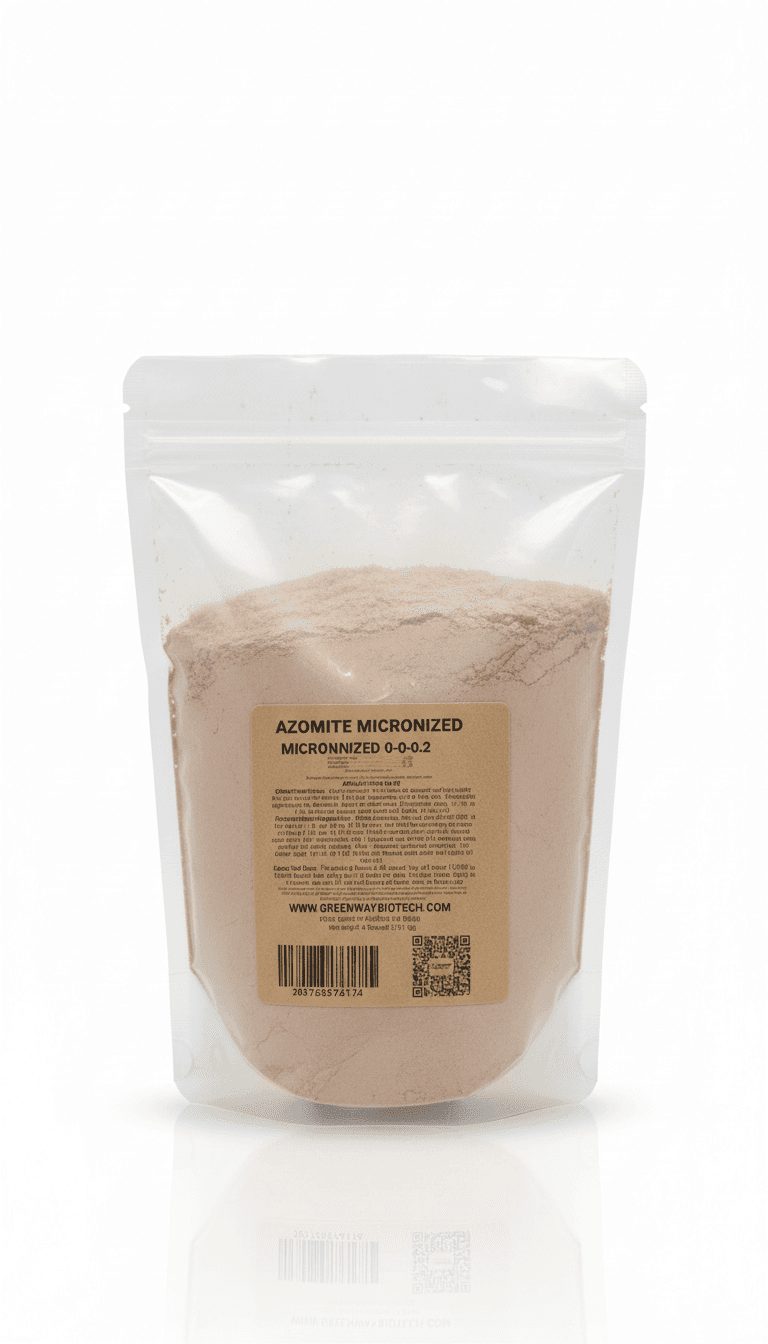
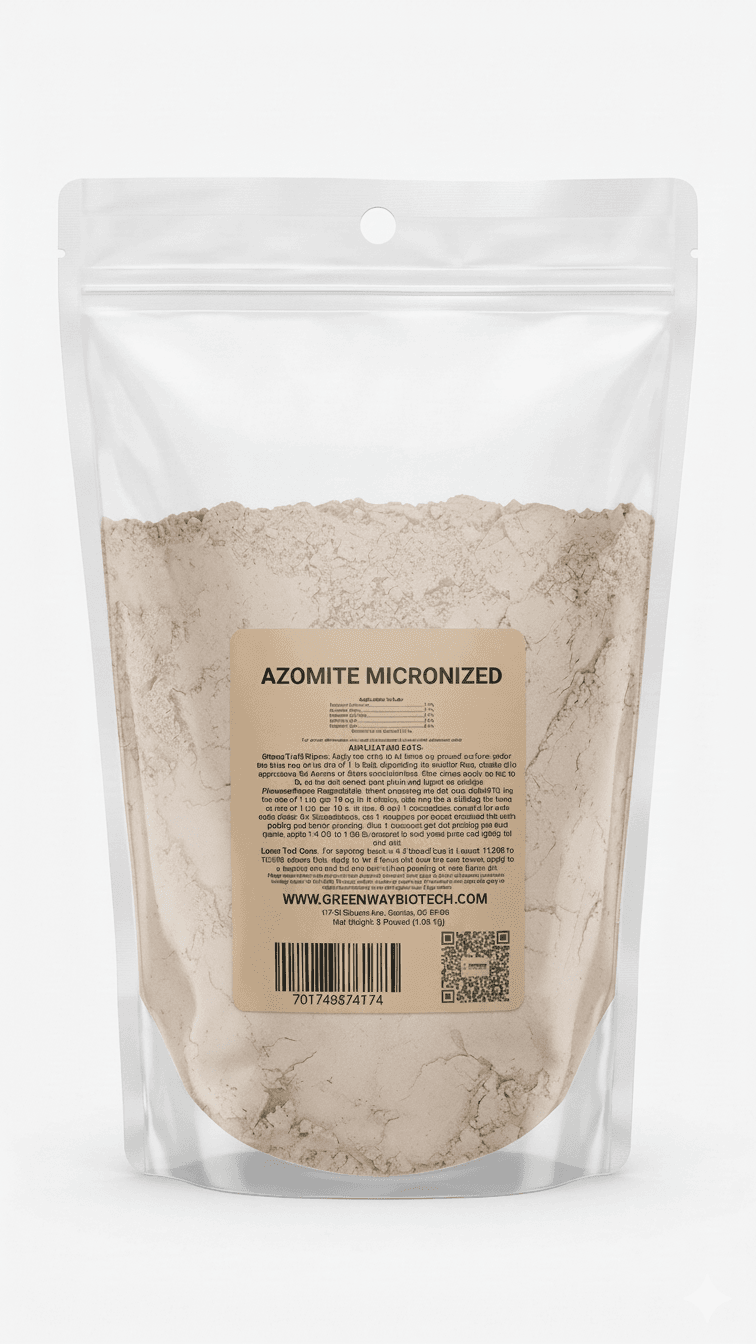
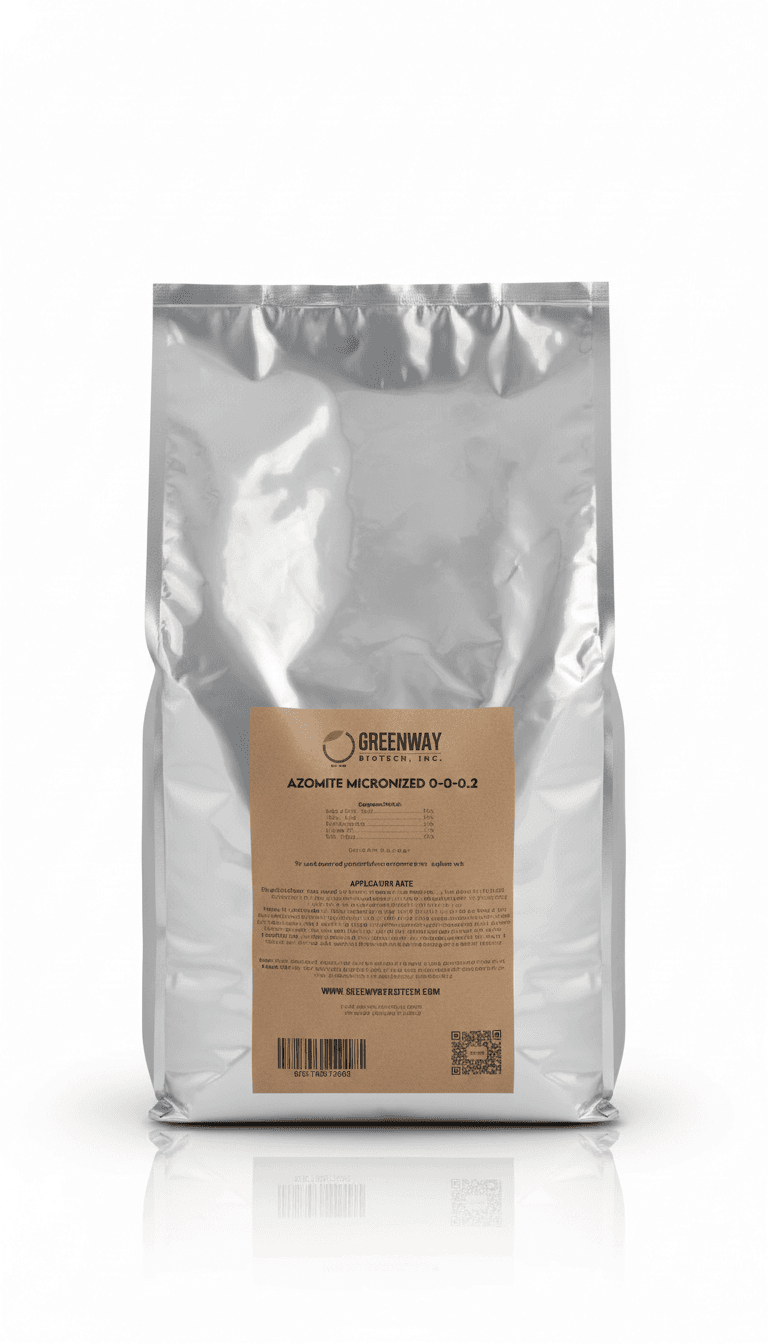
A broad-spectrum trace mineral supplement mined from ancient volcanic ash deposits — delivering approximately 70 trace and ultra-trace elements to remineralize depleted soils and support plant vitality.
Mined from a unique ancient volcanic ash deposit in Utah, Azomite's mineral profile reflects millions of years of geological concentration — a complex that no synthetic fertilizer can replicate.
Azomite delivers approximately 70 trace mineral elements and micro-minerals in a single product, including rare elements such as silica not commonly found in standard organic or synthetic fertilizers.
Azomite is OMRI Listed and approved for certified organic production, meeting the requirements of the USDA National Organic Program so you can use it with confidence on organic crops.
The micronized particle size increases surface area for improved soil contact and mineral availability, allowing trace elements to begin interacting with soil biology more quickly than coarser grades.
Decades of intensive farming and irrigation can leach trace minerals from soil. Azomite can significantly improve the micronutrient foundation that supports plant health and flavor by restoring a broad mineral spectrum.
Many gardeners notice stronger, more resilient plants when trace minerals are replenished — healthy mineral nutrition is associated with improved plant cell integrity and natural resistance to stress.
Suitable for field crops, vegetables, fruits, vines, turf, ornamentals, trees, and houseplants. Azomite adapts to a wide range of growing systems from backyard raised beds to commercial acreage.
Azomite is also approved and used as a livestock and poultry feed supplement, reflecting the same mineral-dense profile that benefits both plant and animal biology.
Our Azomite is independently lab tested for heavy metal content, with results consistently well below required limits. Third-party results are available in the Certificate of Analysis.
Mined and processed in the United States, then packaged at Greenway Biotech's facility in Madera, California — providing traceability from mine to bag.
Azomite is a naturally mined mineral product — not a blended or engineered formula. Its complete mineral profile comes from a single geological deposit formed by ancient volcanic eruptions that deposited ash into a seabed environment over millions of years. The resulting rock contains an unusually broad concentration of trace and ultra-trace elements.
The primary and sole source of all minerals in Azomite — a hydrated sodium calcium aluminosilicate (HSCAS) material containing the full ~70-element trace mineral profile.
Includes silica, calcium, magnesium, potash, and dozens of rare ultra-trace elements not present in most fertilizers — delivered in naturally occurring mineral ratios.
Potassium supports enzyme activation, stomatal regulation, and water transport within plant tissue. Even the modest 0.2% potash in Azomite contributes to the overall mineral balance.
Calcium is critical for cell wall integrity and root tip development. Azomite's naturally occurring calcium contributes to soil structure and plant cell strength as part of its broader mineral profile.
Magnesium is the central atom in chlorophyll, making it essential for photosynthesis. Azomite provides a modest but natural source of magnesium alongside its trace mineral complex.
Silica strengthens plant cell walls and is associated with improved pest and disease tolerance. Azomite contains silica and a range of ultra-trace elements not found in conventional fertilizers.
Macronutrients (N-P-K) are essential for basic plant growth, but trace elements serve as cofactors for hundreds of enzymatic reactions. When these are depleted — as often happens in intensively farmed or heavily irrigated soils — plants may exhibit unexplained deficiencies, poor flavor, and reduced vigor even with adequate NPK supplementation. Azomite addresses this gap by providing a broad-spectrum trace mineral profile from a naturally occurring geological source.
Azomite begins integrating into soil. Microbial populations may start interacting with newly available mineral ions. No visible plant changes expected at this stage.
Many gardeners notice improved color and increased root branching as trace minerals become more bioavailable. Results vary by soil conditions and existing mineral levels.
Cumulative effects on plant vigor, leaf density, and fruit development are often observed in subsequent harvests. Annual reapplication maintains the mineral foundation over time.
Important: Application rates for field crops should always be based on a current soil test and estimated crop removal. The ranges below are general reference figures for medium-testing soils at typical yield goals. Actual rates may be higher or lower depending on soil test level, existing mineral balance, soil texture, and local extension recommendations. Consult your local extension service for crop-specific guidance.
| Application Area | Rate & Method |
|---|---|
| Field Crops | Initial application: 75–200 lbs per acre for medium-testing soils. Annual maintenance: 50–100 lbs per acre, or as needed based on soil test results. |
| Citrus / Fruit / Vines | Apply 1–5 lbs annually under the drip line, depending on tree size. Double the rate for decline or blight-affected trees. Grapes: Apply 0.5–1 lb around each plant and lightly till into soil. |
| Flowers, Plants & Vegetables |
Soil prep: 1 lb per 10 sq. ft. Rows: 1 lb per 25 ft of row, mixed into soil. Established beds: Sprinkle 1 tsp around each plant. Houseplants: Mix 1 tsp per 2-inch pot diameter before planting; reapply 1 tsp quarterly. Roses: 0.5–1 lb per plant, tilled lightly into soil. |
| Lawn & Turf |
Existing lawns: 44 lbs covers 12,000–15,000 sq. ft.; apply up to 4 times per year. New lawns: Apply at a heavier rate and till into soil before seeding or sodding. |
| Ornamentals & Shrubs | Apply 0.5–1 lb around each plant and lightly till into soil. |
| Trees | Apply annually under the drip line from trunk to drip-line edge, based on trunk base diameter: 10 inches or less: 1–5 lbs 10–20 inches: 5–15 lbs 20 inches or more: 15–40 lbs |
Azomite is most effective when used to address documented trace mineral deficiencies. A basic soil test will reveal which elements are low, helping you determine application frequency and whether companion amendments such as Dolomite Lime or Gypsum may be warranted alongside Azomite for your specific soil profile.
Refer to the Safety Data Sheet (SDS) for complete safety information.
Raises soil pH and provides calcium and magnesium — an excellent companion to Azomite in acidic soils where mineral availability is restricted.
Improves soil structure in clay soils without affecting pH. Pair with Azomite for a comprehensive soil amendment approach in compacted or sodium-affected soils.
Provides natural plant hormones, potassium, and additional micronutrients. Works synergistically with Azomite to support vigorous plant establishment and root health.
High-phosphorus organic amendment for root development and flowering. Combine with Azomite to deliver both macro and trace mineral nutrition from organic sources.
Fast-release nitrogen for vigorous vegetative growth. A complete organic program often includes a nitrogen source, phosphorus source, and a trace mineral supplement like Azomite.
Provides nitrogen, potassium, and triacontanol — a plant growth stimulant studied for its role in supporting yield. Pair with Azomite for a balanced organic soil amendment routine.
Azomite is a naturally mined mineral product sourced from a unique geological deposit in Utah, USA. The deposit was formed when ancient volcanic eruptions deposited ash into a seabed environment, creating a hydrated sodium calcium aluminosilicate (HSCAS) material. Over millions of years, this material accumulated an unusually broad spectrum of approximately 70 trace and ultra-trace elements. The name "Azomite" stands for "A to Z Of Minerals Including Trace Elements." It is mined, processed, and sold without chemical alteration.
Yes. Our Azomite Micronized is OMRI Listed for use in certified organic production, meeting the standards of the USDA National Organic Program. It is also registered with the appropriate state agricultural departments for use as a soil amendment. Always verify your specific certification body's requirements if you are seeking organic certification for your operation.
Micronized Azomite has a finer particle size than granular grades, which increases surface area for contact with soil particles and biology. This can support more consistent mineral distribution when broadcast applied. Ultra-fine (ite) powder is the finest available and is sometimes used in liquid amendment mixing or where a smaller particle size is preferred; Azomite remains largely insoluble regardless of particle size, though the ultra-fine grade can be used in hydroponic reservoirs with some settling expected. For standard garden and agricultural soil applications, micronized powder is the most commonly used grade.
While Azomite is a natural product, applying well above recommended rates is not more effective and may shift soil mineral balance in unintended ways. Follow the rates listed in the Application Rates & Directions section. For maintenance applications, an annual rate of 50–100 lbs per acre (or proportional rates for home gardens) is typically sufficient. If you are unsure, a soil test will help guide your application rate more precisely.
Azomite is generally considered pH-neutral and is not expected to significantly raise or lower soil pH at typical application rates. Unlike limestone or sulfur, it is not used as a pH amendment. However, because it is a complex mineral product, periodic soil testing is always recommended when making any amendment additions to your garden or field.
The primary guaranteed analysis includes Soluble Potash (K₂O) 0.2%, Calcium 1.8%, Magnesium 0.5%, Chlorine 0.1%, and Sodium 0.1%. Beyond these, Azomite contains approximately 70 trace and ultra-trace elements including silica, iron, manganese, zinc, boron, selenium, and numerous rare earth elements. For the complete elemental breakdown, refer to our Certificate of Analysis. For a deeper look at why trace minerals matter, read Major Elements vs. Trace Elements: Why Your Plants Need Both. You may also find our article on Essential Micronutrients for Healthier Plants a useful complement.
Azomite is a natural mineral product and is not acutely toxic at typical garden application rates. However, as with any fine mineral powder, inhalation of large quantities of dust should be avoided. Keep children and pets off treated areas until the powder has been watered in or incorporated into soil. The fine dust can be mildly irritating to eyes and respiratory tracts. Always store bags securely away from children.
Yes. For raised beds and container mixes, Azomite is a popular addition during initial soil preparation. Use approximately 1 lb per 10 sq. ft. for raised beds, tilled into the top several inches. For containers, mix 1 tsp per 2-inch pot diameter into potting soil before planting, and reapply 1 tsp per pot quarterly. Many gardeners report strong results over multiple growing seasons when Azomite is incorporated as part of a broader soil preparation strategy. For a comprehensive guide to building healthy soil from the ground up, see The Organic Gardener's Guide to Soil Preparation. You can also read about how Azomite fits a broader soil health approach in The 5 Fertilizers That Will Also Encourage Soil Health.
We stand behind the quality of our Azomite. If you are not satisfied with your purchase, we offer a 90-day money-back guarantee. Simply return the unused portion in its original packaging and we will process a full refund — no questions asked. Contact us at questions@greenwaybiotech.com to initiate a return.
At Greenway Biotech, we believe in giving back to our community. 1% of all profits from our product sales go to the Greenway Foundation, dedicated to supporting children's education. Your purchase directly contributes to improving educational opportunities for children. Learn more at greenway.foundation.
Greenway Biotech, Inc. has been a trusted source of fertilizers, soil amendments, and agricultural minerals since 1989. Originally established in California, we are now located at 17861 Road 24, Madera, CA 93638 — positioned in the heart of the San Joaquin Valley to better serve commercial and home growers alike. We specialize in CDFA-registered agricultural fertilizers, chelated micronutrients, organic amendments, and magnesium wellness products, with a commitment to technical accuracy, third-party testing, and regulatory compliance.
Note: A product label PDF link should be added here once available. Replace the COA link above with the SDS-only standard pairing once a separate product label PDF is uploaded to Shopify CDN.
Couldn't load pickup availability