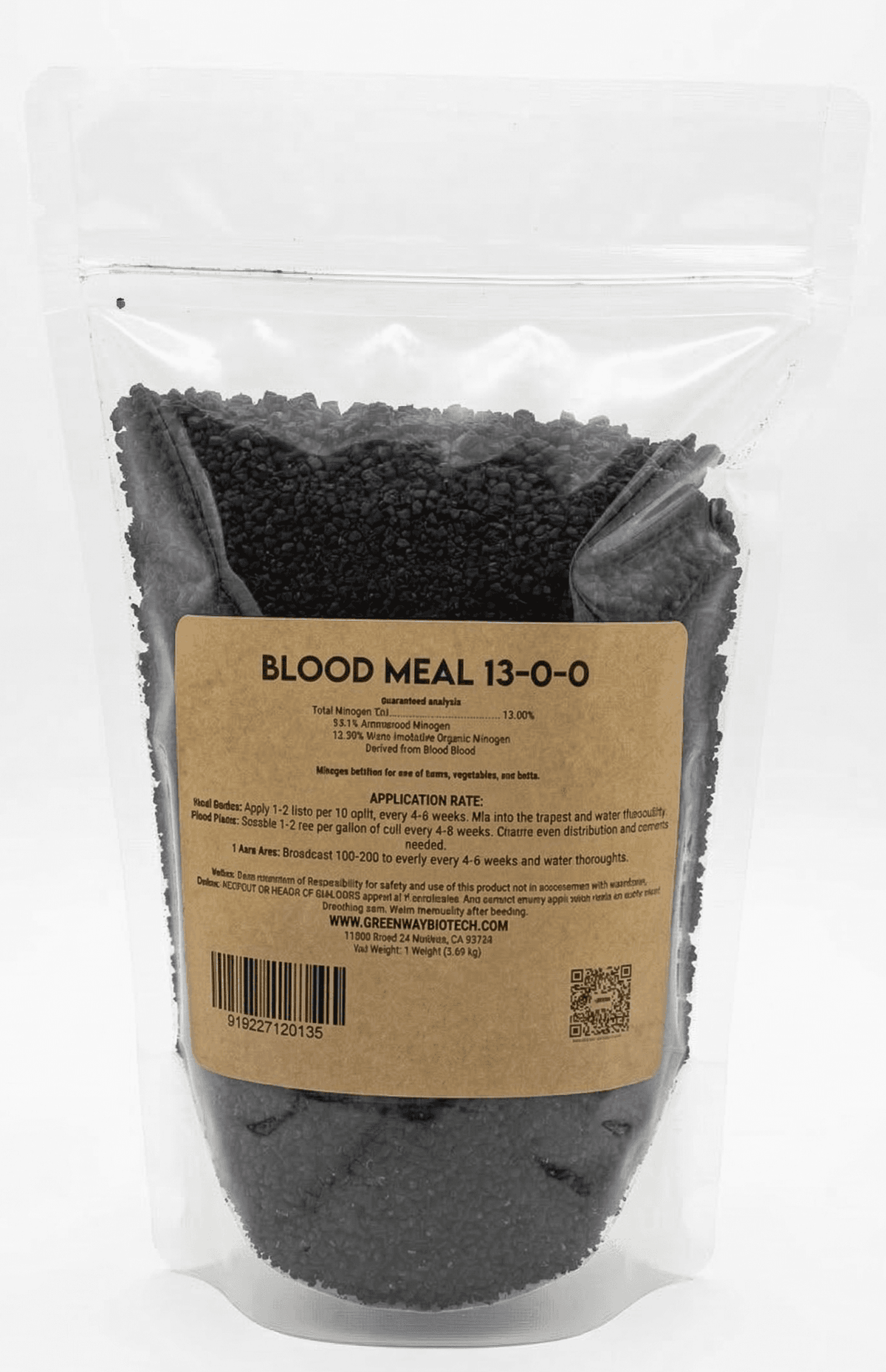
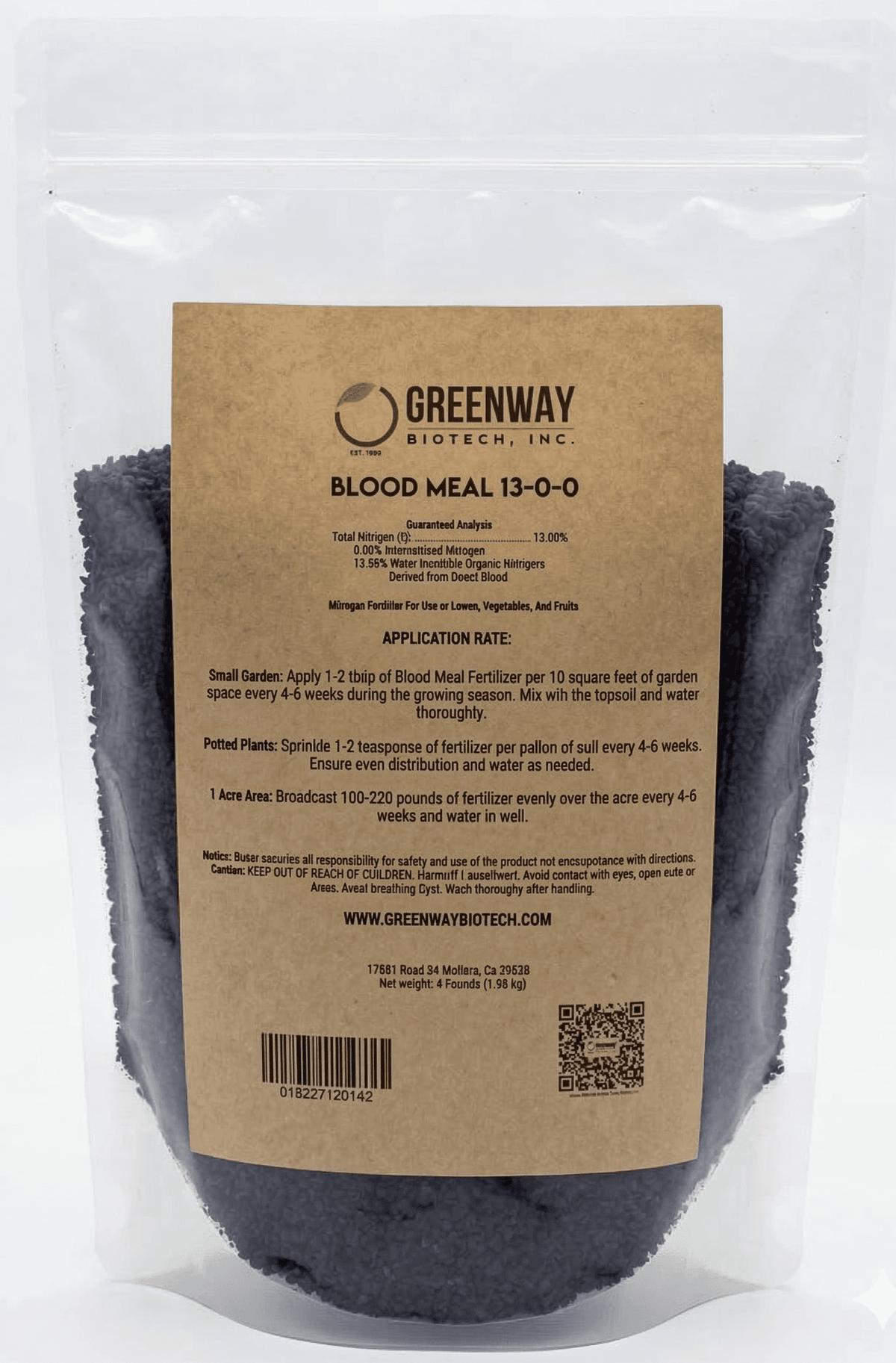
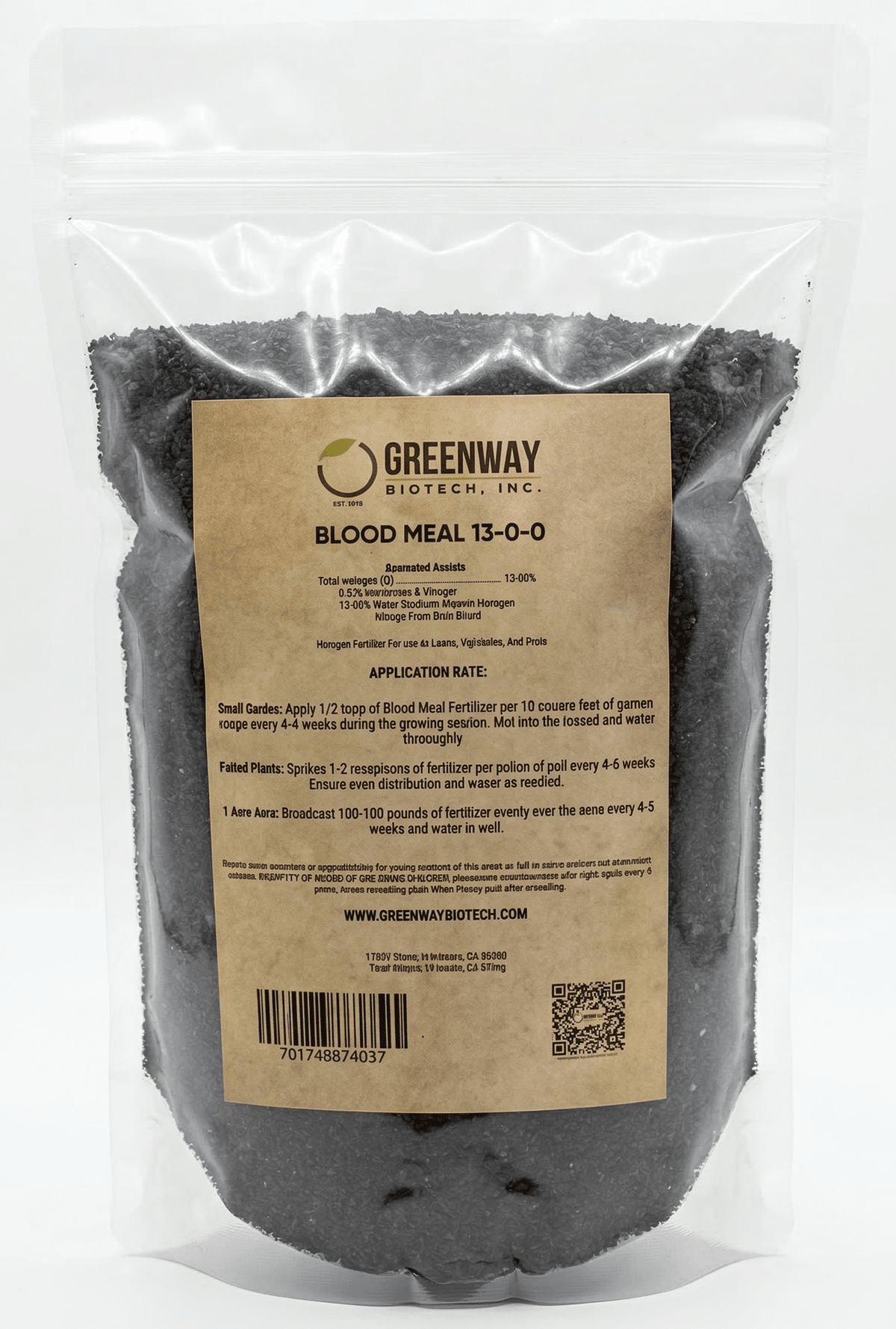
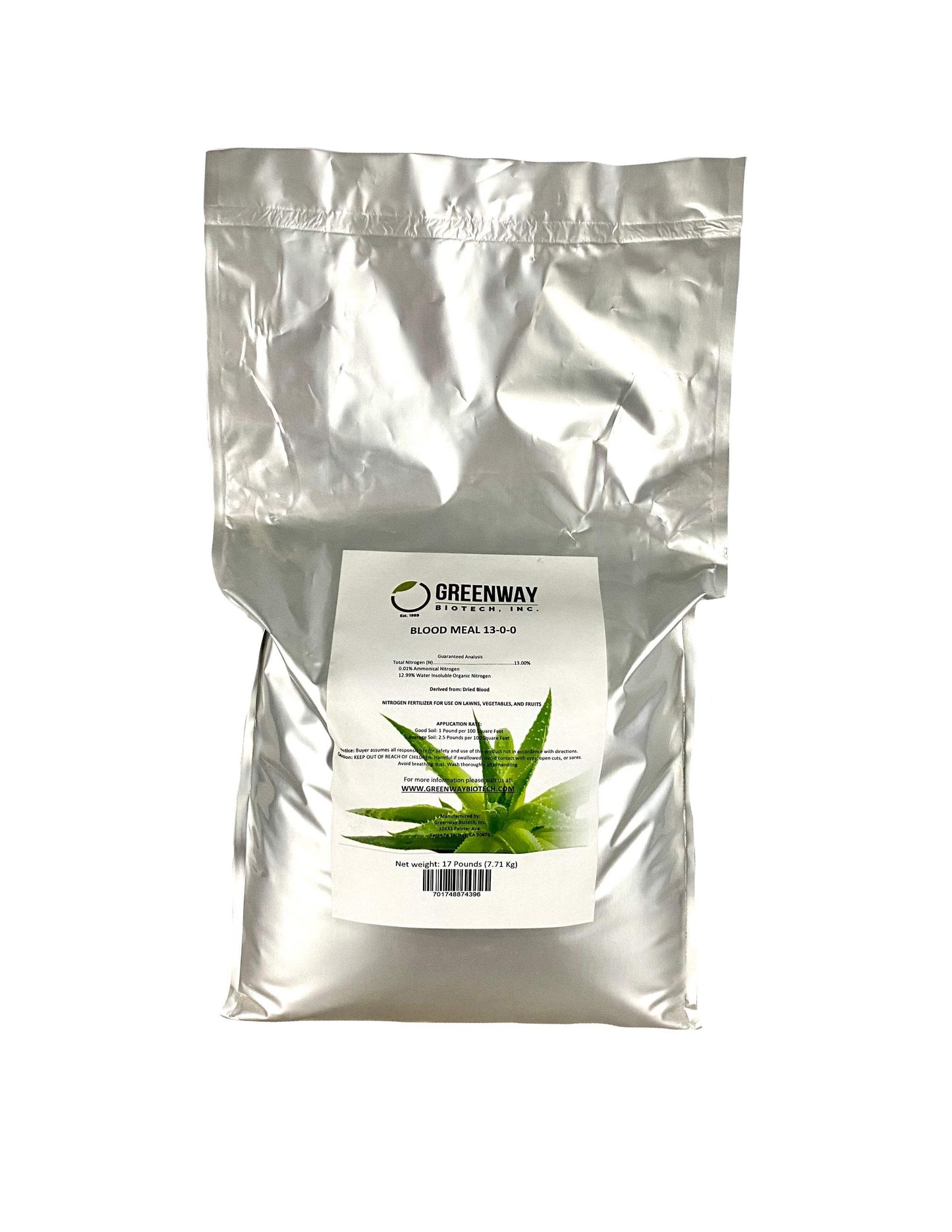
Premium organic blood meal fertilizer derived from bovine blood, independently lab tested and made in the USA. With 13% organic nitrogen, it helps support vigorous vegetative growth, greener leaves, and lush foliage — one of the most concentrated organic nitrogen sources commonly used in gardening. The 40 lb bag is repackaged from OMRI Listed® material.
One of the more concentrated organic nitrogen sources commonly used in gardening. Drives rapid chlorophyll production and vigorous vegetative growth without synthetic inputs.
Blood meal begins feeding as soil microbes break down its protein-bound nitrogen. In warm, moist, biologically active soil, plants may begin responding within 1–3 weeks, with benefits often continuing for several weeks after that.
The 40 lb bag is repackaged from OMRI Listed® material, making it suitable for use in certified organic production systems. Suitable for vegetables, fruits, herbs, and ornamentals when applied according to label directions.
Derived from dried bovine blood, an existing byproduct of USDA-inspected meat processing facilities. Choosing blood meal puts that byproduct to productive agricultural use.
Proteins in blood meal contribute organic nitrogen that soil microbes mineralize, supporting microbial activity and the broader soil food web over the feeding period.
Independently lab tested for heavy metal content to support regulatory and quality requirements for food crop and home garden use.
Leafy greens, corn, brassicas, and lawns all have elevated nitrogen demands — blood meal delivers exactly the nutrient profile these plants need most during vegetative growth.
Microbial breakdown that drives nitrogen release is strongly influenced by soil temperature. Performance is usually best once soils are consistently above about 50°F, and strongest in warm, evenly moist soil.
Use as a soil amendment worked into beds, side-dress around established plants, or mix into warm water for a nitrogen-rich soil drench for containers.
Choose from 2 lb, 5 lb, 10 lb, 25 lb, and 40 lb bags to match the scale of your garden — from a single raised bed to a full-acre production plot.
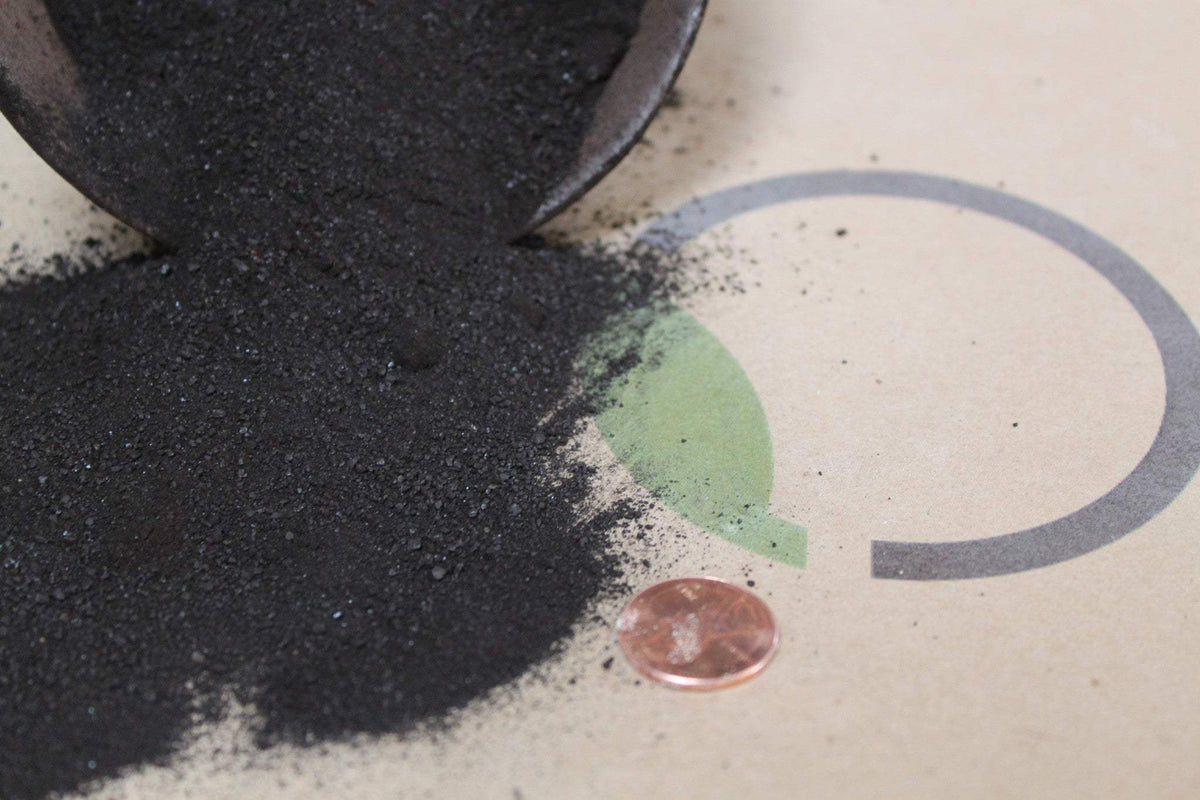
Blood meal is a single-ingredient organic fertilizer — no fillers, binders, or synthetic additives. It is made from dried bovine blood collected at USDA-inspected processing facilities, then milled into a fine powder that mixes readily into soil. Because its nitrogen is primarily protein-bound, most of its feeding effect depends on microbial breakdown in the soil.
Naturally contains approximately 13% nitrogen in peptide and amino acid form. Soil bacteria hydrolyze these proteins into plant-available ammonium and nitrate over several weeks in warm, active soil.
Blood meal supplies nitrogen only (13-0-0). To build a complete nutrient program, pair it with sources of phosphorus and potassium:
Adds slow-release phosphorus for root development, flowering, and fruiting — the macronutrient blood meal naturally lacks.
Adds potassium for stress resistance, fruit quality, and cell function. Safe to combine with blood meal in soil applications.
Provides additional nitrogen and potassium. A gentler complement for flowering plants and ornamentals where sustained, moderate feeding is preferred.
Blood meal is essentially concentrated protein — roughly 80% crude protein by dry weight. Soil microbes break that protein into amino acids and then into ammonium, making it one of the faster-releasing organic nitrogen sources available. Release is strongly influenced by soil temperature, moisture, and microbial activity.
Nitrogen is the engine of vegetative growth. It is a key component of chlorophyll (which drives photosynthesis), amino acids (the building blocks of plant proteins), and nucleic acids. Blood meal's 13% N level makes it one of the more concentrated organic nitrogen sources commonly used in gardening.
Blood meal is derived from animal blood, which contains no significant phosphorus. This makes it useful as a targeted nitrogen amendment without the risk of over-applying phosphorus. Pair with Bone Meal 3-15-0 when phosphorus is also needed.
Blood meal supplies no potassium. For crops that need all three macronutrients, combine with Potassium Sulfate 0-0-53 or Alfalfa Meal 2.5-0-2.5 to round out the nutrient program.
Unlike urea or ammonium sulfate, which release nitrogen through rapid chemical dissolution, blood meal's nitrogen is locked in protein bonds. Soil bacteria must first digest the protein — a process that creates a natural sustained-release effect and feeds the soil food web simultaneously.
Plants receiving adequate nitrogen produce larger, darker green leaves with more chlorophyll — directly increasing photosynthetic efficiency and above-ground biomass. This is why leafy greens and corn respond so visibly to blood meal applications.
Microbial activity is strongly reduced in cold soil. Performance is usually better once soils are consistently above about 50°F, and strongest in warm (65–80°F), evenly moist, biologically active soil. In cold conditions, consider a water-soluble nitrogen source for faster availability.
Microbial colonization of the protein begins in warm soil (above ~50°F). No visible plant response yet.
Nitrogen begins becoming plant-available in warm, moist, biologically active soil. New growth may begin to accelerate.
Deeper green color often visible in foliage as chlorophyll production increases with nitrogen availability.
Nitrogen supply begins to taper as protein reserves are fully mineralized. Reapply based on crop needs, growth response, and soil test results.
Results vary with soil temperature, moisture, texture, and microbial activity. Best performance when soil is consistently above about 50°F and kept evenly moist.
Rates below are general starting points for home gardens and small-scale production. Actual nitrogen needs vary by soil type, existing organic matter, prior fertilization history, and crop variety. A soil test is the most reliable way to determine how much nitrogen your specific site requires. For field-scale or commercial production, consult your local extension service or a certified crop advisor.
| Crop Type | Per 100 sq ft | Per Plant | Frequency |
|---|---|---|---|
| Leafy Greens (lettuce, spinach, kale) | 3–4 lb | 2–3 tbsp | Every 4–6 weeks |
| Corn | 4–5 lb | 2–3 tbsp side-dress | At planting + V6 stage |
| Fruiting Vegetables (tomatoes, peppers) | 2–3 lb | 1–2 tbsp | Vegetative phase only |
| Brassicas (cabbage, broccoli) | 3–4 lb | 2 tbsp | Every 4–6 weeks |
| Plant Type | Application Rate | Frequency |
|---|---|---|
| Annual Flowers | 1–2 tbsp per plant | Every 4–6 weeks |
| Perennial Flowers | 2–3 tbsp per plant | Spring & mid-summer |
| Roses | ¼ cup per bush | Monthly during growing season |
| Plant Size | Amount | Frequency |
|---|---|---|
| Small shrubs (under 3 ft) | ½ cup | 2× per year |
| Large shrubs (over 3 ft) | 1–2 cups | 2× per year |
| Young trees | 1–2 cups | 2–3× per year |
| Mature trees | 2–4 cups | 2× per year |
| Application | Rate | Timing |
|---|---|---|
| Maintenance feeding | 8 lb per 1,000 sq ft | Early spring or fall |
| Standard feeding | 10 lb per 1,000 sq ft | Spring or fall |
| Boost for poor lawn | 12 lb per 1,000 sq ft | Split into 2 applications |
| Pot Size | Amount per Application | Frequency |
|---|---|---|
| 6-inch pot | 1 tbsp | Every 4–6 weeks |
| 10-inch pot | 2 tbsp | Every 4–6 weeks |
| 14+ inch pot or grow bag | 3 tbsp | Every 4–6 weeks |
Do not exceed the recommended rates for your crop type. Blood meal is a high-nitrogen input — over-application can delay flowering and fruiting in many crops and may cause ammonium toxicity in sensitive plants, particularly in warm, moist soil where microbial activity is high.
For tomatoes, peppers, and other fruiting crops, apply blood meal during the vegetative (leafy growth) phase only. Stop nitrogen applications once flowering begins — excess nitrogen at that stage redirects energy into leaves at the expense of fruit set. Switch to a phosphorus-forward fertilizer like Bone Meal 3-15-0 once buds appear.
Blood meal is an animal-origin soil amendment. For edible crops, incorporate it into soil rather than leaving it on the surface, avoid direct contact with harvestable plant parts, and follow good produce-safety practices. Allow it to be watered in thoroughly before harvesting leafy greens.
Refer to the Safety Data Sheet (SDS) for complete safety information.
Blood meal supplies 13% nitrogen and nothing else. For a complete nutrient program, pair it with sources of phosphorus, potassium, and micronutrients based on your crop and soil test results.
The most natural pairing — blood meal handles nitrogen while bone meal provides the phosphorus and calcium needed for roots, flowers, and fruit.
Rounds out the nutrient program with potassium for stress tolerance, fruit quality, and enzyme activation. Safe to combine with blood meal.
Adds a slower secondary nitrogen source plus potassium — excellent for roses, perennials, and ornamentals where gentle, sustained feeding is preferred.
If your soil is acidic (below pH 6.0), nitrogen from blood meal may not release efficiently. Dolomite lime raises pH and supplies calcium and magnesium — verify with a soil test first.
Adds calcium and sulfur to complement the nitrogen in blood meal without affecting soil pH — ideal for clay soils that need structure improvement.
Blood meal is dried, powdered bovine blood — a byproduct of USDA-inspected meat processing facilities. The blood is collected, spray-dried or flash-dried at high temperature, and milled into a fine powder. The drying process kills pathogens and concentrates the protein, yielding approximately 13% nitrogen by weight. It has been used as an organic nitrogen source for centuries and remains one of the more concentrated organic amendments commonly available to gardeners.
Blood meal's nitrogen is bound in protein chains. Soil bacteria must break down these proteins into amino acids and then into ammonium before plants can absorb them. In warm, moist, biologically active soil, nitrogen often begins becoming available within 1–3 weeks, with benefits commonly extending for several weeks after that. Release slows significantly in cold soil because microbial activity decreases. For more on how nitrogen functions in plants, see our article on the function of nitrogen in plants.
In warm, moist soil (consistently above about 50°F), plants often begin responding within 1–3 weeks of application. Visible effects like accelerated leaf growth and deeper green color may follow in the weeks after that. In cold or dry soil, release is much slower because microbial activity drives the process. Blood meal is considered fast-acting for an organic nitrogen source, but it does not work as immediately as a water-soluble synthetic fertilizer.
For tomatoes during the vegetative phase, 1–2 tablespoons per plant worked into the top layer of soil is a typical starting point. Do not apply once flower buds appear — excess nitrogen at that stage can push leafy growth at the expense of fruit set. Once flowering begins, transition to a phosphorus-supportive fertilizer like Bone Meal 3-15-0.
Yes — the scent of blood meal can attract dogs, cats, raccoons, and other animals. To minimize this, work blood meal thoroughly into the top 2–3 inches of soil rather than leaving it on the surface, and water it in immediately after application. Once incorporated and moistened, the scent dissipates more quickly. Store unused product in a sealed container away from pets. If animal access is a persistent issue, consider Alfalfa Meal 2.5-0-2.5 as a lower-odor nitrogen alternative.
Blood meal works best on nitrogen-hungry crops: leafy greens, corn, brassicas, and herbs in their vegetative growth phase. It is not recommended for legumes (beans, peas), which fix their own nitrogen and rarely benefit from added N. For fruiting crops like tomatoes and peppers, use blood meal only during the vegetative phase — reduce or stop applications at the first sign of flower buds. Because blood meal is an animal-origin soil amendment, incorporate it into soil and avoid direct contact with harvestable plant parts for edible crops.
Blood meal is not a pH management product. Like many nitrogen inputs, repeated use over time can influence soil pH, so if your soil is already acidic, periodic soil testing is the best way to track any changes. If your soil tests acidic (below pH 6.0), consider adding Dolomite Lime to balance pH alongside your nitrogen program. For more on building healthy soil, see our Organic Gardener's Guide to Soil Preparation.
Blood meal is commonly used in certified organic production systems. The 40 lb bag is repackaged from OMRI Listed® material. For food gardens, incorporate it into soil, avoid direct contact with harvestable plant parts, and follow good produce-safety practices for animal-origin soil amendments. Allow it to be watered in thoroughly before harvesting leafy greens. For a broader look at how organic and synthetic fertilizers differ, see our organic vs. synthetic fertilizer comparison.
Blood meal is derived from animal blood, which is naturally very high in protein (and therefore nitrogen) but contains no significant phosphorus or potassium. This is the natural nutrient profile of the source material. Rather than a limitation, use blood meal as a targeted nitrogen amendment and pair it with Bone Meal 3-15-0 for phosphorus and Potassium Sulfate 0-0-53 for potassium when a complete program is needed.
Every bag of Greenway Biotech Blood Meal is independently lab tested for heavy metal content and verified against quality standards before packaging. The 40 lb bag is repackaged from OMRI Listed® material and sourced from USDA-inspected processing facilities.
We stand behind every product we sell. If you are not satisfied with your purchase for any reason, contact us within 90 days for a full refund or exchange — no questions asked.
Blood meal puts an existing animal-processing byproduct to productive agricultural use as a concentrated organic nitrogen source. Choosing blood meal also reduces dependence on fossil-fuel-derived synthetic nitrogen inputs.
Family-owned and operated for 35+ years, Greenway Biotech, Inc. has been supplying premium fertilizers and plant nutrition products since 1989. Based in Madera, California — in the heart of the San Joaquin Valley — we serve commercial growers, hydroponic cultivators, and serious home gardeners with technically accurate, quality-tested products.
Check out our full FAQ page or contact our experts for personalized advice.
Couldn't load pickup availability