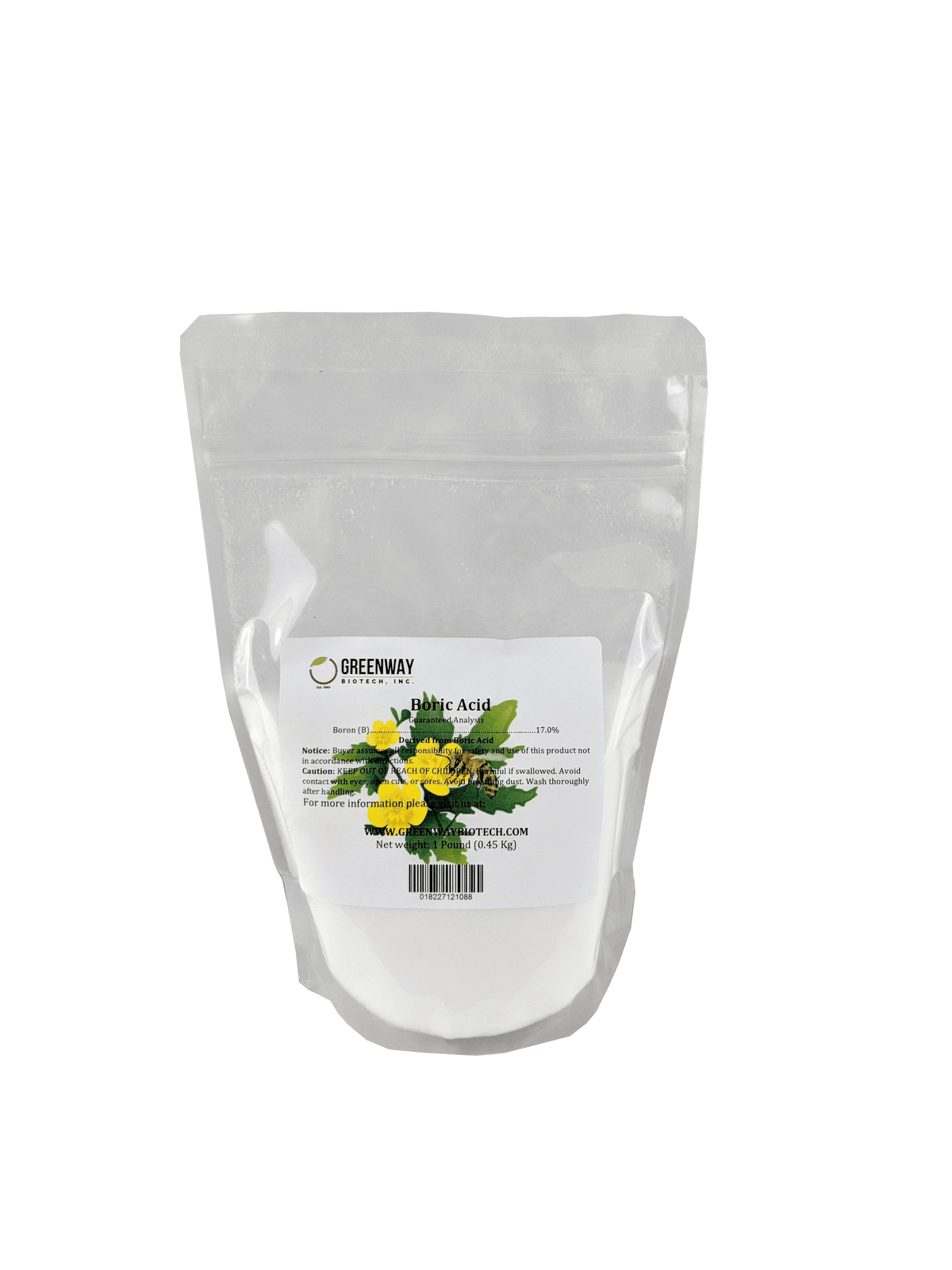
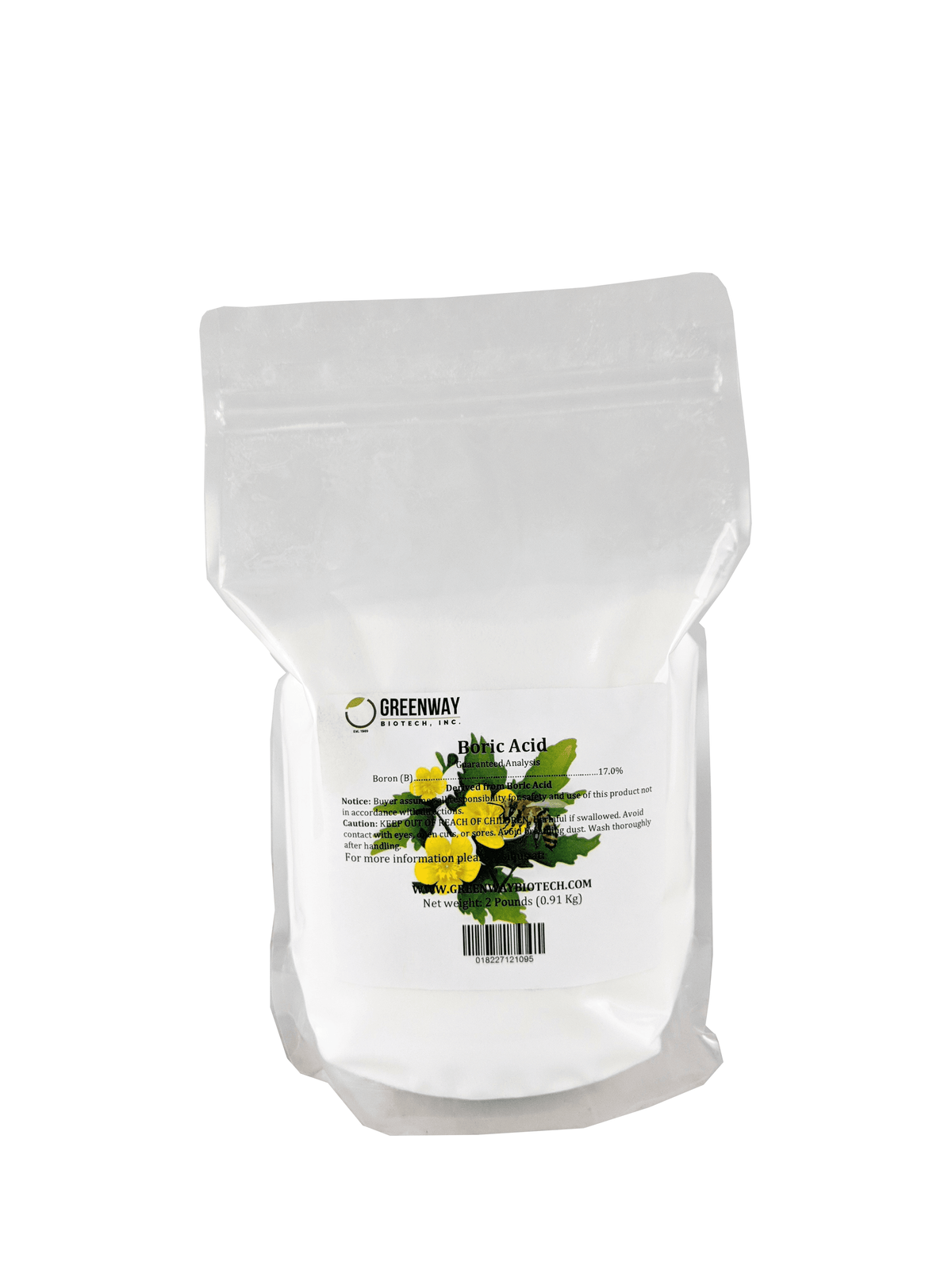
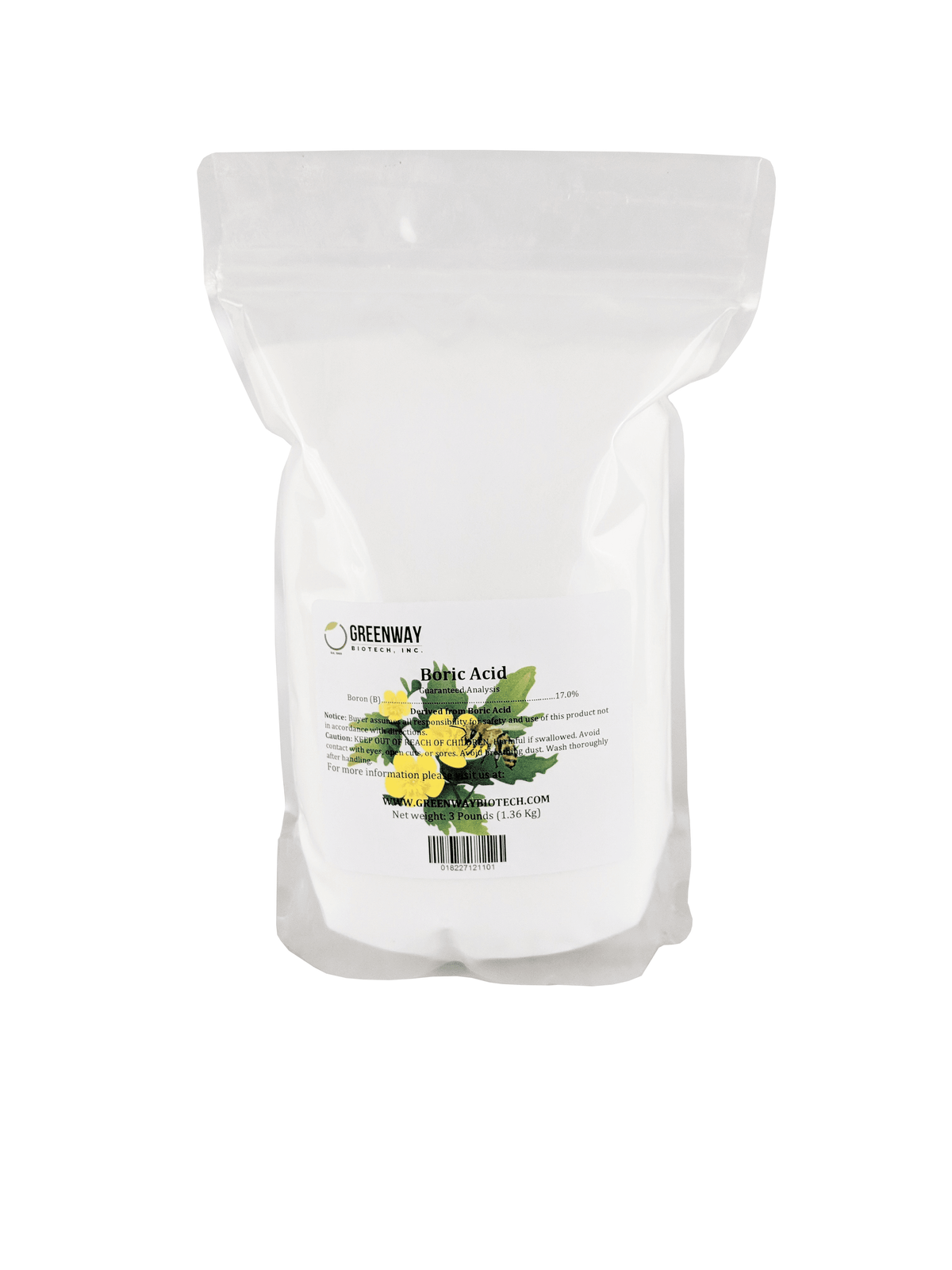
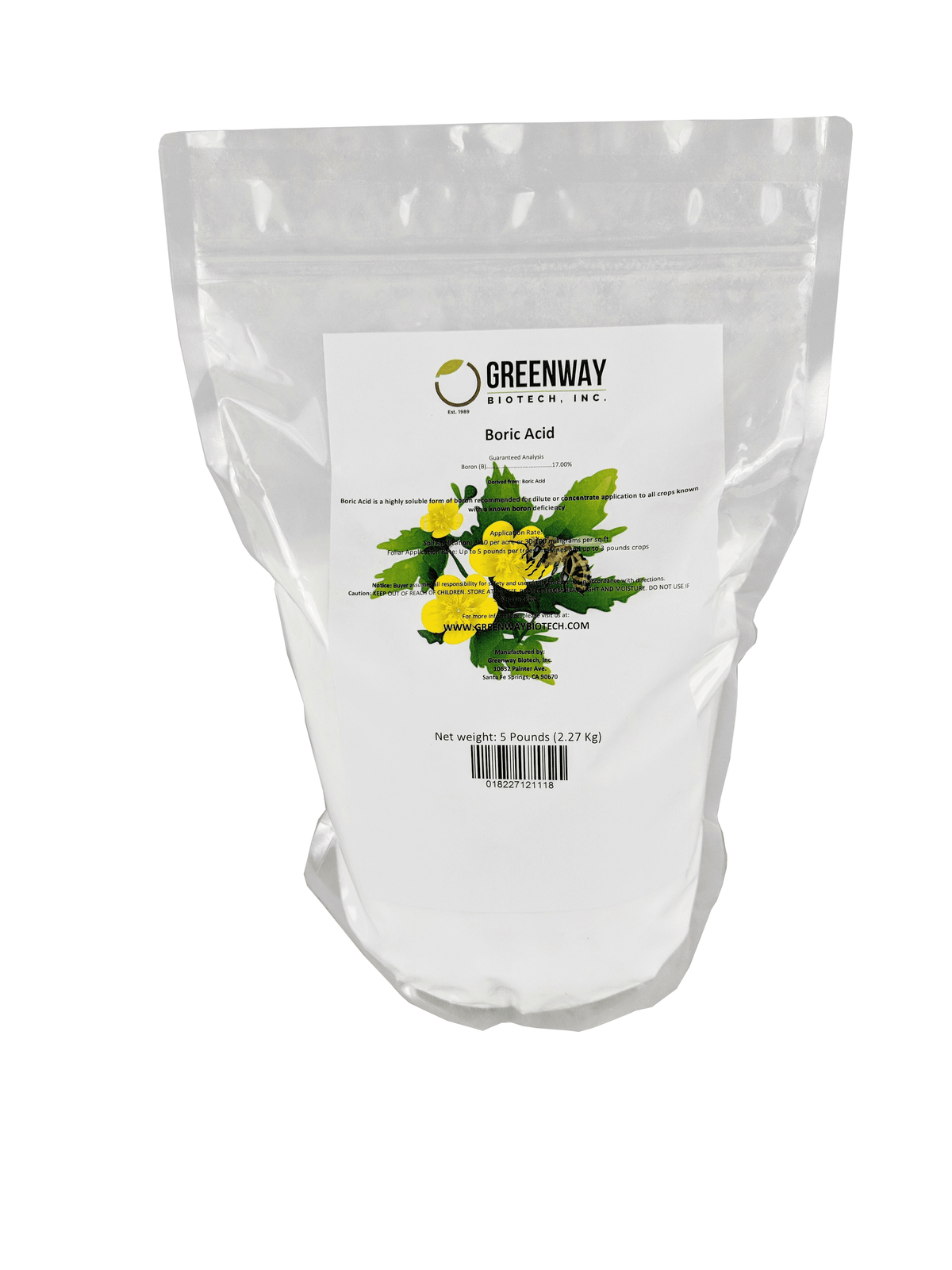
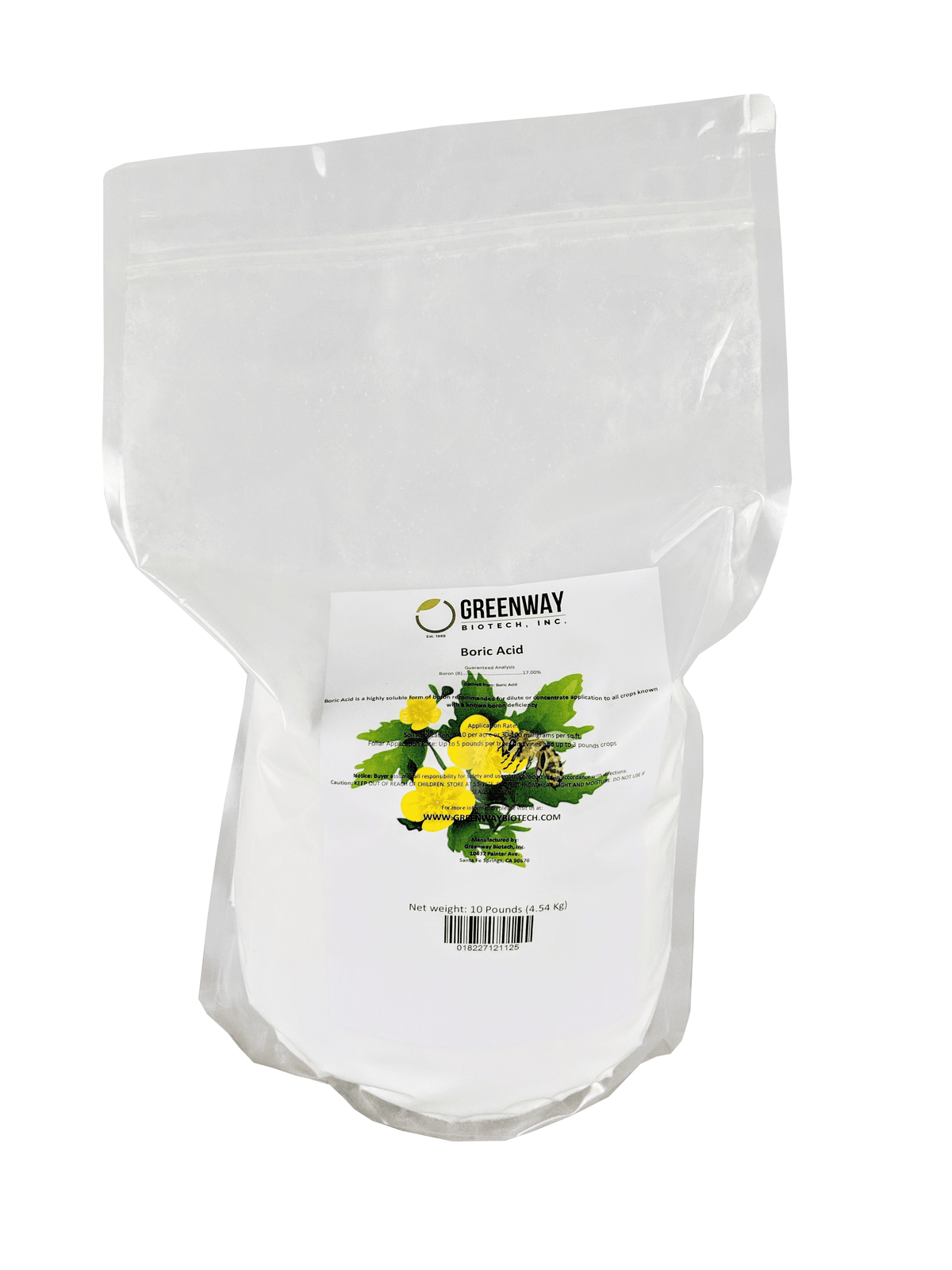
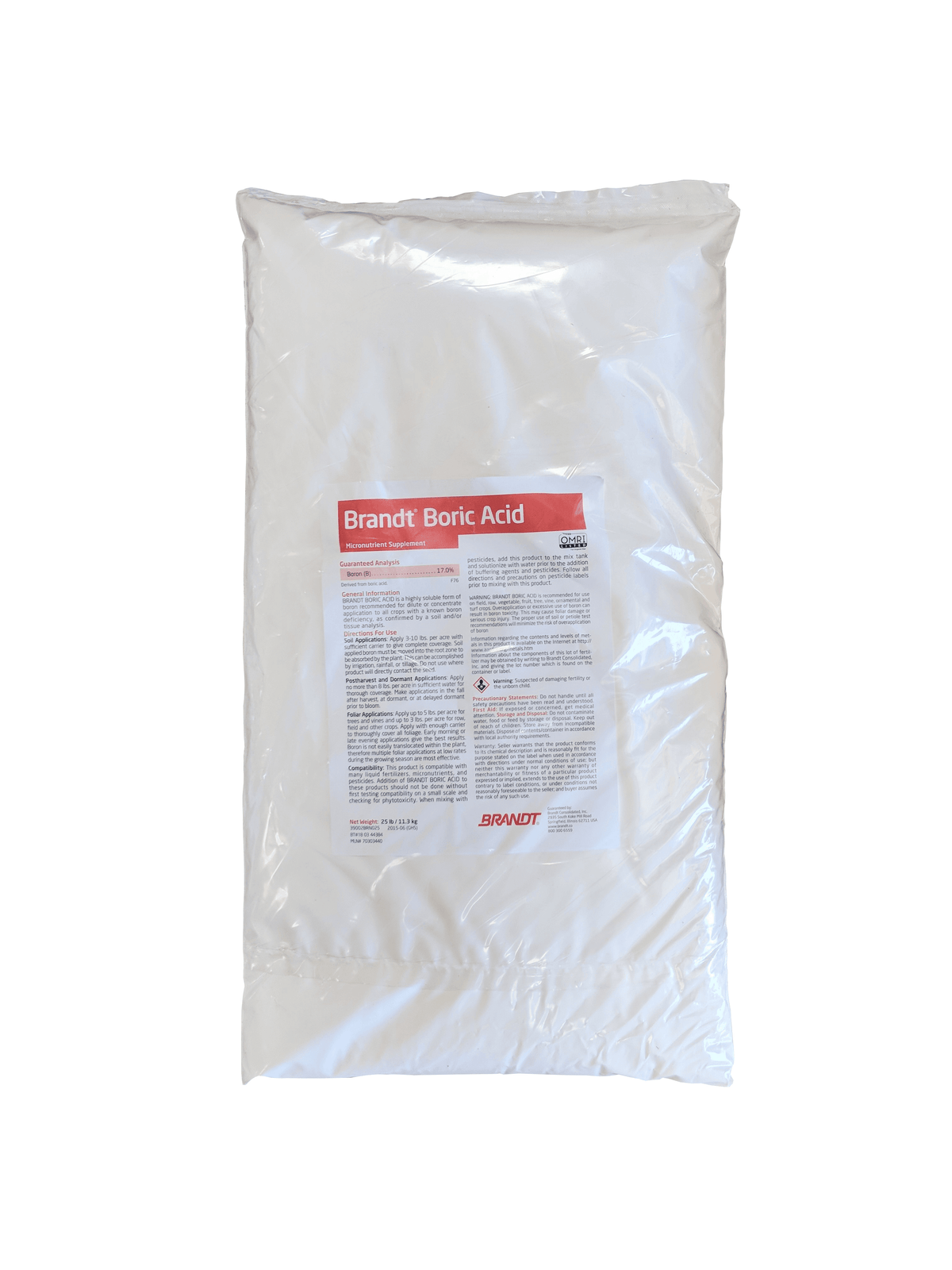
Laboratory-grade boric acid delivering 17% pure boron — an essential micronutrient for cell division, carbohydrate transport, and reproductive development. 99.9% pure, fully water-soluble, and approved for organic growing systems.
Our boric acid is refined to 99.9% purity, ensuring consistent 17% boron content with every application and no unwanted contaminants in your growing system.
At 17% elemental boron, this is one of the highest-concentration boron sources available, allowing precise, low-dose applications across soil, foliar, and hydroponic programs.
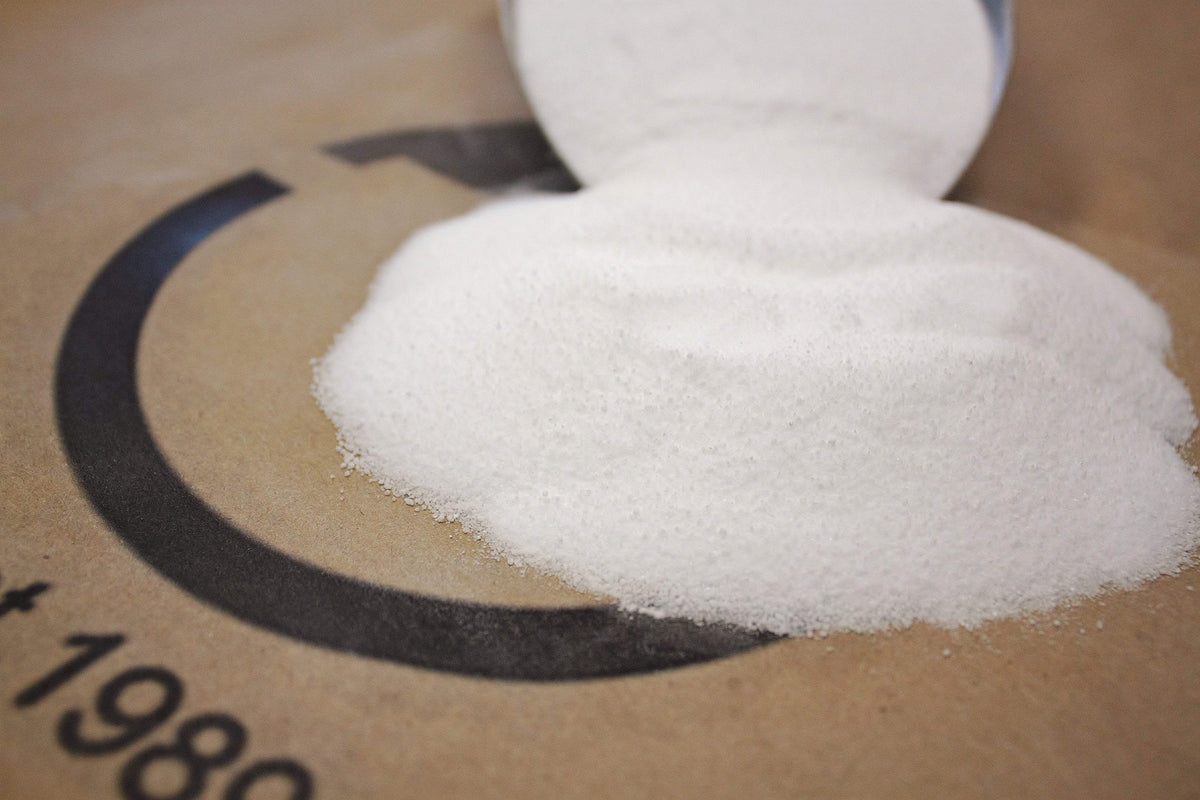
Fine crystalline powder dissolves completely in water — no residue, no clogged drip lines. Compatible with fertigation systems, foliar sprayers, and hydroponic reservoirs.
Approved for use in certified organic growing systems. No synthetic additives, no fillers — just pure boric acid meeting organic certification standards.
Boron is essential for carbohydrate transport, cell wall formation, pollen germination, and fruit set — deficiency can cause hollow stems, poor pollination, and misshapen produce.
Functions as an effective natural deterrent against ants, cockroaches, and silverfish by disrupting their digestive systems — a dual-purpose addition to any integrated pest management program.
Suitable for soil broadcast, foliar spray, fertigation, and hydroponic use. One product covers the full range of application methods for commercial and home growers alike.
Independently lab tested for heavy metal content to ensure every bag meets the purity standards expected by professional growers and organic certifiers.
Processed and packaged in California, USA — CDFA registered and held to strict state agricultural standards for fertilizer quality and labeling.
Odorless and non-staining. Easy to handle, store, and measure — a clean working experience whether you're managing a greenhouse or a backyard garden.
Our Boric Acid 17% Boron is derived from a single, high-purity mineral source — refined to laboratory grade with no fillers or carrier agents added.
Naturally occurring boron mineral compound refined to 99.9% purity. Provides highly bioavailable boron in a stable, water-soluble form with no chelation needed at typical application rates.
Unlike iron, zinc, manganese, and copper — which benefit from EDTA chelation for pH stability — boron as boric acid is naturally stable and plant-available across a wide soil pH range (5.5–7.5). No chelation is required or added.
Boron is required in very small quantities — typically 0.1–0.5 ppm in hydroponic solution and 0.5–3 lbs per acre in soil. A high-purity, high-concentration source like 17% boric acid allows you to dial in precise, low doses without risk of over-application from diluted carrier products.
Boron is structurally integrated into plant cell walls via cross-linking of pectin molecules. Without adequate boron, new growth becomes brittle, distorted, and prone to cracking — especially in rapidly dividing meristematic tissue.
Boron facilitates the loading and movement of sugars through phloem tissue. Deficient plants accumulate starch in leaves while starving roots and reproductive tissues of energy — reducing yield and root development.
Boron is critical for pollen tube germination and elongation. Low boron at bloom time directly reduces pollination success, leading to poor fruit set, seed abortion, and irregular fruit development in fruiting crops.
Boric acid dissolves directly into solution as borate ions (B(OH)₄⁻), the form plants absorb. No conversion step needed — uptake begins as soon as the nutrient reaches the root zone or leaf surface.
At 17% boron, small amounts go a long way. This makes it easy to correct deficiencies without the risk of overshooting — important because boron has one of the narrowest sufficiency ranges of any plant micronutrient.
Boric acid remains plant-available between soil pH 5.5 and 7.5, covering the full range of most commercial and garden growing conditions without the need for pH adjustment or chelation.
Boron is unique among micronutrients: the gap between deficiency and toxicity is smaller than for most other elements. Deficiency symptoms appear below ~0.5 ppm in soil solution; toxicity can occur above ~2 ppm. Always apply at the lower end of recommended rates first, and verify with soil or tissue testing before increasing.
Always start with lower rates and adjust based on plant response and soil or tissue tests. Boron has a narrow range between deficiency and toxicity — precision matters.
| Deficiency Level | Application Rate | Area Coverage | Frequency |
|---|---|---|---|
| Light | 0.5–1 lb | Per acre | As needed (soil test first) |
| Moderate | 1–2 lbs | Per acre | As needed |
| Severe | 2–3 lbs | Per acre | Split into 2 applications |
| Crop Type | Rate per 100 Gallons | Timing | Notes |
|---|---|---|---|
| Vegetables | 0.1–0.2 lbs | Pre-bloom | Apply early morning; avoid hot sun |
| Fruit Trees | 0.2–0.3 lbs | Pink bud stage | Do not apply during open bloom |
| Row Crops | 0.1–0.3 lbs | 4–6 leaf stage | Early morning application preferred |
| System Type | Target Boron (ppm) | Stock Solution | Monitoring |
|---|---|---|---|
| NFT / DWC | 0.1–0.3 ppm | 1 g/L | Weekly |
| Drip / Ebb & Flow | 0.2–0.5 ppm | 2 g/L | Bi-weekly |
| Aeroponics | 0.1–0.2 ppm | 0.5 g/L | Daily |
| Target Pest | Method | Rate | Precautions |
|---|---|---|---|
| Ants | Bait stations | 5% solution | Keep away from pets and food areas |
| Cockroaches | Dust in cracks/crevices | Light dusting | Avoid food prep surfaces |
| Silverfish | Perimeter treatment | 10% solution | Reapply monthly; keep away from pets |
For fruit trees, the single highest-impact boron application is a foliar spray at pink bud stage (just before bloom opens) at 0.2–0.3 lbs per 100 gallons. This directly supports pollen tube germination and significantly improves fruit set — especially in apples, almonds, and stone fruit. Do not spray during open bloom as it can affect bee activity on flowers.
Refer to the Safety Data Sheet (SDS) for complete safety and emergency response information.
Boron works best as part of a complete micronutrient program. These products pair well with Boric Acid 17% Boron to address common deficiencies alongside boron correction.
Corrects iron chlorosis alongside boron deficiency — both are common in high-pH soils. EDTA chelation ensures availability even in alkaline conditions.
Zinc and boron deficiencies often co-occur in sandy or leached soils. Pair with boric acid for a complete trace element correction program.
Manganese supports photosynthesis and enzyme activation. A natural companion to boron supplementation in micronutrient-depleted soils.
Calcium and boron work together for strong cell walls and fruit development. Applying both ensures structural integrity from cell level to harvest.
Molybdenum complements boron in nitrogen metabolism and legume nodulation. Together they support complete micronutrient nutrition.
A complete micronutrient concentrate for hydroponic programs. Use alongside targeted boric acid additions when building a precision nutrient solution.
Boron deficiency is one of the most common micronutrient disorders in plants — particularly in sandy soils, high-rainfall areas, and soils with pH above 7.0. Symptoms include stunted growing tips, hollow or corky stems, poor fruit set, thick and brittle leaves, and misshapen produce. Boric acid provides immediately plant-available boron (as borate ions) that plants absorb through both roots and leaves. Because boric acid is 17% boron, even small applications deliver meaningful correction. Learn more in our article on what boron does in plants.
Yes — boric acid is approved for use in certified organic growing systems when applied according to recommended rates. Our 99.9% pure formula contains no synthetic additives or carriers. Boric acid is a naturally occurring boron compound that provides essential nutrition without disrupting soil biology when used at correct rates. As with all micronutrients, the key is precision: boron has a narrow sufficiency range, so accurate application is essential for both plant health and soil safety.
Boric acid disrupts the digestive systems of insects such as ants, cockroaches, and silverfish when ingested. It also damages their exoskeletons through desiccation over time. One key advantage over chemical pesticides is that insects do not develop resistance to boric acid's physical mode of action. In bait station applications, worker insects carry the boric acid back to the colony before it takes effect, providing broader control. For more natural pest control strategies, see our guide: A Guide to Natural Herbicides, Pesticides, and Fungicides for Your Garden.
When used as a plant fertilizer at recommended rates, boric acid applied to soil or as a pre-bloom foliar spray poses minimal direct risk to pollinators. However, avoid applying foliar sprays directly to open flowers or during active pollinator foraging hours. For pest control applications, place bait stations in sheltered locations away from foraging areas. See our article on creating a pollinator-friendly garden and how boric acid fits into that approach.
The most reliable way to confirm boron deficiency is a soil test or plant tissue test. Visual symptoms — hollow stems, rough or corky texture on fruit, poor fruit set, death of growing tips — are helpful indicators but can overlap with other issues. Boron deficiency is most common in sandy soils, soils with pH above 7.0, and areas with high annual rainfall that leaches micronutrients. We recommend testing before applying so you can dial in the correct rate and avoid the risk of over-application.
When used as a fertilizer at agronomic rates and properly watered in, boric acid poses minimal risk to pets once incorporated into the soil. For pest control applications, keep bait stations in enclosed stations that pets cannot access, and avoid dusting surfaces where pets walk or rest. Do not allow pets to consume concentrated powder or undiluted solutions. As with any garden input, store securely and keep out of reach of animals.
We stand behind every product we sell. If you're not completely satisfied with your Boric Acid 17% Boron, return the unused portion in its original packaging within 90 days for a full refund — no questions asked.
Check out our full FAQ page or contact our experts for personalized advice.
Couldn't load pickup availability