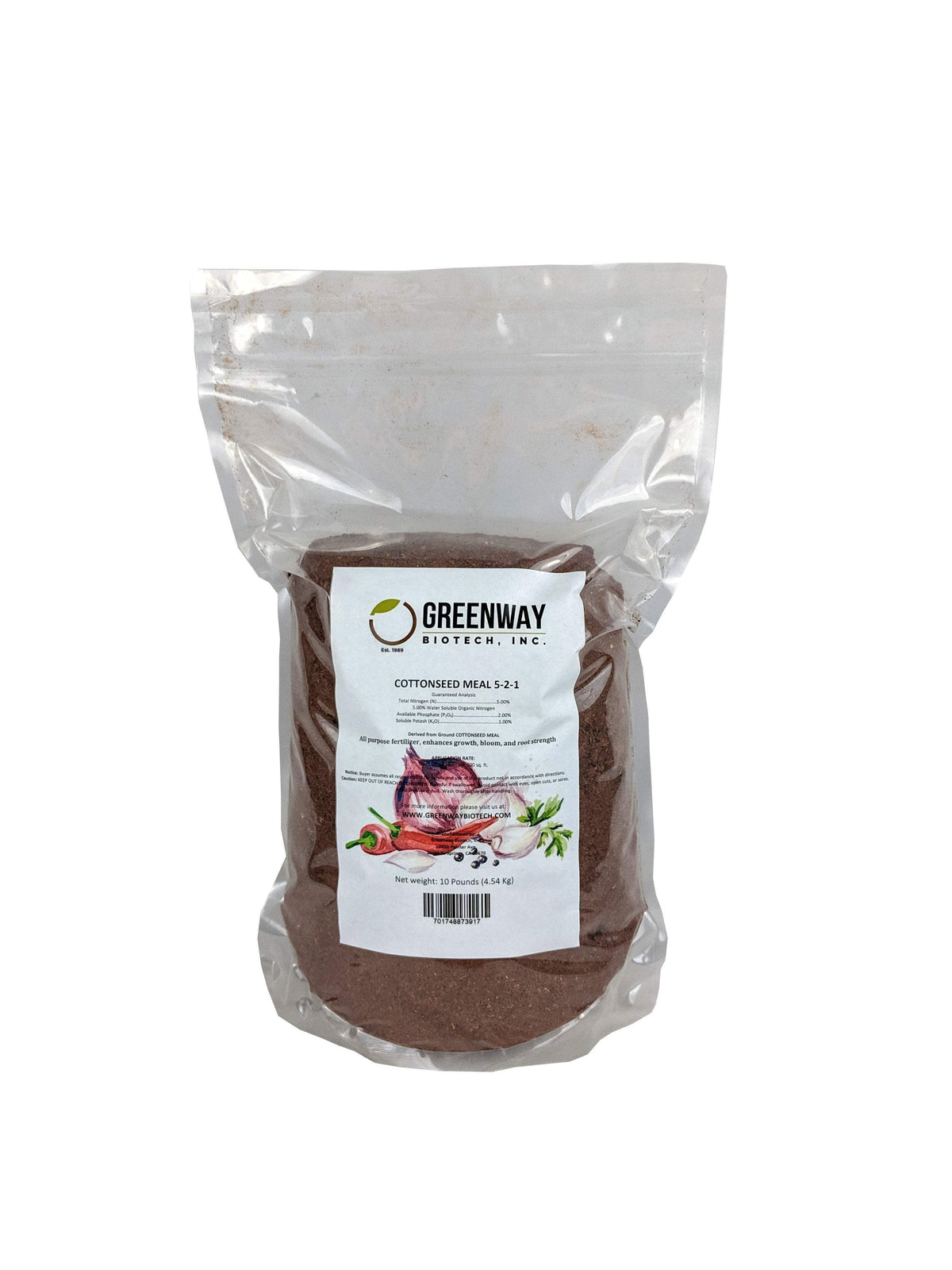
A natural, Non-GMO soil amendment derived from cotton manufacturing. Cottonseed Meal delivers slow-release nitrogen, phosphorus, and potassium while improving soil structure and lowering pH for acid-loving crops. Independently tested for heavy metal content.
Delivers 5% nitrogen gradually over weeks, feeding plants consistently without the risk of foliage burn that fast-release synthetic fertilizers can cause.
Naturally lowers soil pH as it decomposes, making essential nutrients like iron and magnesium more available to acid-loving plants such as blueberries, azaleas, and camellias.
As Cottonseed Meal decomposes, it feeds naturally occurring beneficial soil bacteria and fungi, stimulating microbial activity that improves nutrient cycling, root colonization, and long-term soil health.
Rich in organic matter that feeds the soil food web, improves water-holding capacity in sandy soils, and enhances aeration in heavy clay soils.
Derived from Non-GMO cotton manufacturing, providing a natural, plant-based nutrient source suitable for organic gardening programs and environmentally conscious growers.
Independently lab tested for heavy metal content including lead and mercury, with results consistently well below required safety limits for agricultural use.
Improves moisture retention in light, sandy soils while simultaneously enhancing drainage and aeration in dense, compacted soils — a dual benefit few amendments offer.
Balanced 5-2-1 ratio provides primary macronutrients — nitrogen for foliage, phosphorus for root and bloom development, and potassium for overall plant vigor and disease resistance.
Manufactured as a by-product of the cotton industry, Cottonseed Meal repurposes agricultural waste into a valuable plant nutrient, reducing environmental impact.
The slow-release nature provides steady nutrient availability throughout the growing season, reducing the need for frequent reapplication and supporting consistent, healthy growth.
Cottonseed Meal is a single-ingredient organic fertilizer derived entirely from the by-products of cotton manufacturing. The cottonseed is processed to extract oil, and the remaining meal is dried, ground, and enriched with beneficial soil microorganisms.
The ground meal remaining after oil extraction from cottonseeds. Naturally contains nitrogen (5%), phosphorus (2%), and potassium (1%) in a slow-release organic form that feeds plants gradually as soil microbes break it down.
Cottonseed Meal's 5-2-1 NPK ratio reflects the natural nutrient composition of the cottonseed itself. The nitrogen-dominant profile makes it an excellent slow-release nitrogen source, while the phosphorus and potassium provide supporting nutrition for root development and plant resilience. Because nutrients are bound in organic form, they become available gradually through microbial decomposition — eliminating burn risk and feeding the soil ecosystem simultaneously.
The dominant nutrient in cottonseed meal. This organically bound nitrogen is released slowly as soil microbes decompose the meal, providing steady foliar growth and deep green color over 4-8 weeks without the surge-and-crash cycle of synthetic nitrogen.
Supports root establishment and flowering. While the phosphorus level is modest, the organic form ensures high plant availability and contributes to strong root architecture and fruit set in acid-loving crops.
Provides a baseline of potassium for cell wall strength, water regulation, and disease resistance. For heavy-feeding crops, supplement with a dedicated potassium source like Potassium Sulfate.
The 5% nitrogen drives strong leaf and stem development, essential for photosynthesis and overall plant energy production during the growing season.
Unlike synthetic urea or ammonium-based fertilizers, cottonseed meal nitrogen requires microbial breakdown, meaning nutrients are released over weeks — matching the plant's natural uptake rhythm.
As soil microbes decompose the organic nitrogen, they produce organic acids that gradually lower soil pH — a key benefit for acid-loving plants like blueberries, azaleas, and rhododendrons.
The organic nitrogen and carbon in Cottonseed Meal serve as a food source for naturally occurring beneficial soil bacteria and fungi, stimulating biological activity that improves nutrient cycling and soil structure over time.
Microbial activity begins breaking down the meal. No visible plant response yet — nutrient release is just getting started. Soil moisture and temperature above 50°F are key during this phase.
Nitrogen availability ramps up as decomposition accelerates. Many gardeners notice the beginnings of deeper leaf color and increased vigor in actively growing plants.
Peak nutrient release period. Established plants typically show full response — lush foliage, improved color, and active new growth. Soil pH begins to shift in acid-loving plant beds.
Residual organic matter continues improving soil structure and feeding soil biology. Reapply every 4–6 weeks during the growing season for sustained results.
| Application | Rate | Frequency |
|---|---|---|
| New garden beds | 2-4 lbs per 100 sq ft | Work into soil before planting |
| Established plants | 1-2 lbs per 100 sq ft | Side-dress every 4-6 weeks |
| Trees & shrubs | 1 lb per inch of trunk diameter | Apply around drip line in spring |
| Crop | Rate | Timing |
|---|---|---|
| Blueberries | 1-2 lbs per plant | Early spring, before new growth |
| Azaleas & Rhododendrons | 1 lb per plant | After flowering |
| Strawberries | 2 lbs per 100 sq ft | Early spring & after harvest |
| Application | Rate | Frequency |
|---|---|---|
| Spring green-up | 4-5 lbs per 100 sq ft | Once in early spring |
| Maintenance feeding | 2-3 lbs per 100 sq ft | Every 6-8 weeks during growing season |
| Use | Rate | Notes |
|---|---|---|
| Compost activator | 2-3 lbs per cubic yard | Mix into compost pile to accelerate decomposition |
| Soil conditioning | 3-5 lbs per 100 sq ft | Incorporate into top 4-6 inches of soil |
For maximum pH-lowering impact on blueberries, combine Cottonseed Meal (1-2 lbs per plant) with Elemental Sulfur worked into the root zone in early spring. This pairing feeds nitrogen while actively lowering pH — a dual benefit that single-ingredient acidifiers can't match. Mulch with pine bark after application to lock in moisture and maintain an acidic environment.
Refer to the Safety Data Sheet (SDS) for complete safety information.
Cottonseed Meal provides a solid organic nitrogen foundation. Pair it with these products for a complete feeding program:
Boosts phosphorus for stronger roots and more abundant blooms in organic gardens.
Supplements potassium for fruit quality, disease resistance, and overall plant vigor.
Adds trace minerals, natural growth hormones, and potassium for stress tolerance.
Provides magnesium and sulfur to support chlorophyll production and nutrient uptake.
Adds calcium without raising pH — ideal for acid-loving plants that need calcium supplementation.
Further lowers soil pH for extremely acid-loving crops like blueberries and cranberries.
Cottonseed Meal is a natural, plant-based fertilizer derived from cotton manufacturing. It is Non-GMO and contains no synthetic chemicals. It is widely used in organic gardening programs. Always verify with your certifying agency if you require specific organic certification compliance, as requirements vary by program. For more tips on organic fertilizer options, see our guide on Fertilizing Your Organic Garden.
Cottonseed Meal is a slow-release fertilizer. Nutrients become available over a period of 4-8 weeks as soil microorganisms decompose the organic matter. The release rate depends on soil temperature, moisture, and microbial activity — warmer, moist soils with active biology will break down the meal faster. This gradual release eliminates the risk of foliage burn and provides consistent feeding throughout the growing season.
Yes. Cottonseed Meal is naturally acidic and will gradually lower soil pH as it decomposes. This makes it especially beneficial for acid-loving plants like blueberries, azaleas, camellias, and rhododendrons. If your soil is already acidic and you don't want to lower pH further, monitor soil pH regularly and consider liming if needed. For most vegetable gardens with neutral to alkaline soils, the pH-lowering effect is a benefit that helps unlock micronutrients like iron and magnesium.
Fresh Cottonseed Meal has a mild, earthy scent that is generally not strong or offensive. As it begins to decompose in moist soil, the smell may become slightly more noticeable for a few days — this is normal and indicates active microbial breakdown. As an organic material, it can attract some animals (especially dogs and rodents) if left exposed on the soil surface. To minimize this, work the meal into the top few inches of soil and water thoroughly after application. Covering with mulch also helps reduce the period during which the meal is attractive to pests.
Light clumping is common in organic meals when exposed to humidity and does not significantly reduce effectiveness — simply break up clumps before applying. If you notice visible surface mold on the meal, this is also normal for an organic product that has been exposed to moisture. Surface mold does not penetrate deeply and the underlying meal is typically still viable. That said, heavily molded or foul-smelling product may have lost some nitrogen value. To prevent this, always store Cottonseed Meal in a tightly sealed bag or airtight container in a cool, dry location, and use within 12 months of opening.
Yes. Mix Cottonseed Meal into potting soil or raised bed mix at a rate of 1-2 cups per cubic foot of soil. Because containers have limited soil volume, start with the lower rate and observe plant response before adding more. The organic matter also helps container soils retain moisture and maintain structure over time.
Keep pets away from freshly applied Cottonseed Meal. Dogs in particular are attracted to organic meals and may attempt to eat or dig in freshly treated areas. While not acutely toxic in small amounts, ingestion of large quantities can cause digestive upset. Once the meal is worked into the soil and thoroughly watered in, the risk is significantly reduced. Always store unused product in a sealed container out of reach of pets.
All three are organic nitrogen sources, but they differ in release speed and NPK ratios. Blood Meal (13-0-0) provides a faster nitrogen boost with no phosphorus or potassium. Feather Meal (12-0-0) is a very slow-release nitrogen source. Cottonseed Meal (5-2-1) has a moderate release rate and uniquely provides all three macronutrients plus a pH-lowering effect, making it the most versatile choice for acid-loving plants and general soil conditioning.
Coverage depends on the application rate and bag size. At the standard rate of 2-4 lbs per 100 sq ft for new garden beds, a 5 lb bag covers approximately 125-250 sq ft, a 10 lb bag covers 250-500 sq ft, and a 44 lb bag covers approximately 1,100-2,200 sq ft. For precise calculations, use our Cottonseed Meal Calculator above.
Every Greenway Biotech product is backed by rigorous quality standards, transparent testing, and a commitment to sustainable agriculture.
If you're not completely satisfied, we offer a 90-day money-back guarantee. Simply return the unused portion in its original packaging, and we'll process a full refund. No questions asked.
We're committed to sustainable practices, including:
1% of all profits go to our foundation, focused on improving educational opportunities for children in agricultural communities.
Check out our full FAQ page or contact our experts for personalized advice.
Couldn't load pickup availability