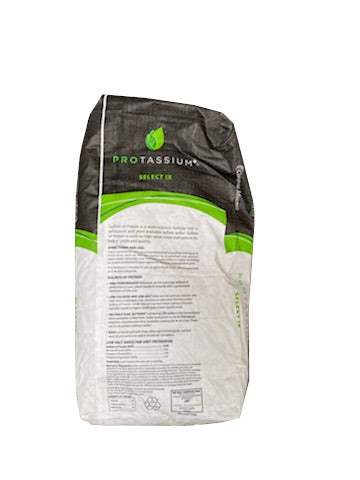
Premium potassium sulfate delivering 53% potassium (K₂O) and 17% sulfur in a completely chloride-free, 100% water-soluble formula. Tested for heavy metals and CDFA registered. Ideal for fruit quality enhancement, disease resistance, and pH management in soil, foliar, and hydroponic applications.
One of the highest potassium concentrations available in any fertilizer, delivering maximum K₂O per pound for efficient nutrition and lower application rates.
Essential for chloride-sensitive crops like tobacco, potatoes, berries, and citrus where chloride reduces sugar content, flavor, and storage quality.
Completely dissolves in water for versatile application through soil drench, foliar spray, drip irrigation, fertigation systems, and hydroponic reservoirs.
Delivers sulfur alongside potassium — supporting protein synthesis, enzyme activation, and amino acid formation without needing a separate sulfur amendment.
Potassium directly improves fruit size, color development, sugar content (Brix), flavor profile, and post-harvest shelf life in all fruiting crops.
Strengthens cell walls, improves stomatal regulation, and enhances drought, cold, and salt tolerance — reducing crop loss from environmental stress.
Sulfate form helps adjust alkaline soils toward neutral pH, improving availability of phosphorus, iron, and other pH-sensitive nutrients.
Every batch is independently lab tested for heavy metal content and CDFA registered, ensuring safe application on food crops and in hydroponic systems.
Lower salt index than potassium chloride (muriate of potash), reducing risk of salt buildup and root burn — safer for sensitive crops and containerized plants.
Potassium serves as a cofactor for over 60 enzymatic reactions in plants, driving photosynthesis, sugar transport, protein synthesis, and energy metabolism.
Our potassium sulfate is a premium-grade crystalline powder sourced for maximum purity, complete water solubility, and rapid plant availability across all application methods.
Provides 53% potassium (K₂O) and 17% sulfur (S) in a single, chloride-free compound. Solution-grade crystalline form ensures complete dissolution.
Potassium sulfate delivers two essential plant nutrients in a single application — high-concentration potassium for crop quality and stress resistance, plus sulfur for protein synthesis and soil pH management. The chloride-free formulation ensures no interference with flavor, sugar content, or storage quality in sensitive crops.
Zero nitrogen by design. This allows growers to add potassium during fruiting and ripening stages without triggering unwanted vegetative growth that delays harvest and reduces fruit quality.
No phosphorus means this product can be used in late-season applications and in soils already adequate in phosphorus, without contributing to P buildup or environmental runoff concerns.
The dominant nutrient at maximum concentration. Potassium regulates water use, activates enzymes, drives photosynthesis, strengthens cell walls, and directly determines fruit quality parameters including size, color, sugar, and shelf life.
Essential for amino acid synthesis (cysteine, methionine), enzyme activation, and vitamin formation. Sulfur also helps lower alkaline soil pH, improving availability of phosphorus, iron, and other micronutrients.
Potassium increases sugar accumulation (Brix), intensifies color development, improves texture, and extends post-harvest storage life — directly impacting market value of premium fruit crops.
Potassium regulates stomatal opening and closing, allowing plants to conserve water during drought while maintaining CO₂ uptake for photosynthesis under heat stress.
Adequate potassium thickens cell walls and cuticles, making plants physically harder for fungal pathogens to penetrate. K-sufficient plants show measurably lower infection rates.
Potassium increases solute concentration in plant cells, lowering the freezing point and protecting tissues from cold damage. Essential for fall applications on perennials and fruit trees.
| Application Method | Rate | Coverage / Notes |
|---|---|---|
| Broadcast (General) | 2 lbs per 100 sq ft | 870 lbs per acre |
| Gardens & Vegetables | 1–2 lbs per 100 sq ft | Work into top 4–6 inches of soil |
| Fruit Trees | 1–3 lbs per tree | Apply under drip line |
| Field Crops | 100–300 lbs per acre | Based on soil test results |
| Crop Type | Rate per Gallon | Timing |
|---|---|---|
| Vegetables | 2–3 tbsp per gallon | Every 2–3 weeks |
| Fruit Trees | 3–4 tbsp per gallon | During fruit development |
| Field Crops | 2–3 lbs per acre in 20–30 gal | 2–3 applications per season |
| Grapes & Berries | 2–3 tbsp per gallon | Veraison to harvest |
| System Type | Concentration | EC Contribution |
|---|---|---|
| Hydroponics | 2–3 tbsp per gallon | 0.7–1.0 mS/cm |
| Fertigation | 1–2 lbs per 100 gallons | Inject weekly |
| Stock Solution | 2 lbs per gallon | Dilute 1:100 |
| Crop | Rate | Application Notes |
|---|---|---|
| Tomatoes | 200–300 lbs per acre | Apply at fruit set |
| Potatoes | 150–250 lbs per acre | At tuber initiation |
| Citrus | 3–5 lbs per tree per year | Split applications |
| Tobacco | 200–400 lbs per acre | Chloride-free essential |
Refer to the Safety Data Sheet (SDS) for complete safety information.
Add calcium and nitrogen alongside potassium sulfate. Apply in a separate tank or at a different time to avoid precipitation.
Bloom BoostHigh phosphorus plus additional potassium for flowering and fruiting stages. Excellent companion for bloom-heavy crops.
MagnesiumComplete the secondary nutrient trio with magnesium for chlorophyll production and enzyme activation.
K + Mg + STriple-nutrient alternative delivering potassium, magnesium, and sulfur in one chloride-free application.
MicronutrientPair with potassium sulfate to address iron chlorosis — especially in alkaline soils where iron becomes unavailable.
Potassium sulfate (0-0-53) is a premium potassium fertilizer containing 53% K₂O and 17% sulfur, with virtually no chloride content. Unlike muriate of potash (potassium chloride), which contains about 47% chloride, potassium sulfate is safe for chloride-sensitive crops including tobacco, potatoes, tomatoes, berries, and citrus where chloride reduces sugar content and storage life. While more expensive than muriate of potash, the quality improvements and yield benefits often justify the cost for high-value crops. For a deeper comparison of potassium fertilizer options, see our guide on What is the Best Potassium Fertilizer?
Timing varies by crop, but key application periods include:
Potassium is especially important during fruit development, as it directly improves size, color, sugar content, and storage quality. Late-season applications enhance crop quality without promoting excessive vegetative growth.
Potassium plays multiple critical roles in plant health: it controls stomatal function for efficient water use, activates over 60 enzymes involved in growth, drives CO₂ fixation and sugar transport during photosynthesis, thickens cell walls for disease resistance, and enhances drought, cold, and salt tolerance. Plants with adequate potassium show improved resistance to fungal diseases, better recovery from environmental stress, and enhanced winter survival. For a complete explanation, see our article What's the Function of Potassium (K) in Plants?
Yes, potassium sulfate is excellent for hydroponics due to its complete water solubility and dual nutrient content. It provides both potassium and sulfur without adding chloride, won't clog drippers or emitters when properly dissolved, and is compatible with most hydroponic nutrients. Typical rates are 2–3 tablespoons per gallon, contributing approximately 0.7–1.0 mS/cm to EC. Always dissolve completely in warm water before adding to your reservoir, and keep it in a separate stock tank from calcium-based fertilizers.
Potassium Sulfate is commonly used after hydroponic disease events to support plant recovery. See our complete guide on treating root rot in hydroponic plants for step-by-step instructions.
Potassium deficiency symptoms typically appear on older leaves first and include marginal chlorosis (yellowing or browning of leaf edges), necrotic spots, weak stems prone to lodging, poor fruit quality (small size, poor color, low sugar), increased disease susceptibility, and reduced overall yields. Deficiency is most common in sandy soils, after heavy rainfall, or when high nitrogen rates are used without balanced potassium. Soil tests showing less than 150 ppm K typically indicate supplementation is needed.
The 17% sulfur in potassium sulfate is a valuable secondary nutrient that supports protein synthesis, amino acid formation (cysteine and methionine), enzyme activation, and vitamin production. Sulfur also helps lower alkaline soil pH, improving the availability of phosphorus, iron, and other pH-sensitive nutrients. For crops like garlic, onions, and brassicas, adequate sulfur directly enhances flavor and nutritional quality. For more on sulfur's role, read Secondary Nutrients in Gardening: Complete Guide to Ca, Mg, & S.
Not in concentrated stock solutions. When potassium sulfate is mixed with calcium-containing fertilizers (like calcium nitrate) in a concentrated tank, the sulfate ions react with calcium to form insoluble calcium sulfate (gypsum) that precipitates out and clogs irrigation lines. In hydroponic and fertigation systems, always use separate A and B stock tanks — potassium sulfate goes in Tank B, calcium nitrate goes in Tank A. In soil applications at normal dilution rates, this interaction is not a concern.
For premium fruit production, potassium sulfate is strongly preferred over potassium chloride (muriate of potash). Chloride can reduce sugar content, degrade flavor profiles, shorten storage life, and cause salt buildup in soils. Potassium sulfate delivers equivalent potassium without these drawbacks, plus provides beneficial sulfur. The higher cost per pound is offset by improved fruit quality and market value. For a complete analysis of how potassium impacts fruit production, see our article on What Types of Fertilizers Should I Use to Improve Fruit Yield?
Our Potassium Sulfate Fertilizer is backed by Greenway Biotech's commitment to quality, transparency, and customer satisfaction.
If you're not completely satisfied, we offer a 90-day money-back guarantee. Simply return the unused portion in its original packaging, and we'll process a full refund. No questions asked.
1% of all profits go to our foundation, focused on improving educational opportunities for children in agricultural communities.
Check out our full FAQ page or contact our experts for personalized advice.
Couldn't load pickup availability