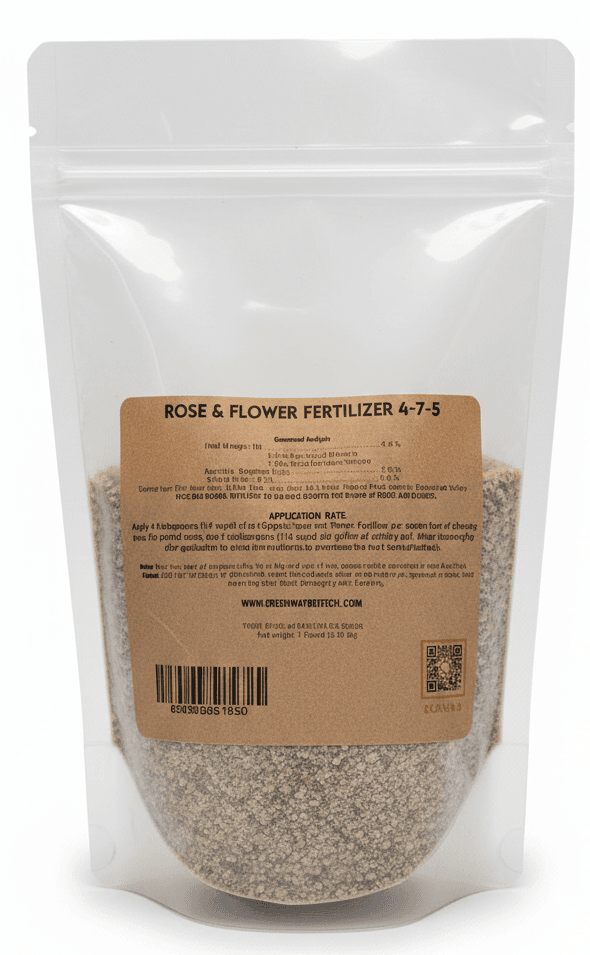
A premium, slow-release blend of organic meals and volcanic minerals designed to produce vibrant blooms, deep colors, and healthy soil biology. CDFA registered and tested for heavy metals. Perfect for roses, flowering perennials, and bloom-heavy vegetables.
Higher phosphorus (7%) specifically targets bud formation and flower size, while moderate nitrogen (4%) prevents leggy, flowerless growth common with balanced formulas.
Unlike synthetic salts, organic meals feed earthworms, mycorrhizae, and beneficial microbes that build long-term soil health and improve nutrient cycling season after season.
Won't burn roots or shock transplants. Nutrients release gradually over 4–6 weeks as soil microbes break down organic matter, providing steady, gentle feeding.
Volcanic ash provides micronutrients most soils lack—enhancing flower color, fragrance, disease resistance, and overall plant vigor beyond what NPK alone delivers.
Alfalfa meal contributes triacontanol, a natural plant growth compound studied for boosting bloom count and accelerating new cane development in roses.
Both fish bone meal and bone meal provide phosphorus at different release rates, delivering immediate bloom support plus sustained flowering throughout the season.
Excellent for tomatoes, peppers, squash, and cucumbers. The high calcium from bone meal also helps prevent blossom end rot in fruiting crops.
Kelp meal provides natural growth compounds, micronutrients, and cytokinins that support stress resistance, root development, and plant vigor during heat and drought.
Every batch is independently lab tested for heavy metal content and registered with the California Department of Food and Agriculture (CDFA) for quality assurance.
All ingredients are sourced from OMRI-listed organic materials, making this formula safe for organic gardens and certified organic growing operations.
Our formula is blended from premium organic meals and volcanic minerals—each chosen for its proven contribution to bloom production, soil health, and long-term nutrient cycling.
High phosphorus for bloom production and strong root development. Ocean-sourced, slow-release organic phosphorus and calcium.
Slow-release calcium and phosphorus for sturdy stems, continuous flowering, and blossom end rot prevention in vegetables.
Steady nitrogen release for lush, green foliage without the burn risk or excessive vegetative growth of faster-acting nitrogen sources.
Contains triacontanol growth stimulant plus nitrogen and potassium. A favorite among rose growers for decades.
This NPK ratio was specifically designed to prioritize flower bud formation (phosphorus-dominant) while providing enough nitrogen for healthy foliage and potassium for disease resistance. The result is a formula that supports more blooms, deeper colors, and stronger plants.
Kept intentionally low to prevent the leggy, flowerless growth that excess nitrogen causes in roses and flowering plants. Slow-release from feather meal and alfalfa meal ensures steady greening without growth spurts.
The dominant nutrient in this formula. Phosphorus triggers flower bud initiation, develops strong root systems, and intensifies petal colors. Sourced from both fish bone meal and bone meal for multi-rate release.
Strengthens cell walls and stems, improves drought tolerance, and enhances winter hardiness. Derived from alfalfa meal and kelp meal for organic, slow-release delivery.
Fertilizer begins breaking down as soil microbes activate. Many gardeners notice improved root activity and early green-up in foliage.
Nutrient release accelerates. Expect fuller, deeper green foliage and early signs of bud development in season-ready plants.
Peak nutrient availability. Most gardeners notice increased bloom set, brighter petal colors, and stronger new cane growth in roses.
Organic matter breaks down into humus, improving soil structure, water retention, and beneficial microbial activity for future seasons.
Ancient volcanic ash providing iron, manganese, zinc, copper, boron, and dozens more trace elements. Fills micronutrient gaps that most soils develop over time.
Ocean-sourced trace minerals plus natural cytokinins and auxins that promote cell division, root growth, and stress tolerance during heat and drought.
Significant calcium contribution strengthens cell walls, helps prevent blossom end rot in tomatoes and peppers, and supports strong stem and cane development in roses.
Phosphorus triggers the hormonal signals that initiate flower bud formation. Higher phosphorus supports more buds per branch, resulting in fuller, more abundant bloom displays.
Adequate phosphorus supports anthocyanin pigmentation in petals, contributing to richer reds, deeper pinks, and more saturated purples in roses and flowering plants.
Phosphorus is essential for root cell division and energy transfer. Plants with strong phosphorus nutrition develop deeper, more extensive root networks that improve water and nutrient uptake.
Repeat-blooming roses and perennials recover faster between bloom cycles when phosphorus is readily available, shortening the gap between flushes of flowers.
| Application Type | Rate | Instructions |
|---|---|---|
| Garden Beds | ¼ cup (4 tbsp) per sq ft | Work into top 2–3" of soil, water thoroughly |
| Potted Plants | ¼ cup per gallon of soil | Mix into potting medium before planting |
| Established Roses | ½–1 cup per bush | Scratch into soil around drip line, water in |
| New Plantings | ½ cup per planting hole | Mix with backfill soil, plant, then water |
| Top Dressing | 2–3 tbsp per plant | Apply around base, cover with mulch |
| Season | Timing | Notes |
|---|---|---|
| Early Spring | When new growth appears | First feeding of the season — feeds spring flush |
| Late Spring | After first bloom cycle | Supports summer reblooming |
| Mid-Summer | July (warm climates) | Optional boost for repeat bloomers |
| Late Summer | August–September | Final feeding — builds roots for winter |
The high calcium from bone meal helps prevent blossom end rot in tomatoes and peppers. Apply at ¼ cup per sq ft at planting time and again when flowers first appear — many gardeners notice improved fruit set and fewer calcium-related issues throughout the season.
Refer to the Safety Data Sheet (SDS) for complete safety information — available in the Documents section below or upon request.
Extra phosphorus for maximum flower production. Mix into planting holes or side-dress heavy bloomers for an added bloom boost.
Trace Minerals70+ trace minerals from volcanic ash. Enhances color intensity, fragrance, and overall plant vigor when applied alongside this formula.
Rose FavoriteMagnesium sulfate for darker green foliage and stronger canes. A classic rose grower's addition for healthier, more vigorous plants.
Stress ShieldAdditional cytokinins and growth compounds for heat stress protection, transplant recovery, and enhanced root development.
Rose BoosterExtra triacontanol growth stimulant and potassium. Use as a mid-season side dressing or brew into alfalfa tea for a liquid boost.
No. Unlike synthetic "blue powder" fertilizers that can chemically burn roots, this is a slow-release organic formula. Nutrients become available gradually as soil microbes break down the organic matter over 4–6 weeks. It's safe for even delicate transplants when used as directed.
Absolutely! This formula is excellent for flowering vegetables like tomatoes, peppers, eggplant, squash, and cucumbers—any crop that needs blooms to produce fruit. The high calcium content from bone meal also helps prevent blossom end rot. For a deeper dive into choosing fertilizers for your vegetable garden, see our guide on What Types of Fertilizers Should I Use to Improve Fruit Yield?
For leafy greens (lettuce, spinach, kale), you may want a higher-nitrogen fertilizer like Blood Meal 13-0-0 instead.
Yellowing leaves (chlorosis) often indicate nitrogen deficiency, iron deficiency, or pH imbalance. This fertilizer addresses all three:
If yellowing persists, test your soil pH. Roses struggle in alkaline conditions above 7.0.
When used as directed and watered into the soil, this fertilizer poses minimal risk to pets. However, bone meal and fish bone meal can be attractive to dogs. We recommend:
| Factor | Organic (This Product) | Synthetic Fertilizers |
|---|---|---|
| Release Speed | Slow (4–6 weeks) | Fast (immediate) |
| Burn Risk | Very low | High if over-applied |
| Soil Biology | Feeds beneficial microbes | Can harm soil life |
| Long-term Soil Health | Builds organic matter | No improvement |
| Application Frequency | Every 4–6 weeks | Every 1–2 weeks |
For a more detailed comparison, read our article on Organic vs Synthetic Fertilizer: Key Differences and Tips on Choosing Your Type.
Roses thrive in slightly acidic soil with a pH of 6.0–6.5. This is the range where nutrients are most available for uptake. Our organic formula naturally creates mild acidity as it breaks down, helping maintain optimal pH without additives.
If your soil is highly alkaline (above 7.0), consider adding sulfur or additional organic matter to lower the pH. Regular soil testing will help you track and adjust over time.
Every application of this organic blend adds organic matter to your soil, which improves water retention, aeration, and nutrient-holding capacity over time. The meals feed beneficial soil microbes that create humus—the dark, crumbly material that makes garden soil rich and productive. For a detailed explanation of how soil microbes transform organic fertilizers into plant-available nutrients, see our article on How Do Soil Microbes Affect Plant Health?
Apply every 4–6 weeks during the active growing season. For most climates, that means 3–4 applications per year: early spring (when new growth appears), late spring (after first bloom), mid-summer (optional for repeat bloomers), and late summer (final feeding to build roots for winter). Stop feeding 6–8 weeks before your first expected frost to avoid encouraging tender new growth that could be damaged by cold.
Our Organic Rose and Flower Fertilizer is backed by Greenway Biotech's commitment to quality, transparency, and customer satisfaction.
If you're not completely satisfied, we offer a 90-day money-back guarantee. Simply return the unused portion in its original packaging, and we'll process a full refund. No questions asked.
1% of all profits support the Greenway Foundation, dedicated to improving educational opportunities for children in agricultural communities.
Greenway Biotech, Inc. has been supplying fertilizers, micronutrients, and soil amendments to growers and home gardeners since 1989. We are based in Madera, California — in the heart of the San Joaquin Valley — where we blend, test, and package our products in a dedicated facility. Our team is available Monday through Friday, 7 AM–5 PM PST to answer technical questions and help you get the best results from your garden.
Need documentation sooner? Contact us and we'll send it directly.
Check out our full FAQ page or contact our experts for personalized advice.
Couldn't load pickup availability