Maximize your cucumber and vine crop yields with our premium water-soluble 8-16-36 formula. High potassium supports crisp, great-tasting fruit while chelated micronutrients help ensure complete nutrition for soil, hydroponic, and foliar growing.
Engineered specifically for heavy-fruiting vine crops. Controlled nitrogen (8%) prevents excessive foliage while very high potassium (36%) drives crisp, sweet fruit with excellent shelf life.
Adequate potassium supports water balance inside fruit cells and helps reduce the stress conditions that can contribute to bitterness. Consistent nutrition — alongside consistent watering and good variety selection — gives you the best chance of sweet, crisp cucumbers.
Every batch is independently lab tested for heavy metal content. Our December 2024 analysis by AgroLab/Matrix Sciences shows results consistently well below required limits — so you can grow food for your family or customers with confidence.
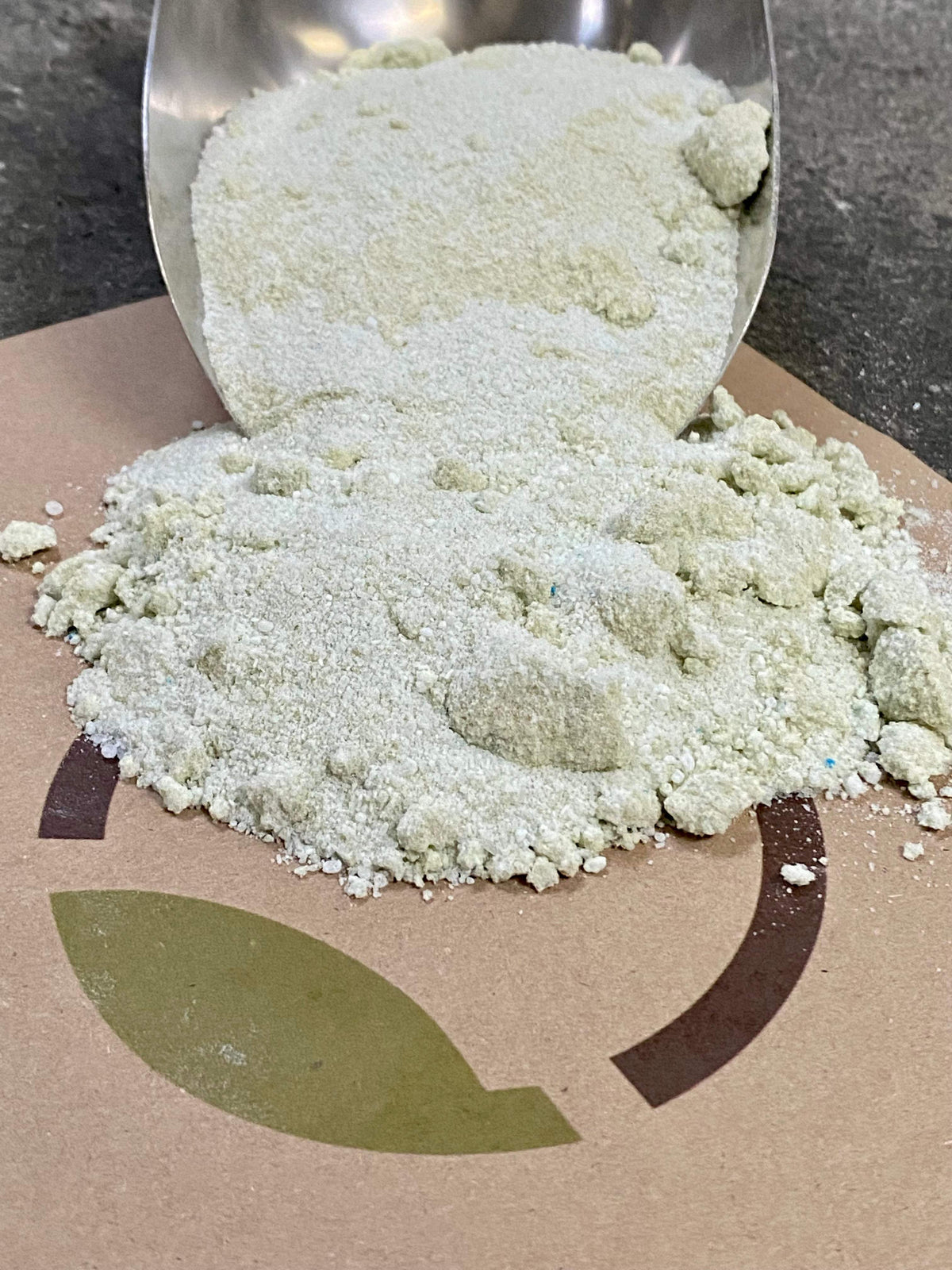
Dissolves instantly in cold water with zero residue. Safe for drip lines, Dutch buckets, NFT systems, and foliar sprayers without clogging risks.
16% available phosphate (P₂O₅) stimulates abundant flower production and strong root systems, reducing flower drop and improving overall yield for continuous harvests.
Adequate potassium supports cell wall strength and overall plant resilience during heavy production. Chelated copper and manganese help maintain the micronutrient availability that supports the plant's own natural defenses.
Equally effective in garden soil, raised beds, containers, all hydroponic systems (DWC, NFT, Dutch buckets, drip), and as a foliar spray. Scales from home gardens to commercial greenhouses.
All six essential micronutrients in precise ratios — iron, manganese, zinc, and copper are EDTA-chelated to prevent lockout in high-pH water, while boron and molybdenum are supplied in highly available mineral forms.
Adequate potassium nutrition helps reduce the risk of curved, bottlenecked, or hollow fruit while supporting firmness for longer storage. Good nutrition is one key factor in market-quality cucumbers — alongside consistent irrigation and variety selection.
Registered with the California Department of Food and Agriculture. Third-party lab tested for guaranteed analysis, purity, and compliance with state fertilizer standards.
Our 8-16-36 formula is blended from premium-grade, solution-grade raw materials — each chosen for purity, solubility, and plant availability.
Primary phosphorus and potassium source. Fully water-soluble with low salt index.
Additional potassium plus sulfur for enzyme activation and protein synthesis.
Ammoniacal nitrogen source that helps lower root-zone pH for better nutrient uptake.
Nitrate nitrogen and additional potassium. Highly soluble with a low salt index — ideal for sensitive growth stages.
EDTA-protected iron for chlorophyll synthesis. Stays available even in alkaline conditions.
EDTA-chelated for enzyme activation in photosynthesis and nitrogen metabolism. Supports overall plant health and micronutrient availability.
EDTA-chelated zinc for auxin production, fruit development, and growth hormones.
EDTA-chelated copper for lignin synthesis and plant structural strength.
Highly available boron source for flower development and fruit set. Not chelated — supplied in mineral form.
Trace molybdenum source for nitrogen metabolism and enzyme function. Not chelated — supplied in mineral form.
Understanding why our 8-16-36 formula works so well for cucumbers and cucurbits requires looking at the unique nutritional demands of these heavy-fruiting vine crops throughout their growth cycle.
Cucumbers need sufficient nitrogen for vine development, but too much creates excessive foliage, delayed flowering, increased plant stress, and can contribute to reduced fruit quality. Our 8% strikes the ideal balance — enough for healthy green growth without diverting energy from fruit production.
Enhanced available phosphate (P₂O₅) stimulates early root development for drought tolerance, promotes abundant flower production, improves fruit set percentage, and enhances energy transfer during rapid fruit development. The 16% P₂O₅ level ensures robust reproductive growth for continuous harvests.
Cucumbers are extremely heavy potassium feeders. Potassium supports water regulation within fruit cells, activates enzymes for sugar transport, contributes to cell wall strength and fruit firmness, and helps extend post-harvest shelf life. The 36% helps ensure plants can meet peak demand during fruiting without running short.
Chelated EDTA. Essential for chlorophyll synthesis. Prevents yellowing between leaf veins that reduces photosynthetic capacity during heavy fruit production. Learn about Chelated Iron EDTA →
Chelated EDTA. Activates enzymes for photosynthesis and nitrogen metabolism. Supports overall plant health and helps maintain the micronutrient availability needed during heavy production. Learn about Chelated Manganese EDTA →
Chelated EDTA. Required for auxin production and fruit development. Deficiency causes stunted growth and small, misshapen fruits. Learn about Chelated Zinc EDTA →
Chelated EDTA. Important for lignin synthesis and plant strength. Helps support structural integrity of heavy fruit-laden vines. Learn about Chelated Copper EDTA →
Boric Acid (mineral form — not chelated). Critical for flower development and fruit set. Deficiency causes flower drop and cracked, misshapen fruits. Learn about Boric Acid →
Sodium Molybdate (mineral form — not chelated). Essential for nitrogen metabolism and enzyme function. Though needed in trace amounts, deficiency causes yellowing and reduced yields. Learn about Sodium Molybdate →
Adequate potassium nutrition helps reduce the risk of curved, bottlenecked, or misshapen fruits — one factor among several, including consistent irrigation, pollination, and variety.
Potassium supports water balance inside fruit cells and helps reduce the plant stress that can contribute to cucurbitacin accumulation. Variety genetics, watering consistency, and temperature all play a role as well.
Adequate potassium supports cell wall integrity and overall plant strength during heavy production, helping vines stay productive through the full harvest season.
Maintains firmness and prevents soft spots during storage and shipping for longer shelf life.
Supports multiple harvests by maintaining plant vigor throughout the growing season.
Improves stomatal function and water use efficiency, helping plants cope during hot summer months.
Recommended rates for cucumbers, melons, squash, and all cucurbit vine crops. Select a tab for your growing method.
Rates are per 100 gallons of reservoir and assume approximately 80 plants per 100 gallons (greenhouse trellised standard). These are Greenway's recommended starting rates based on RO/low-EC source water — adjust for your system and water quality. Rates assume RO or rainwater; reduce Cal-Mag Plus by 30–50% on hard tap water with measurable Ca/Mg.
| Growth Stage | 8-16-36 | Cal-Mag Plus | pH | Target EC (PPM 500 / 700) |
|---|---|---|---|---|
| Seedling | 0.25 lbs ~1.1g per plant |
250–500 ml | 5.8–6.2 | 1.2–1.6 EC (600–800 / 840–1120) |
| Vegetative | 0.5 lbs ~2.8g per plant |
500–1,000 ml | 5.8–6.2 | 1.6–2.0 EC (800–1000 / 1120–1400) |
| Flowering / Fruiting | 0.75 lbs ~4.3g per plant |
1,000–1,500 ml | 5.8–6.2 | 2.0–2.4 EC (1000–1200 / 1400–1680) |
PPM readings depend on your meter's conversion scale. Use EC for the most accurate measurement. 500-scale PPM = EC × 500 | 700-scale PPM = EC × 700
On RO or rainwater, Cal-Mag Plus alone is insufficient for fruit-set calcium during peak cucurbit production. Add Calcium Nitrate as follows:
Pre-dissolve Calcium Nitrate separately. Add to reservoir first, then Cal-Mag Plus, then 8-16-36. Reduce NPK rate by 10–20% if final EC exceeds your stage target. Reduce by ~25% on tap water with 30+ ppm Ca.
Never combine calcium sources with phosphate fertilizers in concentrated form — calcium phosphate precipitate will form and nutrients become unavailable. Dilution greatly reduces but does not eliminate precipitation risk.
| Purpose | 8-16-36 per 100 gal | Per-Gallon Equivalent | Frequency |
|---|---|---|---|
| Maintenance / boost | 0.5–1 lb ~0.6–1.2g per plant sprayed |
~2.3–4.5g / gal (~½–1 tsp) | Every 10–14 days |
| Pre-bloom push | 1 lb + Cal-Mag stock 5 ml/gal in tank | ~4.5g / gal (~1 tsp) | Once, 7–10 days before first female flowers |
| Deficiency correction | 1.5–2 lbs (MAX) | ~6.8–9g / gal | Every 5–7 days, max 3 sprays. Start at low end. |
Rates are general guidelines based on typical soil conditions. Actual rates vary with soil test results, plant density, and local conditions. For commercial field production, consult your local extension service or a certified crop advisor. Cucurbits are heavy feeders — pre-plant organic matter significantly improves results.
| Application Method | Rate | Frequency / Timing | Notes |
|---|---|---|---|
| Pre-plant incorporation | 2 lbs / 100 sq ft | Once, before transplant | Add generous compost; cucurbits are heavy feeders |
| Side-dress — vining | 0.5 lb / 100 sq ft | When vines start to run | Band 4–6" from stem |
| Side-dress — flowering | 0.5 lb / 100 sq ft | At first female flower | Band 4–6" from stem |
| Side-dress — fruiting | 0.5 lb / 100 sq ft | At first fruit set | Pair with separate Ca/N program |
| Drip fertigation | 0.75 lb / 100 gal | Weekly during fruiting | Use 25–50% of rate for continuous fertigation |
| Container — at potting | 0.5 tsp / gallon of soil volume | Once at potting | Mix thoroughly into media |
| Container liquid feed | 0.5 tsp / gallon water | Every 2–3 weeks | Top-dress monthly with dry application |
| Soil drench — seedling | 0.25 lb / 100 gal | At transplant | — |
| Soil drench — vegetative | 0.5 lb / 100 gal | Weekly | — |
| Soil drench — fruiting | 0.75 lb / 100 gal | Weekly | Pair with separate Ca/N program |
| Per Acre (field reference) | 200–400 lbs | Split applications | Base on current soil test and crop removal — consult local extension |
When mixing hydroponic nutrients, always add Cal-Mag Plus to your reservoir first and stir thoroughly before adding 8-16-36. Mixing calcium and phosphorus fertilizers simultaneously in concentrated form causes precipitation — you'll see white cloudiness and lose nutrient availability. Adjust pH only after all nutrients are added.
Refer to the Safety Data Sheet (SDS) for complete safety information.
Build a complete vine crop feeding program by pairing 8-16-36 with these essential companions.
Supplies the calcium cucumbers need for cell wall integrity and firm fruit development. Critical companion product for both soil and hydroponic growing — apply separately from 8-16-36.
AlternativeAnother calcium source option. Provides a small nitrogen boost during the vegetative stage.
BoostMagnesium for chlorophyll production. Enhances green color, photosynthesis, and overall plant vigor.
QualityAdditional potassium boost during peak fruiting for maximum yield and quality.
Cucumbers are extremely heavy potassium feeders. Potassium supports water pressure inside plant cells, activates enzymes, and contributes to cell wall strength and fruit firmness. Adequate potassium can help reduce the stress conditions that sometimes contribute to cucurbitacin accumulation and bitterness — though bitterness in cucumbers is also influenced by genetics, heat, irregular watering, and overall plant stress. The 36% level helps ensure plants can meet peak potassium demand during fruiting.
Cucumbers prefer slightly acidic conditions. For hydroponics, keep pH between 5.8-6.2 during fruiting or 6.2-6.5 during vegetative growth. For soil growing, aim for 6.0-6.5. pH directly affects nutrient availability — outside these ranges, key nutrients like iron and phosphorus become locked out even when present in the solution.
Cucumber bitterness is caused by cucurbitacin compounds, which accumulate mainly in response to plant stress — heat, irregular watering, poor nutrition, and variety genetics all play a role. Our formula can help reduce nutritional stress because:
For best results, combine good nutrition with consistent watering (avoid letting plants dry out), choose low-bitterness varieties where available, and supplement with Cal-Mag Plus during fruit development. No fertilizer can fully offset varietal genetics or severe environmental stress.
Absolutely. Our formula is ideal for greenhouse cucumbers. Use 0.25 lbs/100 gal for seedlings, 0.5 lbs for vegetative, and 0.75-1 lb for fruiting stage. Monitor EC closely — greenhouse plants are more sensitive. Increase Cal-Mag during rapid growth periods and adjust based on variety (European types need higher EC than standard slicing types).
Calcium and phosphorus are chemically incompatible in concentrated solution. When mixed, they form insoluble calcium phosphate that precipitates out and becomes unavailable to plants. Since our formula contains 16% available phosphate (P₂O₅), calcium must be applied separately. Cucumbers need consistent calcium for cell wall integrity and firm fruit development — use Cal-Mag Plus 2-0-0 or Calcium Nitrate 15.5-0-0 as a companion product throughout the season.
Our fertilizer is highly hygroscopic, meaning it absorbs moisture from the air. Keep the bag sealed tight between uses and store in a cool, dry place out of direct sunlight. If it clumps from moisture exposure, simply break it up — the efficacy is not affected.
Yes. This formula works excellently for all cucurbit crops including watermelons, cantaloupes, honeydew, squash, pumpkins, and gourds. All cucurbits share similar nutritional needs — high potassium for fruit quality, enhanced phosphorus for flowering, and controlled nitrogen to avoid excessive vine growth at the expense of fruit.
Important details on quality, returns, sustainability, and charitable efforts that set our product apart.
If you're not completely satisfied, we offer a 90-day money-back guarantee. Simply return the unused portion in its original packaging, and we'll process a full refund. No questions asked.
We're committed to sustainable practices, including:
1% of all profits go to our foundation, focused on improving educational opportunities for children in agricultural communities.
Check out our full FAQ page or contact our experts for personalized advice.
Couldn't load pickup availability