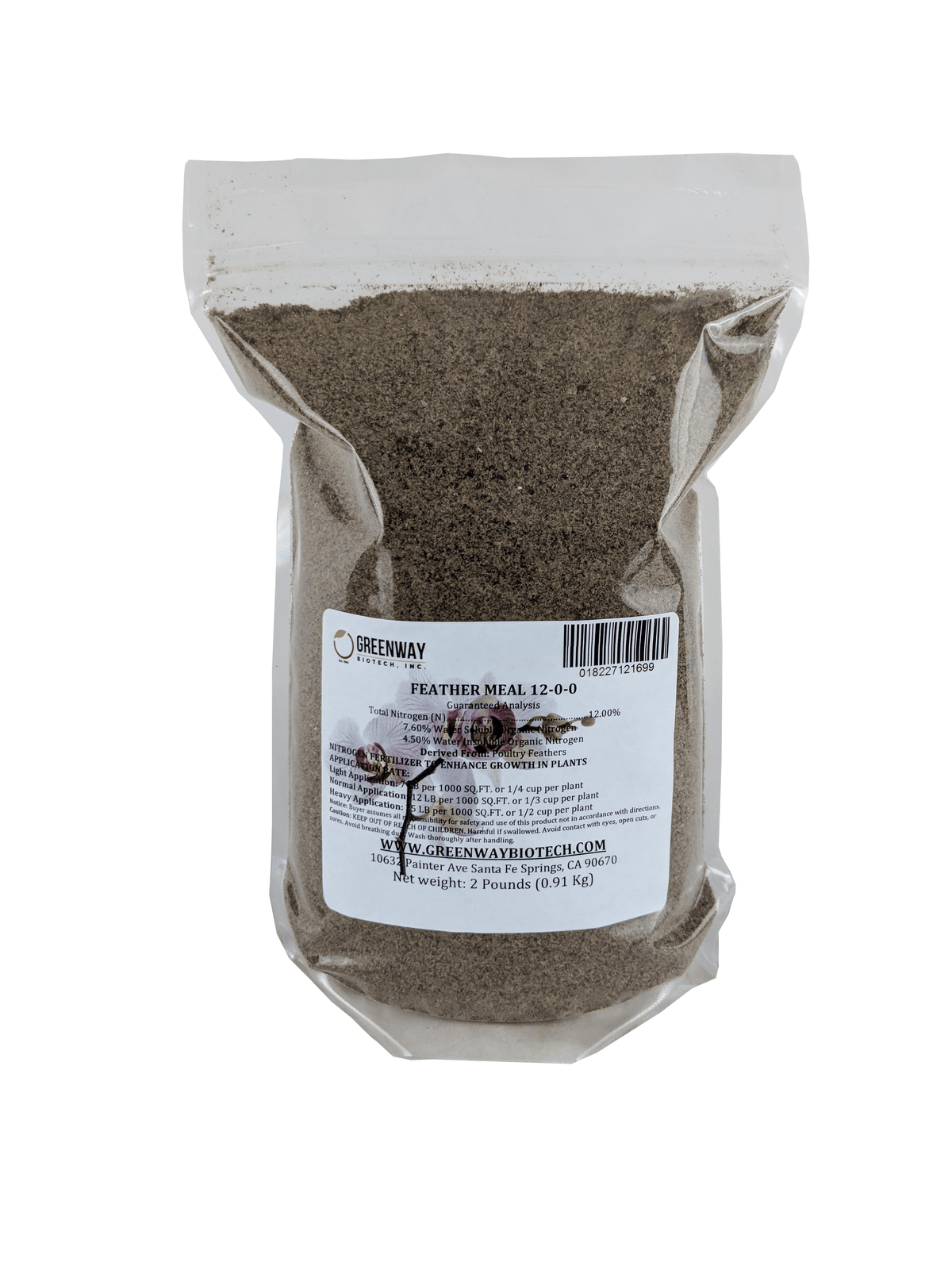
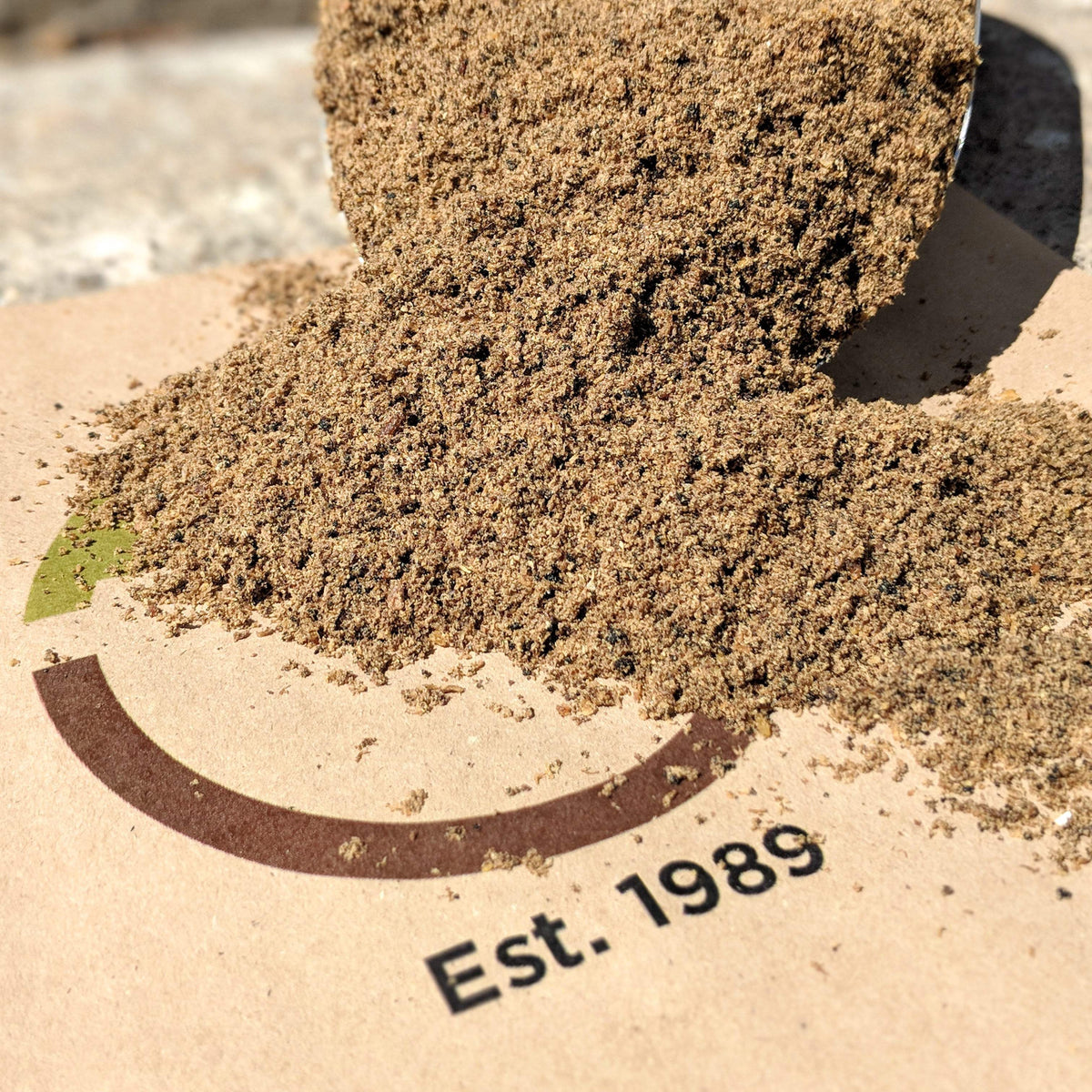
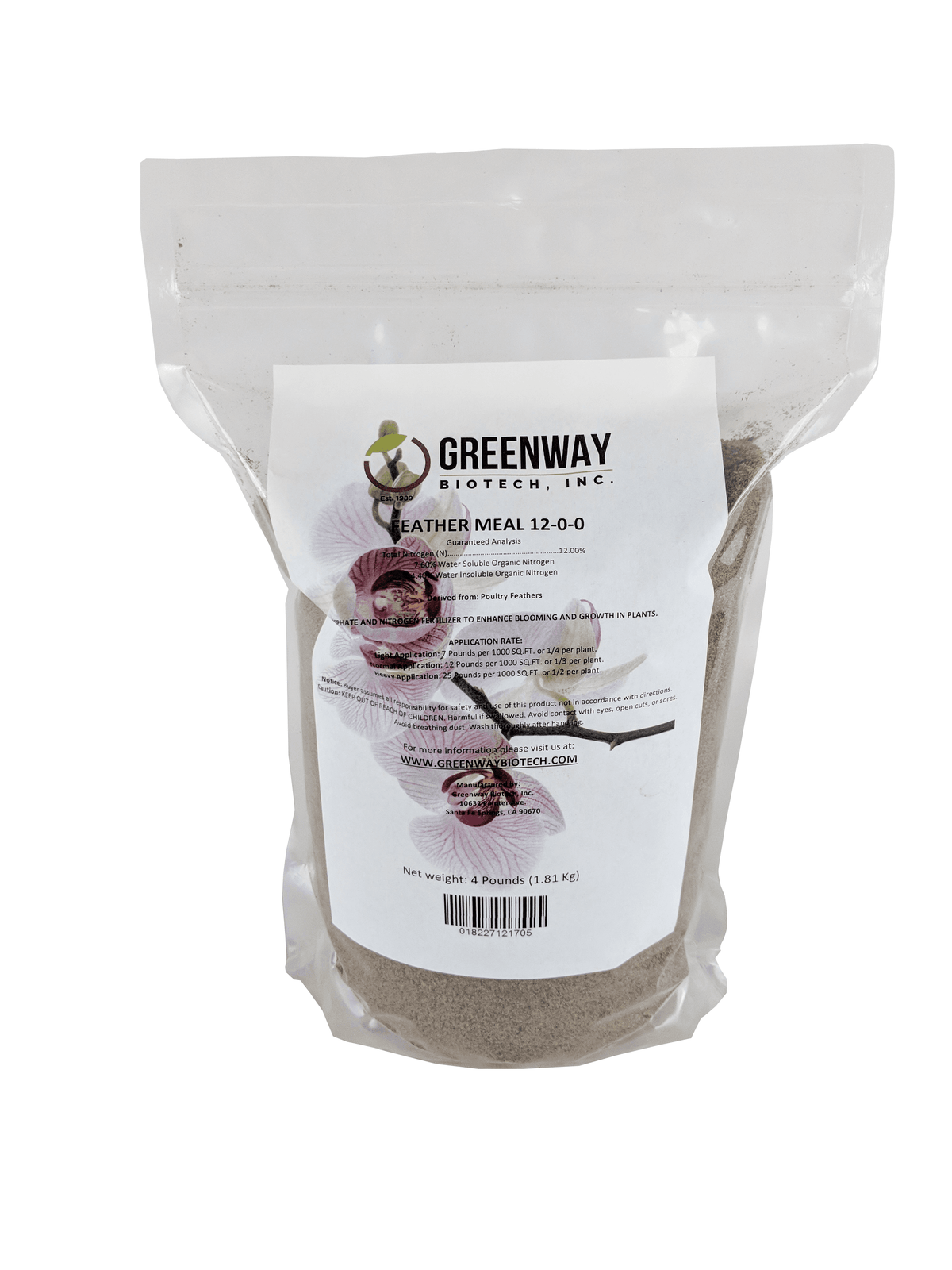
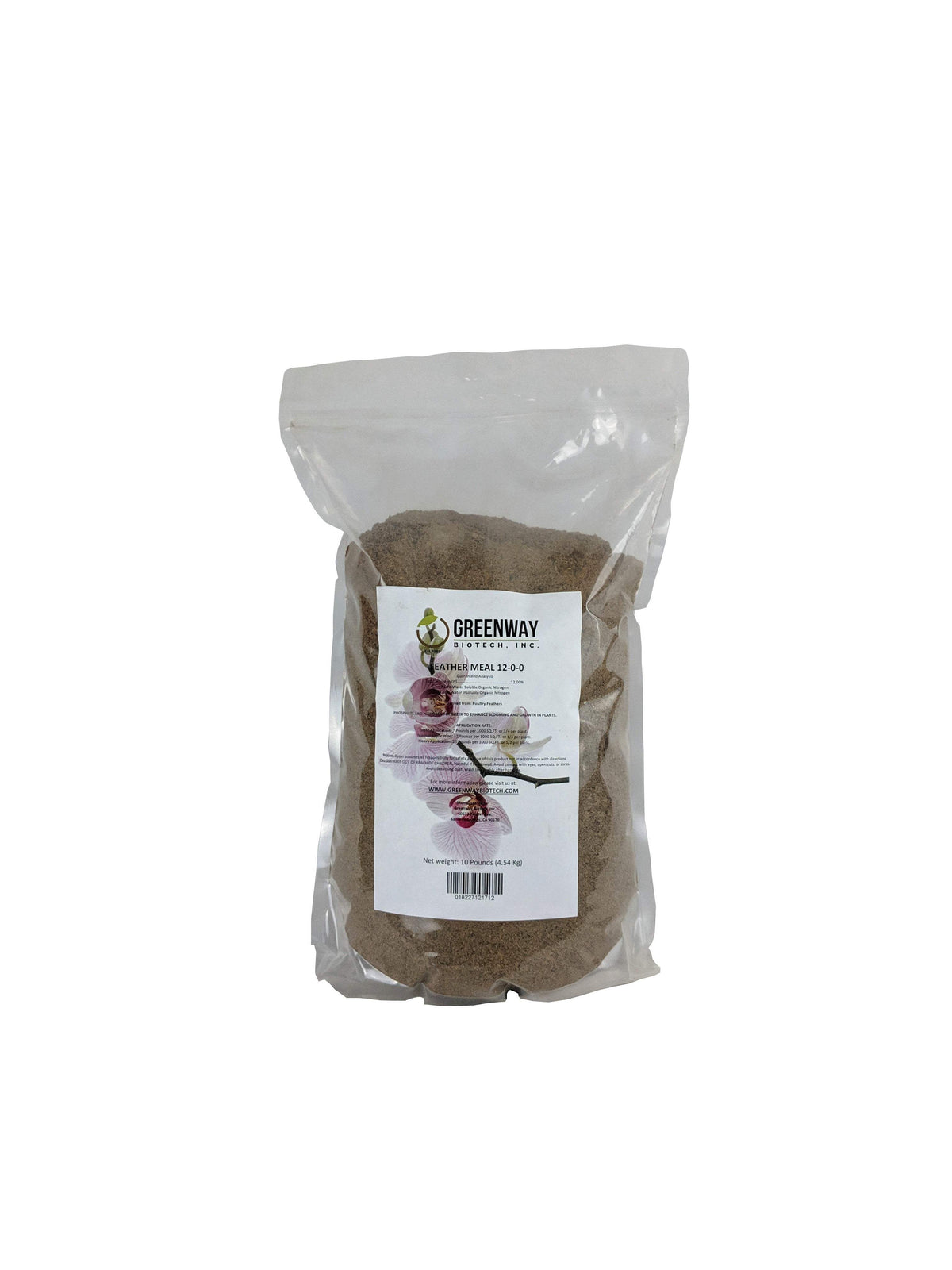
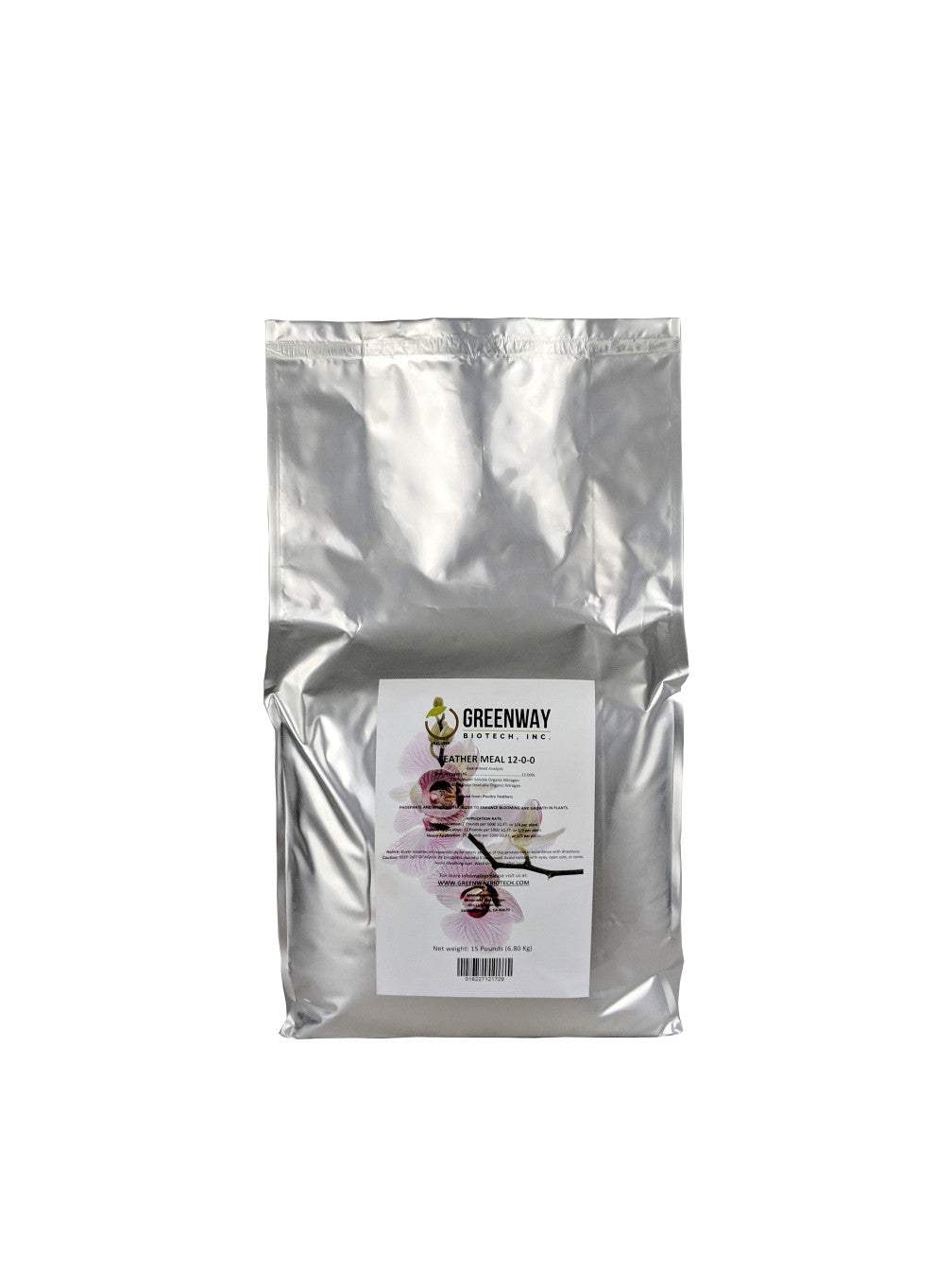
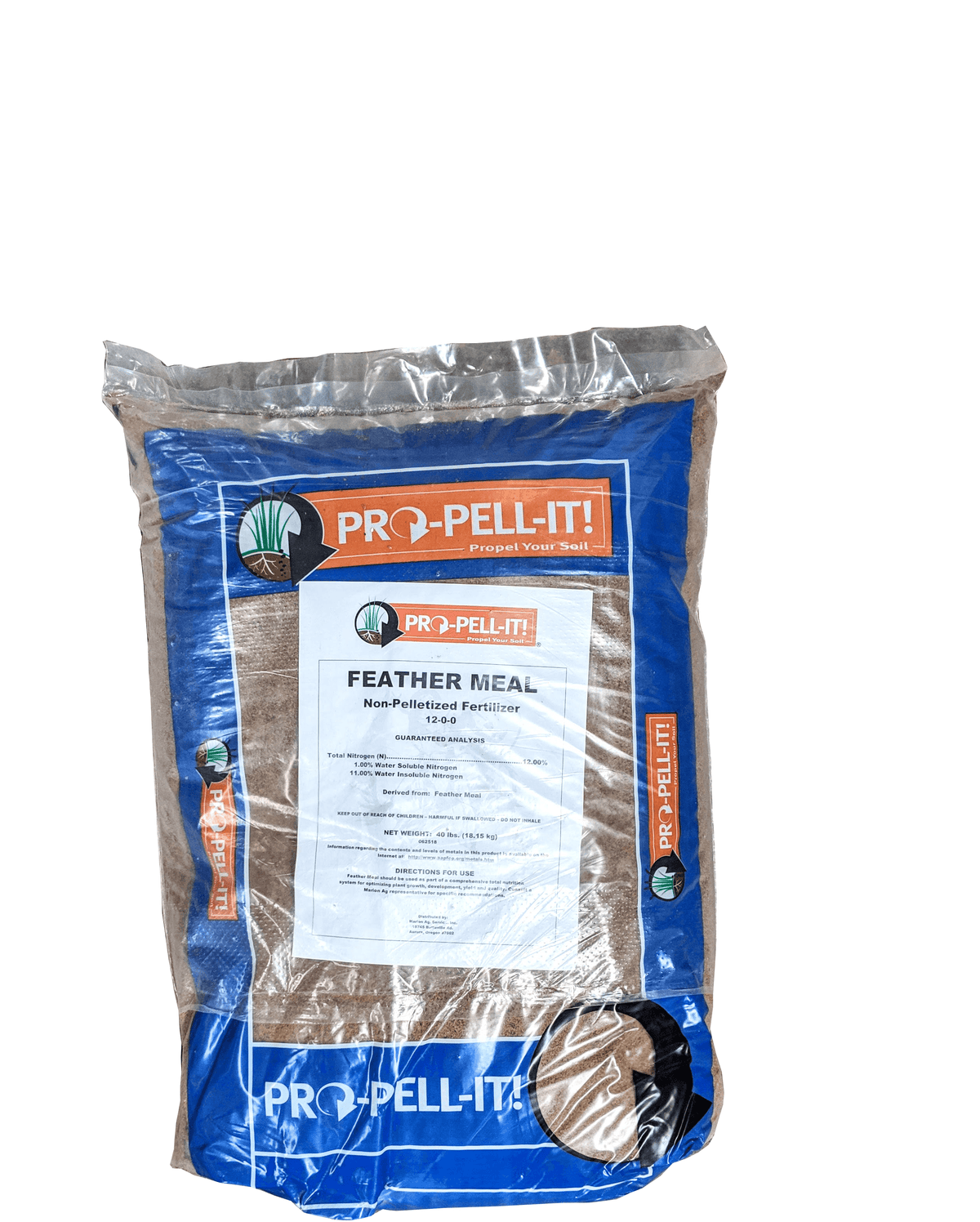
Premium slow-release organic nitrogen from hydrolyzed poultry feathers. Feeds plants steadily for 3–4 months with very low burn risk.
One of the highest organic nitrogen concentrations available, released gradually over 3–4 months by soil microbes for sustained vegetative growth.
Among the longest-lasting organic nitrogen sources — lasts roughly 3 times longer than blood meal, reducing reapplication frequency.
The ultra slow-release nature of hydrolyzed keratin means feather meal is exceptionally gentle even at higher application rates.
Meets California Department of Food and Agriculture standards for fertilizer materials. Tested for heavy metals by independent laboratories.
Premium hydrolyzed poultry feathers sourced from organic operations and repackaged in our California facility.
As soil microorganisms break down the keratin protein, they multiply and improve overall soil biology and nutrient cycling.
Perfect for nitrogen-hungry crops like corn, leafy greens, brassicas, and long-season vegetables that need sustained feeding.
High nitrogen content accelerates composting by providing the nitrogen that microbes need to break down carbon-rich materials.
Recycles poultry industry byproducts that would otherwise go to landfill, turning waste into a valuable soil amendment.
Works for vegetable gardens, lawns, flower beds, trees, shrubs, and compost piles — one product for multiple uses.
Our feather meal is sourced from organic poultry operations and processed through controlled hydrolysis to break down keratin proteins into a form that soil microorganisms can readily utilize.
Feather meal delivers nitrogen in its slowest organic form — water-insoluble keratin protein. Soil microbes must physically break down the protein structure to release plant-available nitrogen, creating a natural time-release mechanism. Best performance when soil temperatures are above 50°F and kept evenly moist.
All 12% is water-insoluble nitrogen, meaning it cannot wash away with rain or irrigation. Soil microorganisms gradually convert the keratin into ammonium and then nitrate — the forms plants actually absorb.
Feather meal naturally contains no significant phosphorus. For root development and flowering, pair with Bone Meal 3-15-0 to complete your nutrient program.
Feather meal naturally contains no significant potassium. For stress resistance and fruit quality, pair with Potassium Sulfate 0-0-53.
Unlike blood meal or synthetic nitrogen that dissolves quickly, keratin protein requires microbial enzymatic activity to break down — creating the longest natural release curve of any organic nitrogen source.
The microbial activity required to process feather meal increases beneficial soil organism populations, improving long-term soil health beyond just the nitrogen contribution.
Many gardeners notice sustained green growth through an entire growing season from a single application, especially on heavy-feeding crops like corn and tomatoes.
Results vary with soil temperature, moisture, and microbial activity. Best performance when soil temps are above 50°F.
Feather meal provides long-lasting nutrition when properly applied. Work into soil before planting or side-dress established plants. Allow 2–4 weeks before planting for initial microbial breakdown.
| Crop Type | Rate per 1,000 sq ft | Per Plant |
|---|---|---|
| Leafy Greens (lettuce, spinach, kale) | 15–20 lbs | ⅓ cup |
| Tomatoes & Peppers | 12–15 lbs | ⅓ cup |
| Root Vegetables (carrots, beets) | 10–12 lbs | ¼ cup |
| Corn (heavy feeder) | 20–25 lbs | ½ cup |
| Application Level | Rate per 1,000 sq ft | When to Use |
|---|---|---|
| Light (maintenance) | 7 lbs | Established, healthy lawns |
| Normal (standard) | 12 lbs | Standard seasonal application |
| Heavy (recovery) | 20 lbs | New lawns or recovery from damage |
| Compost Volume | Feather Meal Amount | Purpose |
|---|---|---|
| Per cubic yard | 2–3 lbs | Nitrogen source for decomposition |
| 5-gallon bucket | ½ cup | Home composting |
For best results with spring gardens, apply feather meal 2–4 weeks before your last frost date and work it into the soil. By the time soil temperatures reach 50°F and you're ready to transplant, the initial microbial breakdown will be underway and nitrogen will be available right when your seedlings need it most.
Refer to the Safety Data Sheet (SDS) for complete safety information.
Feather meal provides only nitrogen. Build a complete organic nutrition program by adding phosphorus, potassium, and other amendments based on soil test results.
Bone Meal 3-15-0 for root development, flowering, and fruit set.
SYNTHETICPotassium Sulfate 0-0-53 for stress resistance, fruit quality, and disease tolerance.
ORGANICBlood Meal 13-0-0 for quick-acting nitrogen when plants need immediate feeding.
ORGANICCrustacean Meal 4-0-0 with 12% calcium plus chitin for soil health.
ORGANICKelp Meal 2-0-4 for trace minerals, growth hormones, and potassium.
MINERALAzomite for a broad spectrum of 70+ trace minerals from volcanic ash.
Feather meal begins releasing nitrogen within 2–4 weeks of application and continues feeding plants for 3–4 months. The breakdown rate depends on soil temperature, moisture, and microbial activity. Warmer, moist soils with healthy microbial populations will process feather meal faster than cold or dry soils. For more on how nitrogen works in your garden, see our article on What's the Function of Nitrogen in Plants?.
Feather meal is one of the slowest-release organic nitrogen sources available (3–4 months vs. 6–8 weeks for blood meal), has very low burn risk even at higher rates, and provides the most consistent feeding throughout the season. It's ideal for long-season crops like corn, tomatoes, and brassicas. For a full comparison of nitrogen fertilizers, see What is the Best Nitrogen Fertilizer?.
Yes. Feather meal provides primarily nitrogen, so it pairs well with phosphorus sources like Bone Meal 3-15-0 and potassium sources like Potassium Sulfate or Kelp Meal. For a complete organic program, combine amendments based on soil test results. Account for all nitrogen sources to avoid over-application. Learn more about building a complete soil program in The 5 Fertilizers That Will Also Encourage Soil Health.
Apply feather meal in early spring when soil temperatures reach 50°F or higher. For best results, work it into the soil 2–4 weeks before planting to allow initial microbial breakdown. Reapply every 3–4 months during the growing season. For lawns, apply in early spring, summer, and fall.
Feather meal is an excellent compost activator. Its high nitrogen content helps balance carbon-rich brown materials like leaves and straw, speeding up decomposition. Add 2–3 lbs per cubic yard of compost material and mix thoroughly. For more composting guidance, see our article on Should You Add Fertilizer to Your Compost Pile?.
Feather meal has minimal effect on soil pH. As it decomposes, the microbial activity may produce a very slight acidifying effect, but this is generally negligible for most garden soils. It is safe to use without worrying about significant pH shifts.
Feather meal has a mild organic, earthy odor — much less pungent than blood meal or fish-based fertilizers. Once worked into the soil and watered in, the smell dissipates within a day or two.
If left on the soil surface in moist conditions, you may see white or gray mold growth. This is harmless microbial activity — actually a sign that the beneficial decomposition process is underway. For best results, always work feather meal into the soil and water in well.
Feather meal is generally safe when applied as directed and worked into the soil. However, keep bags stored away from animals, as pets may be attracted to the scent. While non-toxic, ingestion of large amounts could cause digestive upset.
Feather meal has less odor than blood meal but may still attract some animals like raccoons or dogs. Always mix it thoroughly into the soil and water in well. Store bags in sealed containers. The smell dissipates quickly once incorporated.
90-day money-back guarantee. Return unused portion in original packaging for a full refund.
1% of all profits go to our foundation, focused on improving educational opportunities for children.
Check out our full FAQ page or contact our experts for personalized advice.
Couldn't load pickup availability