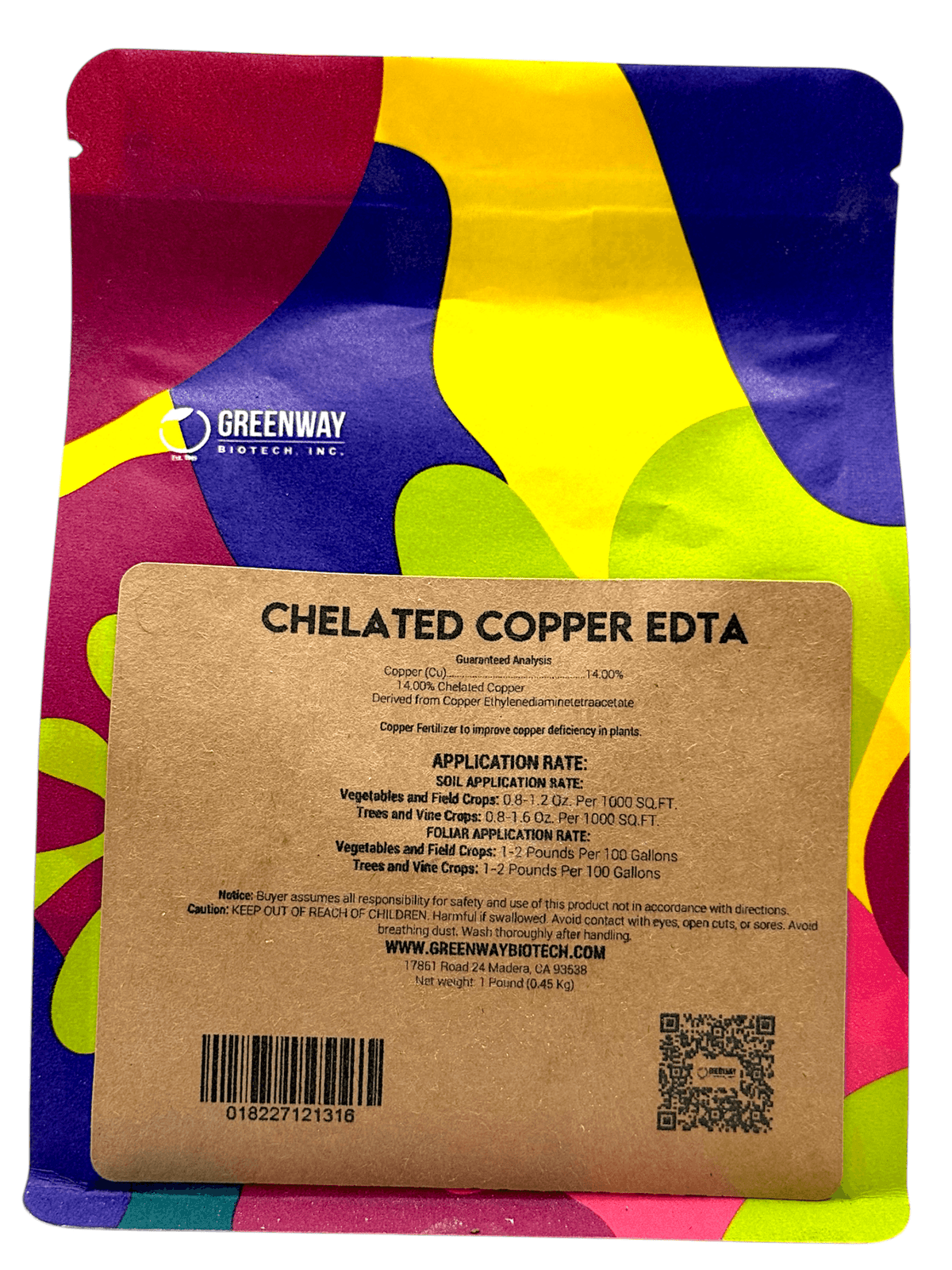
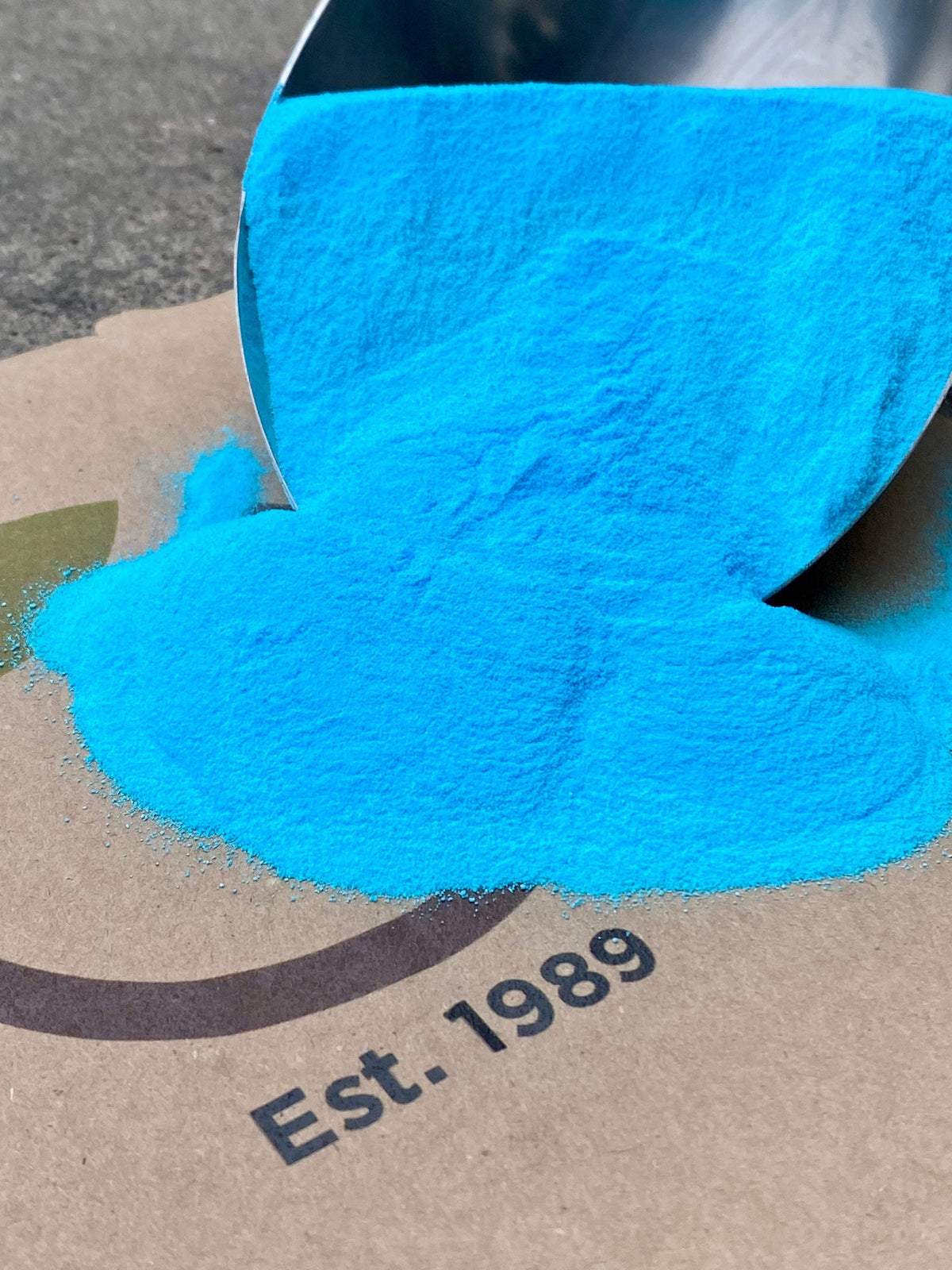
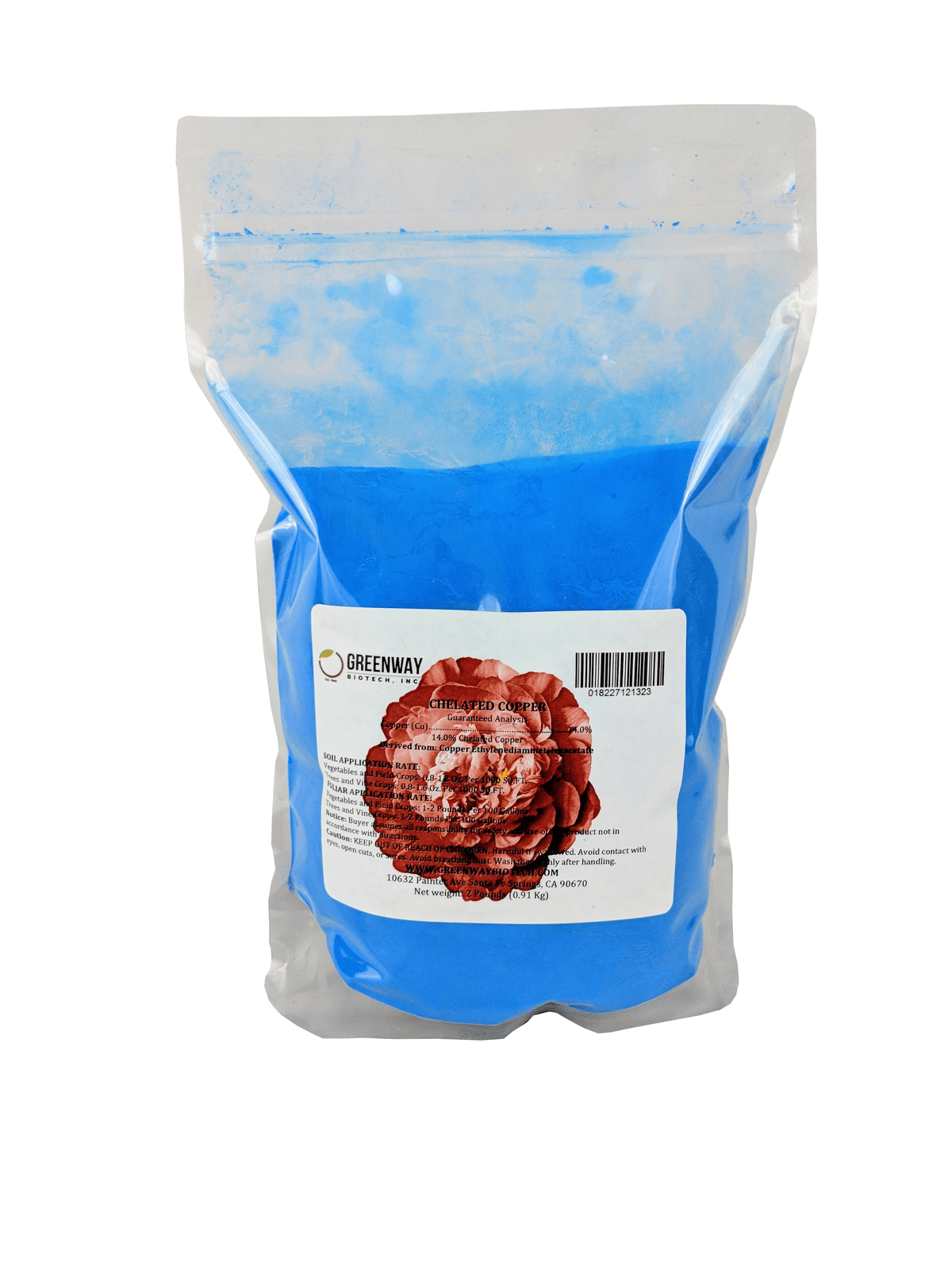
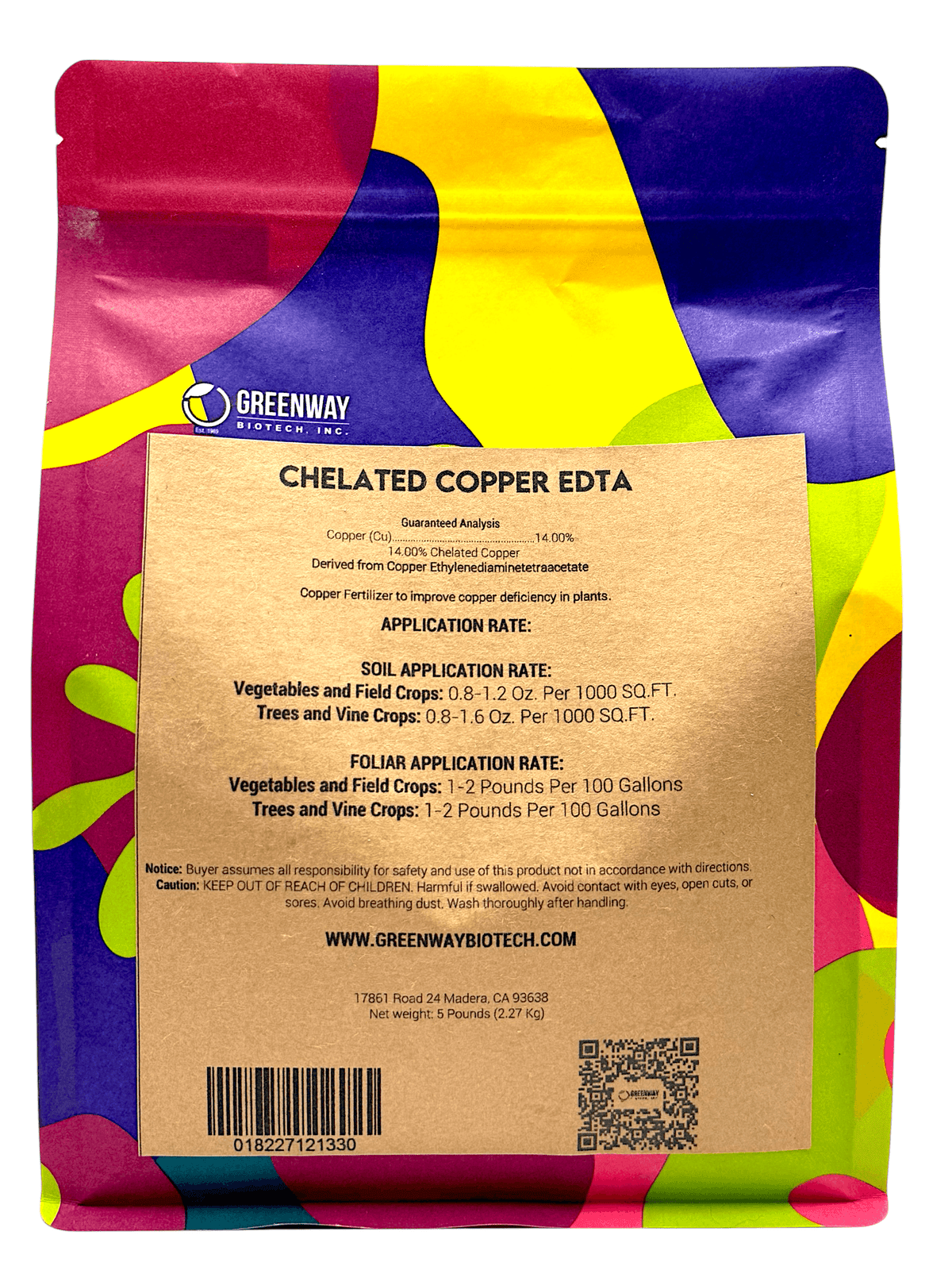
Premium chelated copper with 14% Cu-EDTA for superior bioavailability. EDTA chelation ensures stability across pH 4–9, delivering 3–5× better absorption than copper sulfate. CDFA registered, independently tested for heavy metals.
High copper concentration means lower application rates and more efficient correction of deficiencies compared to dilute copper sources.
Ethylenediaminetetraacetic acid protects copper ions from soil tie-up, maintaining plant availability across pH 4–9 where copper sulfate fails above 6.5.
Dissolves completely with zero residue for soil drench, foliar spray, fertigation, and hydroponic applications without clogging equipment.
EDTA chelation delivers dramatically superior bioavailability versus copper sulfate because chelated copper enters root cells with less metabolic energy.
Copper activates over 30 plant enzymes involved in photosynthesis, respiration, lignin biosynthesis, and phenol metabolism critical for healthy growth.
Promotes lignification for stronger stems, reducing lodging in grain crops and improving structural integrity in trees and vines.
EDTA chelation prevents precipitation with phosphates and carbonates, allowing safe mixing with most fertilizers and crop protection products.
Registered with the California Department of Food and Agriculture and manufactured at our California facility with strict quality controls.
Every batch undergoes independent third-party laboratory testing for heavy metal content, with results consistently well below required regulatory limits.
Effective for soil broadcast, banding, foliar spray, drip fertigation, hydroponic reservoirs, and individual tree treatment — one product for every growing method.
This single-ingredient chelated micronutrient is manufactured from high-purity raw materials chosen for maximum solubility and plant uptake.
Copper is an essential micronutrient required in small but critical amounts for photosynthesis, enzyme activation, and structural integrity. The EDTA chelation shell keeps copper soluble and plant-available even in high-pH soils where unchelated copper precipitates as insoluble hydroxides and carbonates.
The sole active nutrient, delivered at the highest commercially practical EDTA-chelated concentration. Copper is immobile in plants, so continuous availability from the root zone is essential for new growth.
The synthetic chelator forms a stable six-coordinate complex with Cu²⁺, preventing fixation by soil carbonates, phosphates, and organic matter while allowing controlled release at root surfaces.
Copper is essential for plastocyanin — a protein in the electron transport chain that drives photosynthesis. Deficient plants show characteristic pale young leaves because chlorophyll synthesis stalls.
Copper-containing laccase enzymes polymerize lignin, the structural polymer that stiffens cell walls. Without adequate copper, stems weaken and crops are prone to lodging.
Copper activates polyphenol oxidase and other defense enzymes. Adequate copper nutrition reduces susceptibility to fungal and bacterial pathogens by strengthening physical and chemical barriers.
Copper plays a critical role in pollen development and grain fill. Deficiency causes delayed flowering, poor pollination, and significant yield reduction in grain and fruit crops.
Always conduct soil or tissue tests to determine actual copper needs before application. Below are general guidelines for Chelated Copper EDTA 14%.
| Crop Type | Rate | Notes |
|---|---|---|
| Vegetables | 2–4 lbs/acre | Apply pre-plant or side-dress |
| Field Crops | 2–4 lbs/acre | Broadcast or band |
| Trees & Vines | 2–5 lbs/acre | Apply to root zone |
| Turf | 0.5 lb/1,000 sq ft | Water in thoroughly |
| Crop | Rate | Notes |
|---|---|---|
| Citrus/Nuts (hardy) | 1–1.5 lbs/acre | 25+ gal water/acre |
| Trees/Vines | 0.75–1.5 lbs/acre | 25+ gal water/acre |
| Vegetables (sensitive) | 0.5–1 lb/acre | Use lower rate to avoid phytotoxicity |
| Turf | 1 tbsp/1,000 sq ft | Thorough coverage |
| Step | Instructions |
|---|---|
| 1. Make Stock Solution | Dissolve ½ cup (115g) in 1 gallon of water — creates ~4,250 ppm Cu concentrate |
| 2. Apply to Reservoir | Use ½–1 teaspoon of stock per 100 gallons — achieves 0.05–0.10 ppm Cu |
| 3. For Higher Rates | Use 1½ teaspoons per 100 gallons — achieves ~0.15 ppm Cu |
Target ranges: 0.05 ppm (maintenance) · 0.10 ppm (standard) · 0.15–0.20 ppm (deficiency correction)
| Tree Size | Rate per Inch | Annual Maximum |
|---|---|---|
| Young (1–3″) | 0.5 oz/inch | 2 oz total |
| Medium (4–8″) | 1 oz/inch | 8 oz total |
| Large (9″+) | 1.5–2 oz/inch | 20 oz total |
For hydroponic and fertigation applications, always pre-mix a concentrated stock solution (½ cup / 115g per gallon of water = ~4,250 ppm). This eliminates the need to weigh sub-gram amounts of dry powder — a single measured teaspoon of stock solution delivers a precise, consistent copper dose every time.
Refer to the Safety Data Sheet (SDS) for complete safety information.
Copper works alongside other essential micronutrients for complete plant nutrition. These complementary products address the full spectrum of trace element needs.
Corrects iron chlorosis — interveinal yellowing on new growth. Essential partner for complete micronutrient programs.
Activates photosynthesis enzymes and supports chloroplast function. Critical for soybeans, palms, and pecans.
Drives auxin production and protein synthesis. Prevents stunted growth and small leaves in corn, pecans, and citrus.
Essential for cell wall formation, pollination, and fruit set. Critical micronutrient often deficient in sandy and alkaline soils.
Enables nitrogen fixation in legumes and activates nitrate reductase. Required in trace amounts for all crops.
Non-chelated copper alternative for algae control, moss treatment, and acidic soil applications where chelation is unnecessary.
Chelated copper EDTA is copper bonded with EDTA (ethylenediaminetetraacetic acid), creating a protected form that remains available to plants across pH 4–9. The chelation shell prevents copper from reacting with soil carbonates, phosphates, and organic matter — delivering 3–5× more effective absorption than unchelated copper sulfate. For a deeper comparison, see our article on Sulfate vs Chelated Fertilizers: Key Differences and Garden Benefits Explained.
Copper is immobile in plants, so symptoms appear on new and young growth first while older leaves remain green. Look for: young leaves turning pale green or yellow (chlorosis), twisted or malformed new growth, dieback of growing tips, weak stems, delayed maturity, and increased disease susceptibility. Soil tests below 0.2 ppm or tissue tests below 5 ppm indicate deficiency. For a visual guide to identifying micronutrient problems, see our guide to Essential Micronutrients: Boost Your Garden Soil for Healthier Plants.
EDTA chelation provides pH stability across 4–9 (vs. 6.5 for sulfate), prevents precipitation with phosphates in the soil solution, delivers 3–5× better plant absorption, maintains longer availability in the root zone, offers superior tank mix compatibility, and carries lower phytotoxicity risk than sulfate forms.
Use the stock solution method: dissolve ½ cup (115g) in 1 gallon of water, then add ½–1 teaspoon of this concentrate per 100 gallons of reservoir water to achieve 0.05–0.10 ppm copper. Direct measurement of dry powder is impractical because the amounts needed are extremely small (less than 0.3 grams per 100 gallons). Use the calculator on this page for precise dosing.
Yes — EDTA chelation makes this product compatible with most fertilizers. Always jar test new combinations first. Fill your tank 2/3 with water, dissolve the copper EDTA first, then add other products. Do not mix with highly alkaline products (pH >10) or high-calcium solutions, as these can destabilize the chelate.
No — copper is highly toxic to sheep. Do not apply in areas where sheep graze, and prevent runoff into sheep pastures. Cattle and other livestock have higher copper tolerance but should not have direct access to treated areas until product is watered in and dry.
EDTA is a synthetic chelating agent, so this product is not OMRI-listed for certified organic production. For organic operations, consider copper sulfate (with restrictions) or other approved copper sources. This product is excellent for conventional, hydroponic, and IPM programs.
Copper is essential for photosynthesis (plastocyanin protein), lignin biosynthesis (strong cell walls), enzyme activation (over 30 copper-dependent enzymes), pollen viability, and disease resistance. Despite being needed in small amounts, even mild copper deficiency significantly reduces crop quality and yield. Learn more in our article on 7 Ways Copper Sulfate Boosts Garden Health and Productivity.
When you choose Greenway Biotech, you're choosing a company with over 35 years of experience in plant nutrition and a commitment to quality at every step.
If you're not completely satisfied, we offer a 90-day money-back guarantee. Simply return the unused portion in its original packaging, and we'll process a full refund. No questions asked.
We're committed to sustainable agricultural practices, including:
1% of all profits go to our foundation, focused on improving educational opportunities for children in agricultural communities.
Check out our full FAQ page or contact our experts for personalized advice.
Couldn't load pickup availability